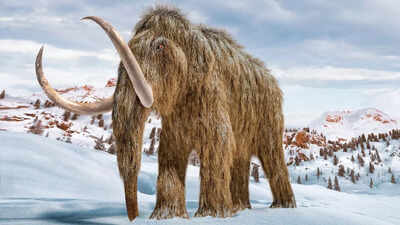
The recovery of ancient RNA from a woolly mammoth preserved in Siberian permafrost has offered scientists a rare look into the workings of an animal that lived nearly forty thousand years ago. RNA usually breaks down soon after death, which makes its presence in the Ice Age remain highly unexpected. Yet the cold, stable conditions of deep permafrost have kept delicate cellular material intact, allowing researchers to examine gene activity that once shaped the mammoth’s body. The discovery is generating attention within scientific discussions on how long biomolecules can endure and what they can reveal about extinct species. It provides an unusual chance to study ancient biology at a level of detail that is seldom possible.
Where and how the 39,000-year-old mammoth was discovered
The mammoth studied was found near the Laptev Sea coast in Siberia, a region known for preserving Ice Age creatures with remarkable clarity. The individual, often referred to as Yuka, had remained locked in frozen ground for around 39,000 years. Much of its soft tissue, including skin and muscle, was still recognisable when excavated. This level of preservation is closely linked to the conditions of the site. The permafrost remains deeply frozen throughout the year, creating a natural vault that protects remains from bacteria, moisture and fluctuating temperatures.Such stability is essential for the survival of RNA. Even slight warming can trigger rapid molecular decay, yet the sediments surrounding Yuka showed long-term cold conditions that slowed these processes dramatically. The mammoth’s rapid burial in dense frozen soil also shielded it from environmental shifts that might have damaged the tissues. Because of this, the recovered samples held tiny but valuable fragments of RNA, which researchers could sequence with modern techniques. The fact that such material endured for almost forty millennia illustrates how powerful the preserving effect of permanently frozen landscapes can be.
What the ancient RNA reveals about mammoth biology
Once extracted, the RNA gave scientists a set of clues about the mammoth’s biology at the time of its death. The sequences, although fragmented, contained enough information to identify genes involved in muscle structure, cellular maintenance and energy use. These transcripts are not just records of genetic code but indicators of which genes were active in living tissues. Their presence suggests that the mammoth’s cells were performing normal functions shortly before death.Some transcripts reflected activity linked to stress, hinting that the animal may have experienced physical strain or environmental pressure near the end of its life. The exact cause cannot be confirmed, but the signals were consistent with what is seen in modern mammals when muscles respond to demanding conditions. The researchers compared the sequences with the genomes of elephants, the mammoth’s closest living relatives. This comparison helped confirm the authenticity of the RNA and showed a strong resemblance in basic cellular processes. These findings highlight how ancient RNA can reveal not only genetic information but also snapshots of cellular behaviour, something that traditional fossil evidence cannot provide.
What techniques made 39,000-year-old RNA analysis possible
Recovering RNA this old required laboratory methods designed for extremely fragile material. The study, published in Cell, used specialised extraction steps that protected the delicate fragments from further damage. Modern sequencing platforms were then adapted to detect small and degraded strands, enabling scientists to piece together meaningful patterns from molecular traces.Strict contamination controls were essential. Ancient samples can easily pick up modern RNA, so researchers used genetic comparisons to separate genuine mammoth sequences from anything introduced after excavation. Only fragments that clearly matched known mammoth or elephant genes were included in the analysis. These advances show how far palaeogenomics has progressed. Several years ago, the possibility of sequencing RNA from an animal that died almost forty thousand years ago seemed limited by technology. Improvements in precision and sensitivity have now made it possible to explore gene activity in organisms long removed from the modern world.
How the surroundings explain the mammoth’s world
The sediments surrounding Yuka offered further information about the world the mammoth once inhabited. The landscape would have been part of the mammoth steppe, a cold but productive ecosystem that stretched across northern Eurasia. The soil preserved traces of grasses and hardy plants that supported large herbivores. This environment favoured species adapted to low temperatures, and the layers of frozen ground reflect the stability of that climate.These same conditions that shaped mammoth life also protected its remains. The continuous cold created an environment where tissues and molecular structures could remain intact for thousands of years. As climate change alters permafrost regions, researchers are increasingly aware that many such specimens may emerge more frequently. However, once exposed to warmer air, their molecular information can deteriorate quickly. Yuka’s RNA highlights both the scientific value of these frozen archives and the urgency of studying them before they decay.Also Read | How stellar eruptions might shape the fate of alien worlds: Could distant stars threaten exoplanets