Think Lesotho. A kingdom of just 2.3 million people, a landlocked highland, surrounded by South Africa. It has deep and widespread poverty, among the highest HIV/AIDS prevalence, and a per capita income about half of Pakistan’s. It has a unique industrial strength, however. It is called the jeans hub of the world. The garment industry is its largest employer, with about 50,000 people. The bulk of the exports are to the United States. This is 10 per cent of Lesotho’s gross domestic product (GDP). It was built on the strength of duty-free access to the US under the African Growth and Opportunity Act (AGOA).
Then came Donald Trump in 2025, and forget AGOA, Lesotho was slugged in the gut with a 50 per cent “Liberation Day” tariff, later reduced to 15. Poor Lesotho can’t compete with the larger Asian manufacturers, Bangladesh, Vietnam and India included. It officially declared a “state of disaster”.
Let’s take Lesotho as our case study for a country with no leverage or time. Its economy cannot even afford to wait Mr Trump out for three years minus three months. Then we come to the nation with the most leverage and time. You guessed it right, China. In trade, it has both a seller’s (critical minerals, magnets) and buyer’s (soybean, corn) leverage.
Militarily it is catching up with America even as Mr Trump guts US alliances. And its time isn’t even limited to the three Trump years. These are its window of opportunity as a distracted America releases strategic pressure, China will strengthen itself so much that Trump’s successors may never catch up.
If Lesotho was our example at the bottom and China at the top, what about the rest? It does sound facetious to compare Europe’s predicament with Lesotho’s, but it isn’t. It’s a fact the Europeans realised as they sat last Friday at the Munich Security Conference with no leverage, as they depend on the US for their defence. They are now beginning to spend more, but it will take years before they can be confident of defending themselves.
Weapon systems, particularly capital assets like fighters, submarines, missiles, even something as basic as 155-mm artillery ammunition are not something you can buy at Hamleys or order on Amazon. And then you have to find citizens willing to fight, and train them. That leaves you no time either, as you see Putin at your doorstep.
How could we list China higher than the US? The US definitely has way more leverage than China but its time is limited to Trump’s remaining three years. The US is the largest market for everybody else’s exports and has the power of tariffs. It has the strongest military and all its most loyal allies of eight decades. Europe, the United Kingdom, Japan, South Korea, Australia and Taiwan depend on it. The semi-allies or strategic partners, India included, need it to balance a rising China.
It has the tech giants, AI leadership and global reserve currency. Trump is spending rather than investing in it. The leverage is diminishing, the time ticking away.
After three years, it will probably be a different superpower. Will it be a lesser one, having lost out to China? Will the allies ever trust it again? Remember that one name. Not Ukraine, but Greenland. American allies would worry: What if somebody even nuttier sits in the Oval tomorrow?
This America’s time, however, is limited to these three years, until the next elections, or maybe even about 10 months if the midterms reduce Mr Trump to a lame duck, and that underlines an important point. It’s only the democracies that have this hard-stop limitation on time. They will all face elections within the next four-five years.
Israel’s leverage is undeniable and comes from history, ideology, intellect, geo-economics, military and intelligence. It is essentially a Western democracy on the edge of Asia and Africa, and an indispensable ally for the US, Europe and India. At some point though, after an election or through a court process, Benjamin Netanyahu will go. You might then have a different Israel post-Netanyahu. Limitation of time is a feature of democracy.
This does not apply to Xi Jinping, Vladimir Putin, and most certainly to field marshal-for-life Asim Munir. Dictatorships, whether classical, like North Korea, or hybrid, like Pakistan, don’t have this limitation of time. Of course, funny things tend to happen in such countries that change the board dramatically. But we aren’t astrologers.
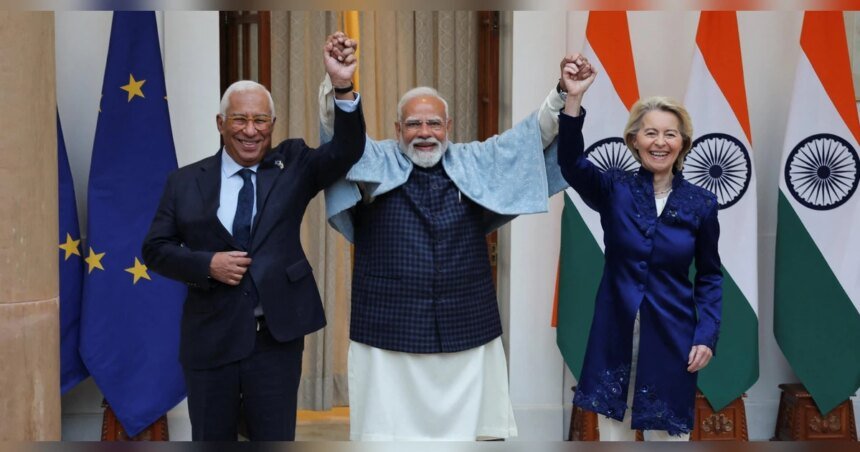
This is the game every nation is now learning to play. Some are finding new allies or seeing value among nations where they’d seen marginal interest. The starkest example is India and Europe. When the final document of the India-European Union trade deal is signed, its headline should be: “Thank You, Trump”. This changed world has also jolted India into discovering the virtues of freer (I didn’t say free) trade and competitiveness. Russia, Iran, Turkey, Saudi Arabia, the UAE are all repositioning themselves in this contested, fraught space.
Where does India sit on this leverage/time scale? The sobering, if rude, fact is that India’s leverage is severely limited. Some of it became evident in the wake of Operation Sindoor when almost the entire world, our 32 “strategic partnerships” including some elevated as “enhanced” or “comprehensive”, counted for very little.
India’s limited leverage lies in the size of its economy and market. The way to employ that is to keep growing your GDP, which means more, even risky reform, and open up your markets. The current size and the boast of being (in fact soon-to-be) the fourth-largest economy doesn’t count for much unless we convince the world that it will keep growing upwards of 7.5 per cent annually over the next decade. As economist Gita Gopinath said at Davos in January, it’s simple mathematics that India will be the third-largest economy in 2028. But it will still be a distant laggard on per capita income. India’s strategic capital then isn’t the size of its economy, but how fast it expands.
Similarly, the markets, to add weight to India’s Comprehensive National Power (CNP), must be open to imports. Then the rest of the world, the US, Europe, Australia, Japan and especially China, will acquire a stake in our growth and work toward stability in bilateral relationships.
And time for India? There is sufficient continuity of policy to not worry about the 2029 elections. The three Trump years will be rough, with their good, bad, or rude moments as we move from one Truth Social post to another. The biggest challenge will be to deal with his nonchalance over any political sensitivities, especially when our Parliament is in session.
This will test the Modi government’s nerve and judgement often, especially because they built the image of India as a global leader. Wait till Sergio Gor settles down and starts living up to his larger role as envoy to Central and South Asia. This will test our three-decade red line on de-hyphenation with Pakistan and rejection of the two-country rule (an American leader visiting India and Pakistan on the same trip). Mr Trump is there for only three more years, but it will be a rocky three years.
India has made quick strategic adjustments, dumped some presumptions, signed trade deals and free trade agreements after being mostly trade-averse for more than a decade, some hard reform has been undertaken. And most importantly, the defence budget is rising and long-pending acquisitions are moving forward. This is rebuilding leverage and buying time.
By special arrangement with ThePrint