
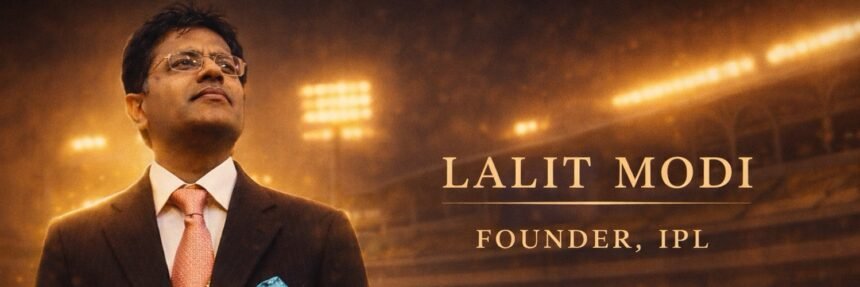
 When the story of modern cricket is written, one chapter will inevitably revolve around Lalit Modi and the bold revolution he launched in 2008.
For all the controversies that later surrounded him, one reality remains undeniable: Lalit Modi’s vision fundamentally transformed Indian cricket. By launching the Indian Premier League under the Board of Control for Cricket in India, he created a platform that empowered Indian cricketers financially, professionally and globally.
The Vision That Changed Cricket
When Lalit Modi proposed the IPL, the idea sounded radical. A franchise-based T20 league mixing international stars, young Indian talent, entertainment and prime-time television had never been attempted on such a scale in cricket.
But he believed cricket needed a modern format that could capture global attention and create new opportunities for players.
What followed proved him right.
The IPL quickly became the most exciting and lucrative tournament in the sport. Packed stadiums, record-breaking television deals and global participation turned Modi’s concept into one of cricket’s biggest success stories.
Empowering Indian Cricketers
Before the IPL era, financial security in cricket was largely limited to players who represented India. Domestic cricketers often struggled despite years of dedication to the game.
The league created by Modi changed that reality.
Young cricketers from the Ranji Trophy circuit suddenly found themselves playing alongside international legends and earning contracts that could transform their lives. For many domestic players, the IPL became the first real chance to gain recognition and financial stability.
Today, many Indian cricketers build strong careers and wealth even before making their international debut — a system made possible because of the IPL.
Global Exposure and Learning
Another powerful impact of the lucrative league was the global exposure it brought to Indian players.
Sharing dressing rooms with stars from Australia, England, South Africa and the Caribbean accelerated learning and confidence. Young Indian players gained access to world-class coaching, tactical insights and professional standards.
For many, the IPL became a finishing school before stepping onto the international stage.
Building a Global Brand
The IPL also transformed Indian cricketers into global sporting personalities.
Franchises turned players into brands. Crowds filled stadiums, television audiences grew across continents and social media amplified the popularity of players who once played only domestic cricket.
The league reshaped how cricket was marketed, consumed and celebrated.
A Legacy That Endures
Today, the IPL stands as the most powerful cricket league in the world. Broadcast deals run into billions, franchise valuations continue to rise, and the tournament influences the global cricket calendar.
At the heart of that transformation lies the original vision of Lalit Modi.
Time may continue to debate the controversies surrounding him, but it cannot erase the scale of what he created. The financial strength, global exposure and professional opportunities enjoyed by modern Indian cricketers owe much to the platform he built.
For that reason, many believe Indian cricketers — and perhaps the game itself — have reason to thank Lalit Modi.