A one-pound rock found in the Sahara Desert may hold the oldest ghost story in the solar system. Recovered in 2019, the meteorite known as Northwest Africa 12774 belongs to a rare class called angrites — among the oldest volcanic rocks known to science. New research suggests it is a fragment of a moon-sized world that orbited our young sun 4.5 billion years ago before vanishing entirely.
Pressure, Crystals, and a Vanished World
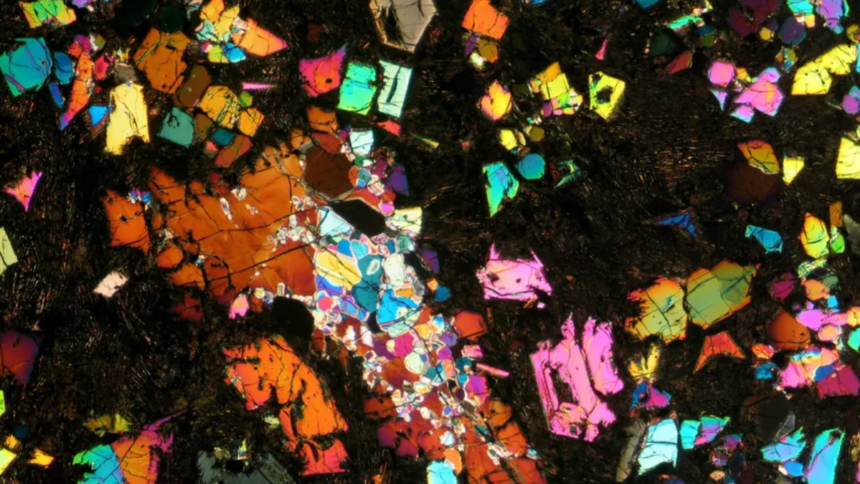
Published in Earth and Planetary Science Letters, the study by Aaron Bell of the University of Colorado Boulder identified a key clue inside Northwest Africa 12774: clinopyroxene crystals unusually rich in aluminium. This mineral signature indicates formation under immense pressure — at least 17.5 kilobars, far exceeding anything a small asteroid could produce. The crystals also preserved sharp edges and delicate chemical patterns, suggesting they formed at shallow depths. For such extreme pressure to occur near a planet’s surface, the parent body must have been enormous. The team concluded it likely exceeded 1,800 km in radius, rivaling Earth’s moon.
A Different Blueprint for Early Planets
Angrites feel different chemically, sort of, they have almost no silica, which is a mineral that shows up in nearly every rocky planet we know. For a while, scientists assumed this meant angrites were born in smaller asteroids, with radii less than about 200 km. But Northwest Africa 12774 kind of overturns that idea completely, like it changes the whole thing. The lost world probably went through a rather distinct developmental trail— one that ended with a catastrophic collision. As Bell mentioned, lots of meteorites that haven’t been examined yet still sit in collections across the world, and maybe even more protoplanets may wait to be uncovered.