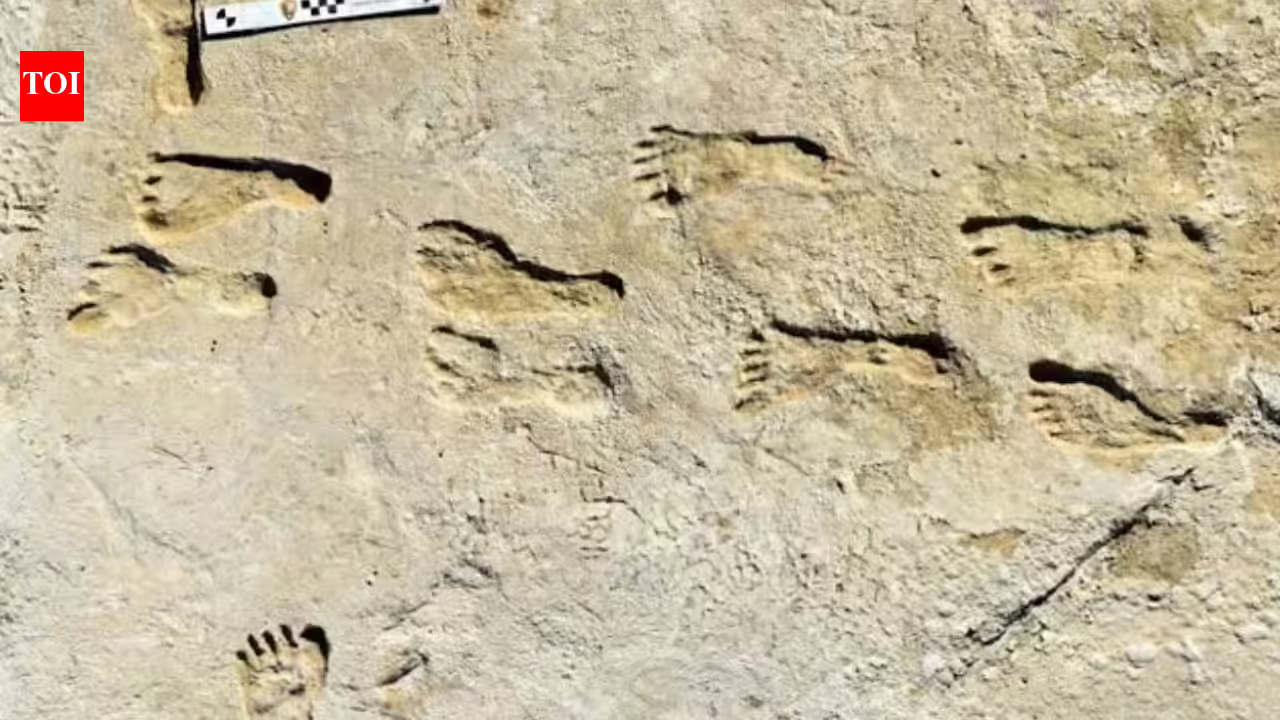
In the scrubby expanse of White Sands National Park in New Mexico, a set of impressions pressed into ancient mud has continued to unsettle assumptions about when people first moved through the Americas. The markings, preserved in layers of sediment that later hardened into gypsum, were first described in a 2021 study published in Science, titled ‘Human footprints near ice age lake suggest surprisingly early arrival in the Americas’, which revealed that they placed them far earlier than the long-accepted timeline. That interpretation drew attention partly because of the methods used to anchor the age, relying on organic material trapped within the same deposits. Years on, a fresh round of testing has revisited those layers using different techniques, incorporating microscopic pollen and mineral signals rather than relying on a single line of evidence. The latest work has strengthened the case for an unexpectedly early human presence while also addressing lingering doubts about the original analysis.
How scientists revisited the dating evidence to test the 23,000-year timeline
The prints sit in what was once a damp surface, likely a shifting mix of floodwater and fine sediment. The study revealed when they were first reported, the dating pushed human presence in the region back to around 23,000 years ago. That figure sits awkwardly against earlier models of migration into the Americas, which tended to place arrival thousands of years later, after the last glacial maximum had begun to ease.The immediate reaction was cautious. Not because the footprints themselves were in question, but because the surrounding material used to estimate their age could, in theory, be influenced by environmental quirks. In particular, some of the plant remains used for dating are known to behave unpredictably in certain water conditions.To address those concerns, scientists returned to the same stratigraphic layers and expanded the range of evidence. Instead of relying mainly on seeds embedded in the mud, they looked again at tiny biological and mineral traces distributed through the same deposits.The approach was less about replacing the original findings and more about stress-testing them from different angles. If multiple independent signals pointed to the same time period, the argument for an early date would become harder to dismiss.
Microscopic pollen and laboratory checks
One of the key additions came from fossilised pollen, examined using high-precision techniques that can sort and analyse individual cells. Pine pollen preserved within the sediment was studied in detail, offering a separate clock that could be compared against earlier estimates.This line of analysis also helped address one of the lingering concerns: whether the area had been affected by so-called “hard water” conditions that might distort radiocarbon readings in plant material. The pollen evidence did not support that complication, which strengthened confidence in the original chronology rather than weakening it.
How quartz grains helped independently date the footprint sediments
A second strand of evidence came from quartz grains buried in the same layers as the footprints. These minerals can record environmental exposure over time, storing energy from background radiation until they are released under laboratory conditions.By exposing the grains to controlled light sources, researchers measured the accumulated signal and built a separate estimate for when the sediment was last exposed at the surface. That result aligned closely with the pollen-based timeline, placing the formation of the footprint layer in the same distant period.
What the site suggests about early movement
Taken together, the different approaches point in the same direction: humans were present in this part of North America far earlier than once assumed. The footprints themselves suggest repeated movement across a landscape that would have been cold, shifting, and intermittently wet, rather than a stable grassland or forest environment.The impressions are not isolated marks either. They sit within a wider spread of tracks that indicate movement patterns over time, including interactions between people and animals moving through the same terrain.
A timeline still under discussion
Despite the convergence of evidence, the site has not closed the debate. White Sands remains one of the most closely examined archaeological locations in the Americas, partly because its implications are so large.The latest analysis does not overturn earlier objections so much as narrow their scope. It leaves less room for simple explanations but still invites further work on how early populations might have entered and moved through the continent during a period when ice sheets and climate shifts reshaped migration routes.