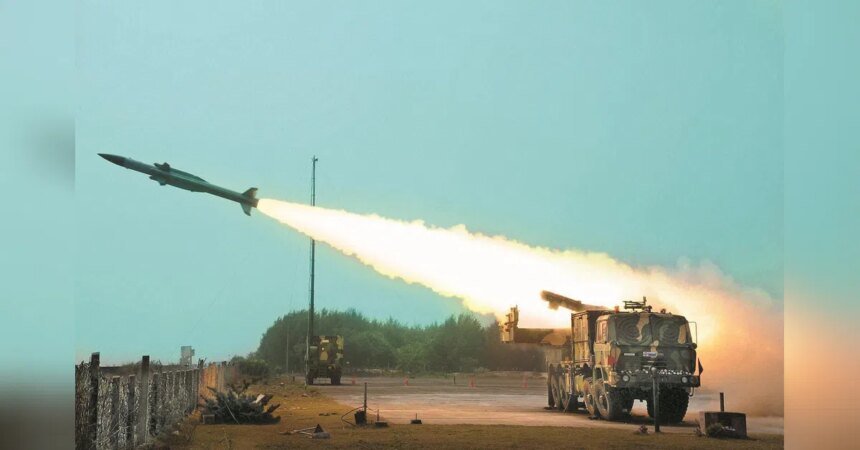
Large programmes such as quick reaction surface to air missiles (₹30,000 crore), P-75 (India) submarines (₹70,000 crore) and the Next Generation Corvette (₹33,000 crore) support revenue visibility, but near-term contribution to revenue is limited. Defence order inflows were down 17 per cent year-on-year (Y-o-Y) given delays in awarding tenders. Analysts hope that activity will accelerate in the second half of FY27.
Acceptance of Necessity (AoNs) worth ₹6-6.5 trillion was announced in FY26 and should start to convert into orders from FY27 onwards. The Defence Acquisition Council also approved AoNs worth ₹52,000 crore recently. Under the revised Delegation of Financial Powers for the Defence Services rules, the MoD has increased financial autonomy to fast-track over ₹1.3 trillion worth of central defence procurement annually, which is likely to accelerate order inflows and execution as a larger share of procurement contracts can now be approved directly by the armed forces.
In Q1, Bharat Heavy Electricals announced order inflows worth ₹3,500 crore; while Bharat Dynamics Ltd (BDL) announced orders worth ₹1,400 crore.
In the recently approved AoN for ₹52,000 crore, the focus is on air defence against unmanned vehicles, precision strike capability via kamikaze drones and improving aerial surveillance with high altitude pseudo satellites (HAPS). Approvals include acquisition of anti-unmanned aerial vehicles electronic warfare systems and man portable anti-tank guided missile (MPATGM) systems.
Likely beneficiaries include BDL, Bharat Electronics Ltd (BEL), Solar Industries, Mazgaon Docks, Hindustan Aeronautics Ltd (HAL), Zen Technologies, and PTC Industries. Other electronics and subsystem providers like Astra Microwave, Data Patterns, Paras Defence & Space Technologies and Premier Explosives may also gain.
Request for proposal will now be issued to vendors, followed by technical evaluation and field evaluation trials and price bids to identify the winning bid (L1). Discussions are then held between the L1 vendor and contract negotiation committee before final approval from the Cabinet Committee on Security.
BDL is well positioned to benefit from acquisition of MPATGM systems as the primary manufacturer of ATGMs. It is a lead integrator in medium range surface-to-air missile and is executing an MRSAM order for ₹2,960 crore.
The very short range air defence system (VSHORAD) is developed indigenously by Research Centre Imarat. BDL has a tie-up with Thales for the laser beam-based variant of the VSHORAD (Star-Streak system). Adani Defence is also expected to bid for the VSHORAD contract.
Delhi-based SMPP (unlisted) has recently delivered Agniveg, a jet-based kamikaze drone system. HAPS prototypes are being developed by National Aerospace Labs and NewSpace Research and Tech. Anti-unmanned aerial vehicles electronic warfare system, ‘AKASH TARANG’, is likely to be manufactured by BEL. The Navy is looking at multi influence ground mine, which may be made by Apollo Micro Systems (L1 vendor) or BDL (L2).
BEL may capture a share of over ₹20,000 crore, given its positioning across radars, electronic warfare and system integration, participation across multiple platforms, and a missile-oriented mix of procurement.
BDL has an opportunity of somewhere between ₹12,000 crore-₹18,000 crore. It may see sales rise more than 2x Y-o-Y in Q1, if it accelerates execution. GardenReach Shipbuilders & Engineers may see revenue growth of 22 per cent Y-o-Y. BEL and HAL could see low teens or high single-digit revenue growth in Q1. Solar Industries could be looking at 25 per cent revenue growth or better.
The activity in the defence sector indicates continuation of the structural change brought about by a policy of indigenisation. There will be steady order visibility for years to come but execution bottlenecks and the slow translation of orders into revenues will need to be addressed. There are chances that exports will also start to pick up since many nations have expressed interest in Indian missiles and electronics systems.