Bengaluru: Twenty years into its India journey, Max Fashion is changing what its value proposition means. The retailer is moving away from a model built around low prices and periodic sales towards faster product refreshes, higher full-price sell-through and a more experience-led store network, while continuing to expand at 60-80 stores a year.
Max Fashion now has 540 stores and expects its Max business like for like growth in the mid-teens this fiscal, with the total growth in the early 20s, according to Sumit Chandna, CEO, Max Fashion.
The strategy is built around a simple shift: freshness is increasingly replacing discounting as a traffic driver.
Max, which earlier worked with four-five major launches a year, now launches new ranges 12 times a year. The change has required its buying, design, quality, planning and product teams to operate on a much faster cycle.
The payoff, Chandna said, is visible in full-price sales.
“Fresh fashion trumps discount, at least for me,” he said. Max now has less merchandise left for end-of-season sales because full-price sell-through has risen.
That is significant for a value retailer, where promotions and end-of-season sales have traditionally been an important part of the fashion retail playbook. Max now launches the same number of new lines even during sale months, rather than treating the sale period as a pause in newness.
The shift, however, comes with a supply-chain cost. Running 12 launch cycles a year at a 540-store scale requires greater agility across design, buying, planning and sourcing. Chandna acknowledged that maintaining this pace is “not easy” from a supply-chain perspective.
But the company believes the faster cycle is translating into stronger consumer metrics. Max sells almost 10 garments a second across its stores, while like-for-like growth has been in the teens for the current and previous year, Chandna said.
From low price to price-value-quality
The faster fashion cycle is part of a broader repositioning of Max.
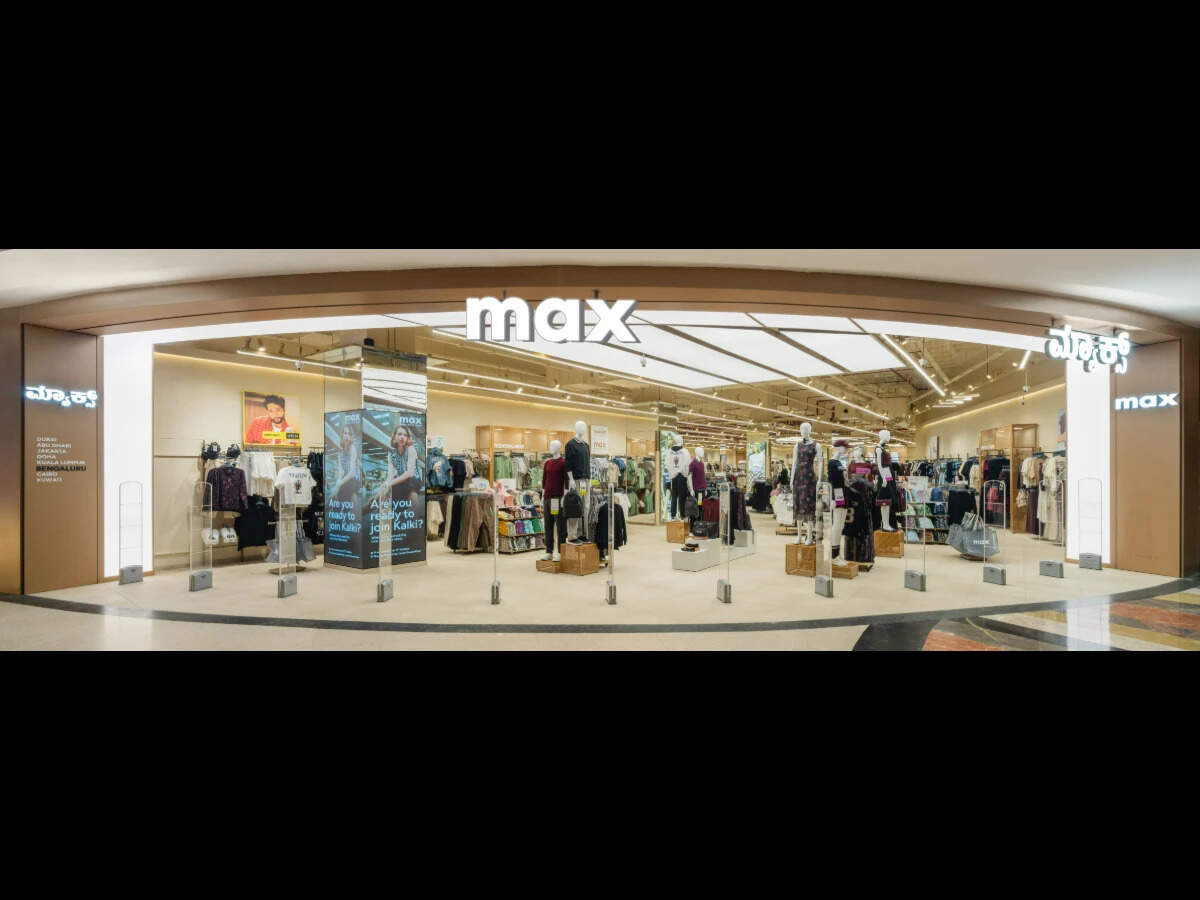
Chandna said the retailer’s definition of “value” has changed from simply offering cheaper products to balancing price, value and quality. At the same time, Max has upgraded its stores, revamped its assortment and moved from its traditional positioning as a family store to communicating with individual consumer cohorts.
The post-Covid consumer has been a major catalyst. More relaxed clothing and casualisation have changed what consumers wear, including at the workplace, forcing Max to overhaul its styling and product mix.
The company also launched Max Urban to target younger consumers as Gen Z emerged as a significant spending cohort. Today, its core customer is in the 25-35 age group, spanning Gen Z and millennials, while the business remains broadly spread across men, women and children.
“Consumer frequency is going up. Our basket size is also going up,” Chandna said, attributing the improvement to greater freshness and better store experience. Higher dwell time, he added, has also helped lift basket size.
Around 18 crore consumers visit Max stores annually, and its consumer base is growing at a healthy double-digit rate on a like-for-like basis. The average customer buys around 3.5-4 items per basket.
That gives Max another reason to keep expanding its physical footprint. The company plans to add 50-80 stores a year, with Chandna putting the foreseeable annual pace at 60-80 stores.
While stores remain the primary engine, Max’s online business has grown at a mid-20% rate over the past three-four years. Chandna said the business remains relatively small but is now significant, with consumers moving between online discovery and offline purchases in both directions.
“A consumer actually is ambivalent between online, offline,” he said, describing a pattern where consumers discover products on the website, Myntra or through influencers before buying in stores, or browse in stores and later order through the app.
Max expects online to reach a double-digit contribution in the next couple of years. It does not currently fulfill quick-commerce orders from its stores, although Chandna said the company is evaluating the opportunity and already has a successful collaboration with Myntra.