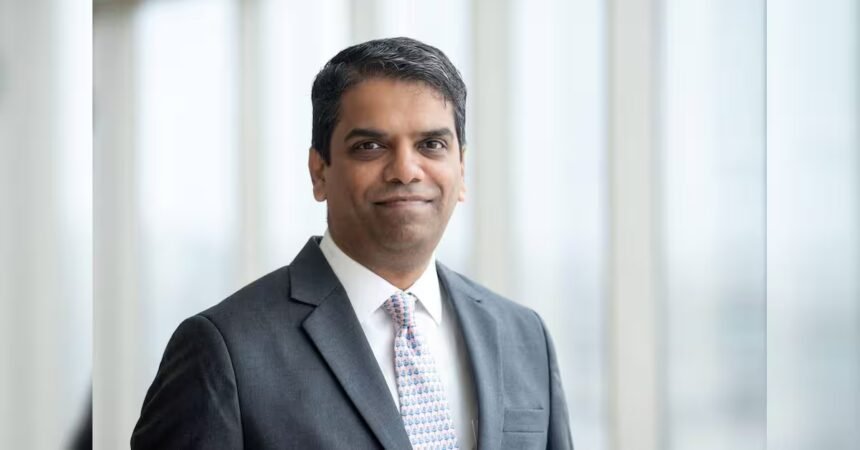
It has been two months since you became the CEO. What are your key focus areas currently?
The last couple of years have been very strong for us in terms of growth. Fund performance has always been the focus area and that remains so. From time to time, we keep looking at what new skill sets, knowledge sets and experiences we can add to our investment team to strengthen it. For instance, when we launched the SIF, we added talent with a long-short background.
Artificial intelligence (AI) is another area we are looking at. Someone who is AI-native and also brings domain expertise could be an added asset for us.
Overall, the plan is to sustain the growth momentum that we have built.
Which segments — active, passive, SIF or PMS — do you see driving the most growth going forward?
We look at the rate of change closely. Passives, for instance, have been growing very fast. The mutual fund industry has been growing at around 19 per cent, while passives have been growing at almost 27 per cent. This is one space where we have positioned ourselves quite well. Over the last two years, our passive assets under management have gone from around Rs 2,000 crore to almost Rs 20,000 crore.
We have launched a number of differentiated products on the passive side that have met with reasonable success. The idea is to launch the products and stay there. When the underlying theme gains traction, you benefit from it.
What are your plans for GIFT City and SIFs?
We have a couple of inbound funds in GIFT City and will soon launch an outward fund.
We are also coming up with a new SIF — Titanium Active Asset Allocator Long Short Fund. Again, this is a differentiated offering because it combines three asset classes — equity arbitrage, commodity arbitrage and fixed income — and aims to run a portfolio with relatively low volatility compared with similar products in the space. Together, these provide stability to the way the product performs. On top of that, we add a small portion of alpha-generating ideas, which we consider to be relatively low risk.
The market has not been very supportive for almost two years, resulting in a slowdown in areas such as new investor additions and SIP growth at the industry level. Is it a concern?
I disagree with the view that SIP momentum has not been strong. Think about it this way: there are two types of corrections. Price corrections are sharp, violent and tough to handle. But a time correction can be more painful because it gradually tires you through the whole process.
For the last two years, we have gone through a sideways market, with very little performance to talk about, particularly as far as large caps are concerned.
During this period, investors have shown remarkable resilience by continuing with their SIPs. In fact, the SIP pool has continued to increase. This is despite alternatives such as bank recurring deposits and fixed deposits being available.
You mentioned that the last few years have been very strong. What worked for you?
It has been a combination of several factors. First, our presence across product categories has helped us capture opportunities across different segments of the market. Second, our strong distribution connect has played an important role. And third, consistent fund performance has been a key driver of our growth.