
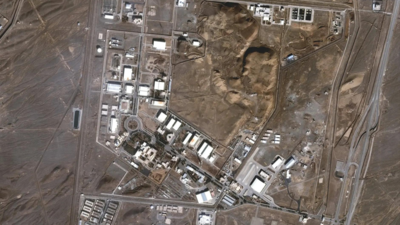
Israel on early Friday launched its “greatest military operations in history” against Iran, targeting nuclear sites and military camps. The ‘preemptive strikes’ by Israel resulted in killing of top military commanders and scientists in Khamenei-led Islamic Republic.Israeli PM Benjamin Netanyahu called it a strike at “the heart of Iran’s nuclear weaponisation program.” The move sparked global concern, especially as the United States and its intelligence community maintain that Iran’s nuclear program is not currently designed to build weapons, according to CNN.
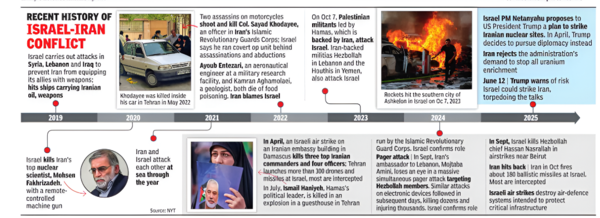
However, that didn’t stop Israel from acting on what it claims are growing signs of a serious threat in the Middle East region.Iran has repeatedly insisted that its nuclear efforts are only for peaceful purposes specifically for generating energy and powering its economy. Yet, the fact that Iran is enriching uranium to high levels and limiting international inspections has deepened global suspicion. Critics say Iran may be positioning itself to be just a step away from building a bomb if it decides to.
The roots of Iran’s nuclear program
Iran’s nuclear journey actually began with help from the United States in 1957, when the two countries were allies and the Shah ruled Iran. Back then, the focus was peaceful energy use. But everything changed after the 1979 Islamic Revolution, which replaced the monarchy with a theocratic regime. Uncle Sam withdrew its support, and tensions around Iran’s nuclear ambitions have grown ever since.Iran is a signatory of the UN’s Nuclear Non-Proliferation Treaty (NPT), under which it has pledged not to develop nuclear weapons. Still, concerns have persisted for decades.The key issue is uranium enrichment—something Iran says it needs for energy but which also brings it much closer to weapons capability.
What is uranium enrichment and why does it matter?
Uranium enrichment is a process that increases the concentration of uranium-235, the part of uranium that can be used for nuclear energy or weapons. Naturally, uranium is mostly made up of uranium-238, which isn’t useful for either. Only a small fraction—about 0.7%—is uranium-235, and that needs to be increased to be usable.To enrich uranium, it’s first converted into gas and then spun at high speeds in machines called centrifuges. Iran has thousands of these centrifuges, including highly advanced models. The more sophisticated the centrifuge, the faster the uranium can be enriched. For civilian use in nuclear power plants, uranium is typically enriched to around 3-5%. For a nuclear bomb, it needs to reach about 90%.
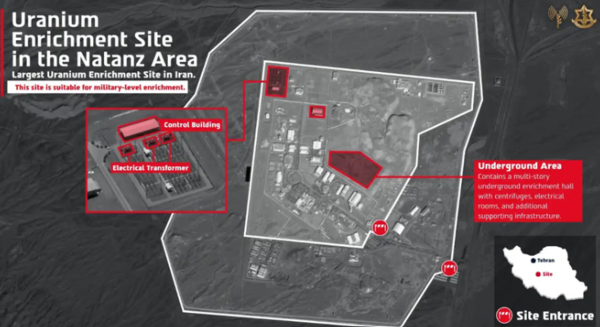
Iran has already enriched uranium to 60% purity. That’s not yet bomb-grade, but it’s alarmingly close. The UN’s nuclear watchdog, the International Atomic Energy Agency (IAEA), recently reported that Iran has stockpiled over 400 kilograms of uranium enriched to that level. According to nuclear experts, that’s enough to make up to nine bombs if further enriched.
From diplomacy to deadlock
Iran’s uranium enrichment has long been the center of global negotiations. In 2015, Iran reached a deal with six major world powers—including the US—to limit its nuclear program. In return, it received relief from international sanctions.Under the deal, Iran agreed to cap enrichment at 3.67%, reduce its stockpile, and limit the number of centrifuges it used.But in 2018, US President Donald Trump withdrew the US from the deal and reimposed sanctions, saying the agreement was flawed. Iran responded by breaking the deal’s limits—enriching more uranium, increasing purity levels, and using more advanced centrifuges. It also removed IAEA surveillance cameras from key facilities. Efforts by the Biden administration to revive the deal failed in 2022.In 2023, inspectors found particles enriched up to 83.7% purity at an Iranian facility—dangerously close to the 90% threshold for weapons. And in recent months, US intelligence has assessed that Iran’s “breakout time”—the time needed to produce enough weapons-grade material for a bomb—has shrunk to just one or two weeks.
Where Israel’s strike stands in the broader conflict?
Israel’s operation targeted what it believes are critical parts of Iran’s nuclear program. One of the most significant strikes was on the Natanz facility, a central site for uranium enrichment.
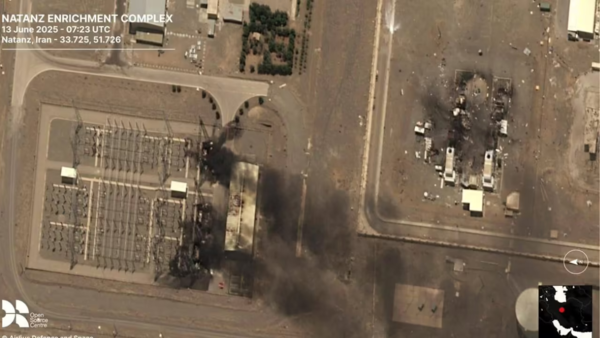
Natanz is located about 250 kilometers south of Tehran and is believed to be the hub for developing and assembling centrifuges. Videos and satellite images showed fire and destruction in the area after the Israeli strike.
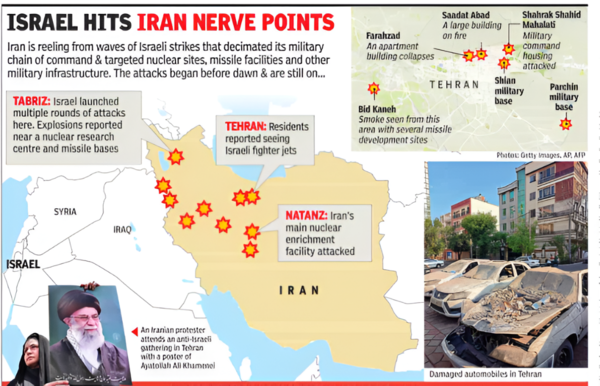
The IAEA said three other key nuclear sites—Fordow, Isfahan, and Bushehr—were not affected. However, Iranian media reported that six nuclear scientists were killed, which would mark a major blow to the human capital behind Iran’s nuclear progress.Iran has long prepared for the possibility of military strikes on its nuclear sites. Many facilities are buried deep underground or fortified in ways that make them hard to destroy completely. Military analysts say that while Israel may have disrupted Iran’s progress, it likely hasn’t ended the nuclear threat altogether.
Violation of non-proliferation obligation
The IAEA has now taken a stronger stance than in previous years. For the first time in nearly two decades, it passed a resolution declaring that Iran is in violation of its non-proliferation obligations. Iran, in turn, has promised to escalate its nuclear activity in response.In a public statement shared on social media, the Israeli military released a declassified assessment claiming Iran is dangerously close to building a bomb. It said Iran has decentralized its enrichment activities, hidden its centrifuges in underground sites, and continues to produce enriched uranium at a fast pace.
According to the Israeli Defence Forces, the world has tried diplomacy, but Israel now believes it has no choice but to act in self-defence.