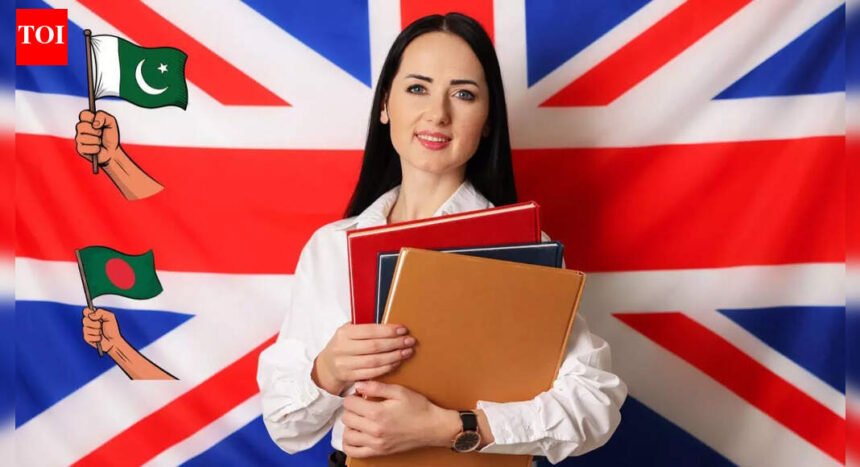

The irony is sharp. For years, British universities depended on international students to keep their books balanced and their campuses global. Now many of those same institutions are quietly shutting their doors to two of their biggest applicant pools. The sector insists this is about compliance, not discrimination, but the effect is unmistakable: students from Pakistan and Bangladesh are being blocked, deferred or dropped because universities fear breaching tougher Home Office rules.Here is the full breakdown.
What prompted the sudden restrictions?
Several UK universities have stopped accepting new applications from Pakistan and Bangladesh after tighter Home Office rules made it riskier to sponsor students from countries with high visa refusal rates.The trigger is the overhaul of the Basic Compliance Assessment, the framework universities must meet to retain their student sponsor licence. Under the updated rules, no more than 5 per cent of an institution’s sponsored visa applications can be refused. The previous limit was 10 per cent.Pakistan and Bangladesh now sit well above the new threshold. Their refusal rates — roughly 18 per cent for Pakistan and 22 per cent for Bangladesh in the year to September 2025 — put universities at risk of sanctions, including losing their ability to enrol international students altogether.For many mid-tier and lower-fee institutions, that is an existential threat.
Which universities have halted or paused recruitment?
- A growing list of institutions has already moved to protect their compliance status:
University of Chester has suspended recruitment from Pakistan until autumn 2026, citing an unexpected rise in visa refusals.- University of Wolverhampton is no longer taking undergraduate applicants from Pakistan and Bangladesh.
University of East London , Coventry, Sunderland and others have temporarily stopped recruitment from one or both countries.- University of Hertfordshire — under a Home Office-mandated action plan — has paused recruitment from both countries until 2026.
- Oxford Brookes has paused undergraduate recruitment from Pakistan and Bangladesh for its January 2026 intake.
- London Metropolitan University has stopped recruitment from Bangladesh entirely, saying the country accounted for 60 per cent of its visa refusals.
- BPP University has temporarily paused recruitment from Pakistan as a risk-mitigation measure.
Some institutions have reinstated certain programmes for the January intake, but most remain cautious.Why are refusal rates so high?Three major trends have converged:
1. Higher scrutiny from the Home Office
The government has tightened student-visa rules as part of a broader strategy to reduce net migration. Universities now face stricter monitoring of outcomes: refusal rates, enrolment follow-through, and student attendance.
2. Sharp rise in asylum claims
There has been a surge in asylum claims lodged by individuals who first entered the UK on a study or work visa. Ministers have warned universities that student routes must not become a “backdoor” to settlement.
3. Uneven quality of overseas recruitment
Some universities rely heavily on education agents to source students. Multiple insiders say poor vetting — particularly in high-volume markets — has led to a mix of strong applicants alongside others with weak documentation or questionable intentions.This combination has pushed refusal rates above the new threshold, putting institutions at risk of non-compliance.
How is this affecting students in Pakistan and Bangladesh?
For thousands of genuine applicants, the consequences are immediate and painful:
- Offers are being withdrawn late in the process
- Applications are being paused or left in limbo
- Some students have paid deposits they cannot recover
- Many who were preparing to travel in January or spring 2026 now have no clear pathway
Education consultants in the region say the decisions are “heartbreaking” for students who did everything correctly but are caught in the crossfire of institutional risk-management.They also argue that UK universities themselves created the incentives that led to aggressive agent recruitment, weak documentation and fraudulent applications — and are now punishing students for it.
Why are universities so worried?
The new rules are unforgiving. If a university breaches the 5 per cent refusal cap or other compliance metrics, it can lose its licence to sponsor international students for at least a year.A one-year loss could mean:
- Tens of millions in lost tuition revenue
- Layoffs and course closures
- An irreversible reputational hit
- Inability to recruit for key postgraduate programmes
Officials estimate that at least 22 universities would fail at least one compliance criterion if no corrective action is taken. Five of them could lose their sponsorship rights outright, cutting an estimated 12,000 international students from the system.For lower-fee universities, heavily dependent on international enrolments, even a brief suspension could be fatal.
What changes are universities making?
Institutions are now:
- Increasing deposit requirements
- Tightening financial documentation checks
- Re-evaluating all partnerships with overseas agents
- Diversifying recruitment to other markets
- Introducing stricter pre-CAS interviews
- Reducing exposure to any country with a high refusal risk
The result is a cautious and sometimes blunt response: cutting entire markets to protect compliance.
What does this mean for migration policy?
The UK government has made it clear that the new rules are intended to restore public confidence in the international student route. Ministers argue that genuine students remain welcome but institutions must take greater responsibility for screening applicants. At the same time, universities warn that the reforms will reshape the sector — reducing diversity, limiting access for students from developing countries, and pushing institutions toward more profitable markets such as China and the Gulf. The Home Office maintains that it “strongly values” international students but insists that only genuine applicants should come to the UK.
The bottom line
The freeze on recruitment from Pakistan and Bangladesh is not a political statement by universities. It is a defensive manoeuvre forced by tougher immigration rules, high refusal rates and the fear of losing the right to sponsor students altogether. But regardless of the intention, the impact is immediate: thousands of South Asian students now find their UK education plans derailed, delayed or dropped — not because of their merit, but because the system around them changed overnight.