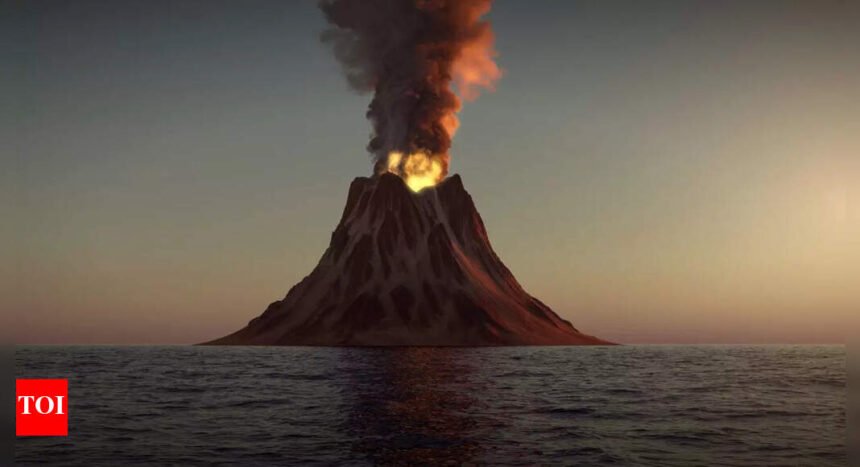
Submarine volcanoes, volcanic structures hidden beneath the ocean surface, play a vital role in shaping Earth’s geology and marine ecosystems. Formed through tectonic plate movements, rising magma, and deep mantle hotspots, these underwater volcanoes behave like their land-based counterparts but operate under immense pressure. As magma pushes through cracks in the seafloor, volcanic formations emerge, sometimes eventually building island chains above the water. Scientists estimate that nearly 70% of Earth’s volcanic activity occurs underwater, yet most eruptions remain undetected due to extreme depth and remoteness. Research published in Remote Sensing and the 2023 NHESS study on the Hunga Tonga–Hunga Haʻapai highlights how submarine volcanoes form, erupt, and affect the environment, from reshaping the seafloor to triggering tsunamis and altering ocean chemistry, demonstrating their significant influence on both local and global scales.
How underwater volcanoes form: Tectonic plates, magma and hotspots
Underwater volcanoes, or submarine volcanoes, form through the same processes that create volcanoes on land. Deep within the Earth, the upper mantle reaches temperatures hot enough to melt rock into magma. This molten material rises through cracks in the crust, and when this occurs beneath the ocean floor, it forms a submarine volcano. Scientists estimate that around 70% of the planet’s volcanic activity happens underwater, often undetected due to extreme depth and remoteness. According to a study published in Remote Sensing, underwater volcanoes form when hot mantle rises and melts rock, creating seamounts along spreading ridges or farther out in chains.Most submarine volcanoes form along mid-ocean ridges, enormous mountain chains where two tectonic plates pull apart. As the plates separate, magma rises to fill the gap, cools, and forms new oceanic crust, a process known as seafloor spreading, which continuously reshapes the ocean bed. Volcanoes also form at subduction zones, where one plate sinks beneath another, melts, and generates magma that can build volcanic arcs and islands. Additionally, mantle hotspots, rising plumes of heat beneath moving plates, create volcanic chains, like Hawaii, which began as underwater volcanoes before emerging above sea level.
Source: Wikipedia
What triggers underwater volcanic eruptions beneath the ocean
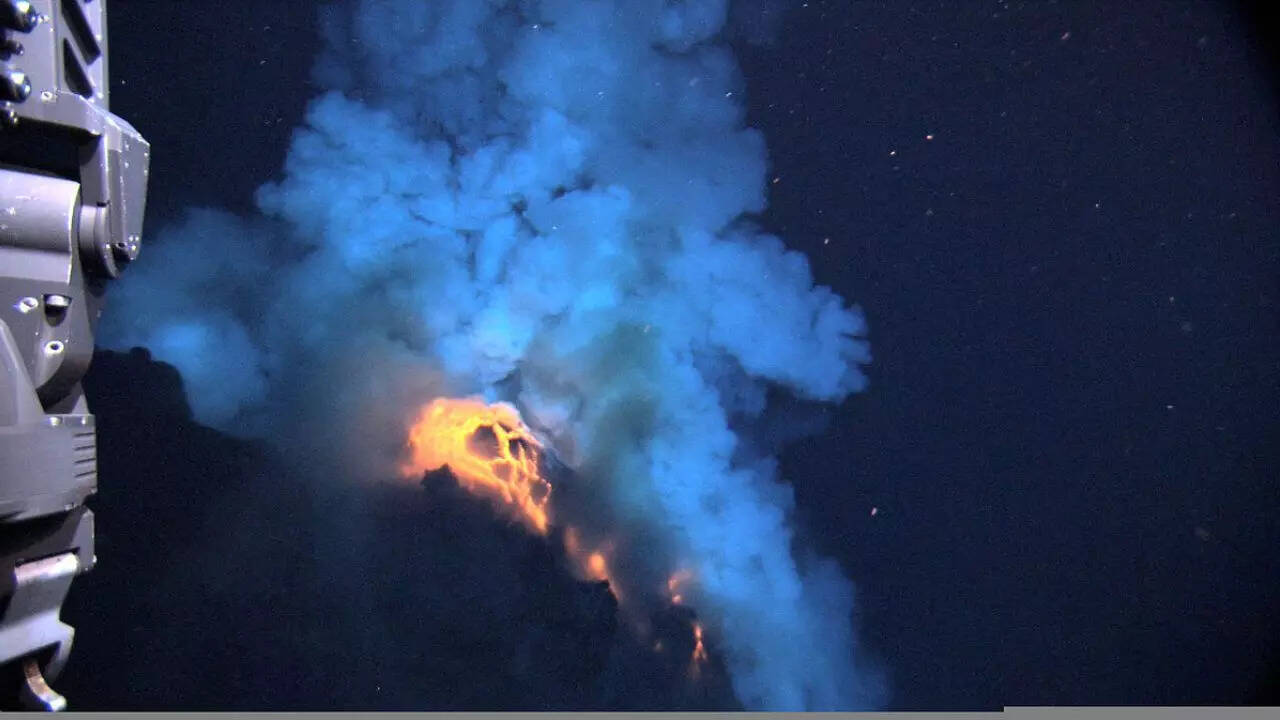
Underwater eruptions occur when magma breaks through the seafloor and meets seawater, with water depth largely determining their behaviour. In the deep ocean, immense pressure limits explosiveness. Magma cools rapidly, forming rounded pillow lava, while trapped volcanic gases are unable to expand, making eruptions slow, quiet, and mostly detectable only by sensors.In shallow waters, reactions become far more violent. Magma can heat seawater instantly, converting it into expanding steam and triggering phreatomagmatic explosions. These blasts can eject ash, fracture rock, and send pressure waves through the ocean.Because most submarine eruptions happen far below the surface, scientists rely on seismic activity, hydrophones, unusual water temperatures, and satellite monitoring. Floating pumice drifting to shore can also indicate recent underwater volcanic activity.
Effects of submarine volcano eruptions: Tsunamis, steam and ash
The consequences of underwater eruptions vary greatly depending on depth and magnitude. Deep-sea eruptions primarily affect the local seafloor, heating surrounding water and altering chemical conditions, but rarely disturbing the surface. However, shallow eruptions can be destructive. Explosive submarine eruptions may displace massive amounts of water, triggering tsunamis capable of travelling hundreds or thousands of kilometres. According to a study published in the journal Natural Hazards and Earth System Sciences in 2023, the explosive eruption of Hunga Tonga–Hunga Haʻapai produced a complex tsunami with multiple wave components and far‑reaching effects. The 2022 Tonga eruption showed this clearly when a submarine volcano generated a tsunami that impacted multiple countries across the Pacific.Shallow eruptions can also expel volcanic ash into the atmosphere. Ash clouds may drift long distances, degrading air quality and posing a serious health risk when inhaled, particularly for vulnerable populations. Ashfall can contaminate drinking water, smother crops, interrupt electricity networks, and disrupt aviation by damaging aircraft engines and reducing visibility. In addition, volcanic gases such as sulphur dioxide may react in the atmosphere to form acid rain, affecting land, freshwater sources, and marine ecosystems.Underwater eruptions also disrupt ocean environments. Sudden temperature shifts, oxygen depletion, and chemical changes can harm marine species, especially around sensitive ecosystems such as hydrothermal vents. Some habitats may take decades to recover, while others may change permanently.
Why underwater volcanoes are hard to study: Limited access and data gaps
Studying submarine volcanoes is difficult because they lie kilometres beneath the ocean, where extreme pressure, darkness, and freezing temperatures prevent direct observation. Unlike land volcanoes, they cannot be easily monitored or sampled.Scientists rely on advanced tools such as sonar to map the seafloor, ROVs to capture footage and collect samples, and seismometers to detect magma movement. Hydrophones record underwater eruption sounds, while satellites track changes like water discolouration, temperature shifts, or floating debris. However, these methods cannot fully replace real-time observation.Many eruptions occur in remote, unmonitored areas and are only studied later through rock samples, sediment analysis, and chemical changes in seawater. High costs and technical risks also slow research. Despite limitations, ocean exploration continues to expand knowledge of how submarine volcanoes shape the planet and marine ecosystems.Also Read: NASA spacecraft record interstellar comet 3I/ATLAS reaching peak brightness near the Sun