
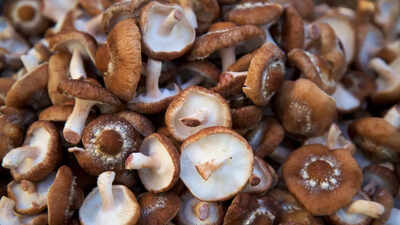
As global computing demands surge, scientists are searching for new materials that can deliver energy-efficient processing without relying on rare-earth minerals or complex semiconductor manufacturing. Neuromorphic computing, designed to mimic the neural architecture of the human brain, has emerged as one of the most promising frontiers in artificial intelligence and low-power data processing. However, the materials currently used to build neuromorphic hardware are resource-intensive and environmentally costly. In response, researchers are exploring unconventional biological systems that exhibit neuron-like electrical behaviour. Among these, fungi are gaining attention for their adaptive electrical signalling and remarkable resilience, particularly species such as Lentinula edodes, commonly known as shiitake mushrooms.A recent study published in PLOS One demonstrated that shiitake mushrooms could act as sustainable memristors, tiny components that replicate the memory and learning functions of neural synapses. By cultivating shiitake mycelium and interfacing it with electrodes, scientists observed repeatable electrical responses similar to those seen in biological neurons. The findings suggest that fungal-based bioelectronics may one day serve as low-cost, biodegradable alternatives to traditional computing materials, offering a path toward scalable and environmentally friendly artificial intelligence systems.
From silicon to mycelium: The evolution of neuromorphic computing
Neuromorphic computing aims to replicate how the human brain processes and stores information using minimal energy. Traditional semiconductors, while efficient, struggle to achieve the adaptability and self-learning behaviour of neural networks. Memristors, electronic components capable of retaining memory through changes in electrical resistance, address this gap by emulating synaptic function. Yet, manufacturing these devices conventionally requires rare metals and high-energy fabrication techniques.The PLOS One research highlights that fungi may provide a sustainable alternative. The mycelial network of shiitake mushrooms exhibits natural electrical activity, with signals propagating through its hyphae in ways comparable to neuronal firing. When grown under controlled conditions, this living material forms conductive pathways that respond dynamically to electrical input. The resulting fungal memristors achieved accuracies of up to 90 per cent at frequencies as high as 5.85 kHz, demonstrating reliable signal retention and adaptability. This biological mechanism, once optimised, could reduce the environmental footprint associated with semiconductor-based neuromorphic devices while maintaining comparable functionality.
Electrical intelligence in nature: How fungi process information
Fungi have long been recognised for their complex underground networks that allow colonies to share nutrients and respond to environmental stimuli. These same networks also exhibit electrical potential fluctuations that resemble neuron-like activity. Shiitake mycelium, in particular, produces measurable voltage changes that can be trained and reprogrammed in response to electrical input. This process effectively mirrors how synapses strengthen or weaken with repeated stimulation, a core principle of learning in neural systems.In laboratory tests, dehydrated shiitake samples preserved their memristive behaviour, maintaining electrical memory after rehydration. This durability distinguishes fungal materials from delicate neural organoids, which require costly and unstable bioreactors. The biological composition of fungi allows them to operate across variable environmental conditions while consuming minimal energy. Such characteristics open possibilities for lightweight, self-sustaining bioelectronic systems that could adapt to new data in real time. As a result, fungal computing represents not just a novelty but a potential paradigm shift in how data processing materials are designed and maintained.
Resilient design: Radiation resistance and potential for space technology
Beyond their electrical capabilities, fungi possess an extraordinary ability to withstand radiation and harsh environments. Shiitake mushrooms, in particular, contain compounds such as lentinan, a polysaccharide that enhances structural integrity and provides antioxidant protection against oxidative stress. This biochemical resilience enables the fungi to survive exposure to ionising radiation, making them strong candidates for aerospace electronics, where traditional materials often degrade.Experiments with fungal species in space have shown that certain mycelial structures adapt morphologically under radiation, potentially through the production of melanin and other protective compounds. The PLOS One study extends this understanding by demonstrating that shiitake-based memristors remain functional even after dehydration and environmental stress, suggesting they could retain computational properties in extreme conditions. In theory, these biological systems could be cultivated directly in extraterrestrial habitats, reducing the need to transport fragile semiconductor materials from Earth. For long-duration missions, such as self-repairing, biodegradable computing systems could serve as sustainable components for embedded sensors and autonomous robotics.
Sustainable technology: The promise of biodegradable electronics
The environmental cost of conventional computing is becoming increasingly difficult to ignore. Semiconductor fabrication requires significant energy, chemical solvents, and non-renewable minerals, all contributing to pollution and electronic waste. In contrast, fungal electronics are derived from renewable biomass, can be grown using low-cost nutrient media, and naturally degrade after use. The cultivation process described in the PLOS One research relied on organic materials such as farro seed and wheat germ, supporting the notion that complex computing components can be produced without industrial facilities or toxic by-products.Moreover, fungal-based materials align with the broader movement toward green electronics. Their lightweight, flexible, and energy-efficient properties offer advantages not only in computing but also in wearable technology, environmental sensing, and medical implants. Because fungal systems operate through bioelectrical signalling rather than conventional circuitry, they may integrate more seamlessly with living tissues, paving the way for hybrid biological–digital interfaces. As neuromorphic engineering evolves, such biologically inspired designs could help close the gap between artificial and organic intelligence.
The next frontier for intelligent machines
Although fungal computing remains in its experimental stages, its potential implications are substantial. The PLOS One study marks one of the first demonstrations that edible mushrooms can perform neuromorphic functions with measurable precision. By bridging biology and electronics, the research points toward a future where data processing devices can grow, adapt, and even repair themselves using natural processes. Continued refinement of cultivation techniques, preservation methods, and miniaturisation could make fungal memristors viable for large-scale integration into computing systems.The idea that intelligence can emerge from organic matter is no longer confined to science fiction. With each new study, the possibility of building living, energy-efficient computers becomes more tangible. Shiitake mushrooms, once valued primarily for their nutritional properties, may soon find themselves at the core of a new era in sustainable and adaptive technology.Also Read | Scientists make eggs from skin cells, making a step ahead in reproductive medicine