
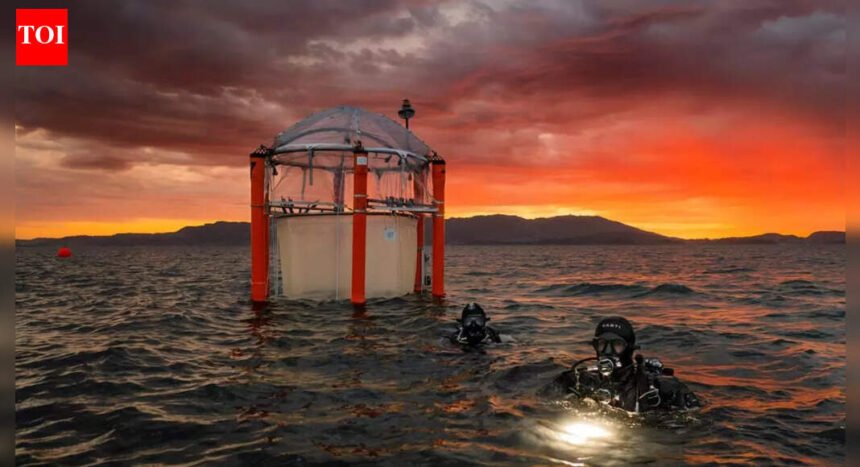
Scientists, governments, and global climate organisations are showing growing interest in ocean carbon removal as a way to slow global warming. Because the oceans naturally absorb a large share of atmospheric carbon dioxide, some experts believe that enhancing this process could help lower global CO₂ levels. However, a new European Union report urges caution, warning that ocean-based carbon removal technologies are still unproven. The findings highlight that there is not yet enough evidence to confirm whether these methods are effective, measurable or environmentally safe. According to researchers, deploying them too quickly could damage marine ecosystems and create new climate risks. The report stresses that stronger scientific data and strict monitoring standards are needed before these techniques can be used at scale.
Understanding how ocean carbon removal technologies capture CO2
As countries race to meet their net-zero targets, ocean-based carbon removal has emerged as a promising but highly controversial option. Marine carbon dioxide removal technologies use biological, chemical, or physical approaches to extract CO₂ from seawater. These include methods such as increasing plankton or seaweed growth, restoring coastal habitats like mangroves, or using engineered systems to draw carbon directly from the upper ocean.Once the carbon is captured, it may be transferred to the deep ocean, buried in seabed sediments, stored within rock formations or incorporated into long-lasting materials. In theory, these processes could remove large volumes of CO₂. In practice, scientists say the technology is still too young to predict its real impact.
New EU report raises serious safety and reliability concerns
A major report commissioned by the European Marine Board has warned that current evidence on ocean carbon removal is insufficient. Led by senior researcher Helene Muri from the Norwegian Institute for Air Research and the Norwegian University of Science and Technology, the expert group reviewed all existing scientific data and concluded that the world is not yet ready to rely on marine carbon removal.The findings, released during the COP30 climate summit in Brazil, are included in a comprehensive publication titled Monitoring, Reporting and Verification for Marine Carbon Dioxide Removal. The report highlights that no ocean-based technique currently has robust, long-term proof of effectiveness, nor do researchers fully understand the potential ecological consequences. Deploying these methods at scale, the authors warn, could cause more harm than good.
Global warming is accelerating faster than predicted
The urgency behind exploring new carbon removal technologies stems from rapid warming across the planet. According to the latest climate assessments, global temperatures are rising much faster than countries anticipated when they signed the Paris Agreement. Speaking at COP30, UN Secretary-General António Guterres warned that exceeding the critical 1.5°C threshold is now highly likely within the next decade.Despite the pessimistic outlook, scientists insist that staying within this limit remains technically achievable. But the window for action is tightening quickly. The EU report stresses that reducing emissions remains the most effective and immediate strategy. Carbon removal, including marine methods, should be considered supplementary rather than a replacement.
Why the world still needs carbon removal solutions
Even with ambitious climate policies, certain activities cannot be fully decarbonised with current technology. Aviation, heavy industry and long-distance shipping remain particularly challenging sectors. Since these emissions cannot be eliminated entirely, countries aiming for net zero by 2050 must remove equivalent amounts of CO₂ from the atmosphere.According to the Intergovernmental Panel on Climate Change (IPCC), achieving global climate targets may require the removal of 5–10 gigatonnes of CO₂ every year by the end of the century. For comparison, global emissions in 2024 exceeded four times that amount. Land-based carbon removal techniques, such as large-scale forest restoration and direct air capture facilities like the one in Iceland, already exist. But ocean-based solutions are still in their infancy.
How marine carbon removal methods work
One major method involves adding nutrients to seawater to stimulate plankton growth. As these microscopic organisms absorb CO₂ and eventually die, some of the carbon sinks into the deep ocean. Another growing area of interest is large-scale seaweed farming, where seaweed absorbs carbon as it grows and can be sunk or processed to retain that carbon. Coastal ecosystem restoration also plays a role. Mangroves, salt marshes and seagrass meadows are natural carbon sinks, storing large amounts of carbon in their soils and vegetation. Restoring these habitats can enhance natural storage while protecting coastal biodiversity.More technologically advanced methods include machinery that extracts CO₂ from seawater, allowing the ocean to absorb more from the atmosphere. Yet scientists caution that understanding the long-term fate of this stored carbon remains extremely difficult.
Huge challenges in monitoring and verifying carbon storage
The largest obstacle facing marine carbon removal is a lack of reliable measurement. Researchers still cannot accurately quantify how much carbon these methods remove, how long it stays stored, or whether it simply returns to the atmosphere later.This uncertainty creates major risks for carbon credit markets. Some companies are already planning to sell ocean carbon removal as a commercial service, but the EU report warns that without scientifically verified data, these carbon credits could be misleading or environmentally damaging. The report calls for strict, transparent standards for monitoring, reporting and verification. Without them, marine carbon removal could undermine global climate efforts rather than support them.

