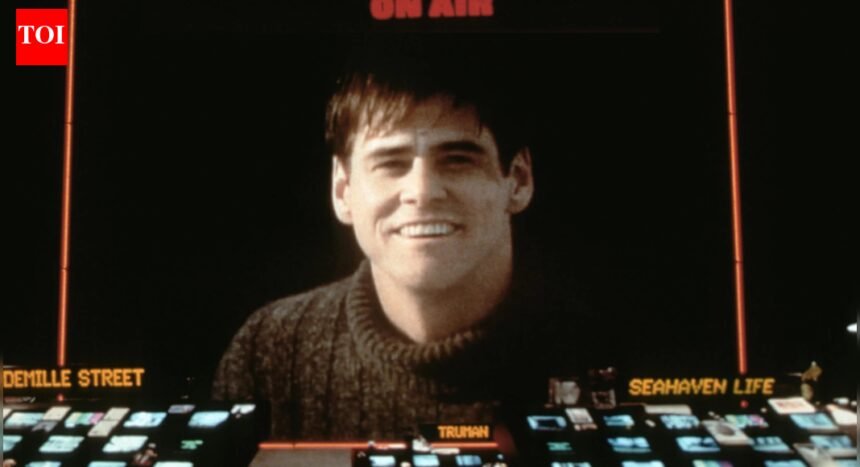
For years, the idea that we might be living inside a giant cosmic computer has been one of the internet’s favourite existential spirals. A kind of upgraded Truman Show: you go to work, you pay rent, you load the dishwasher, and somewhere, a higher civilisation checks your stats and tweaks the difficulty settings. Even serious thinkers indulged it. Neil deGrasse Tyson once argued that if advanced species can simulate whole universes, then statistically, we’re probably inside one of the simulations, not the lone “base reality.” But a team of physicists at the University of British Columbia Okanagan has just published research that tries to shut that door, not philosophically, but mathematically. Their study, released in the Journal of Holography Applications in Physics, argues that the universe cannot be a simulation, not because it’s unlikely, but because computation itself is incapable of producing the kind of reality we inhabit. The claim rests on a deceptively simple point: some features of the universe cannot be generated by any algorithm, and simulations are algorithms. That’s the centre of their case. Before we get into the new paper, it’s worth remembering why the simulation hypothesis caught fire so easily. The version that stuck with people was intuitive: if future civilisations can build realistic universes, and if those universes can themselves generate simulations, then simulations quickly outnumber originals. The “real” universe becomes rare; simulated ones become common. Combined with the rise of hyper-real videogames, AI models, VR and generalised techno-anxiety, the idea gained momentum. Suddenly, wondering aloud whether we’re digital characters felt less like sci-fi roleplay and more like a late-night thought experiment. The UBC team argues we’ve been framing the question incorrectly. Here’s what the scientists actually showed. Dr Mir Faizal, who led the study, writes: “We have demonstrated that it is impossible to describe all aspects of physical reality using a computational theory of quantum gravity.” In plain language: if you try to capture the entire universe in a rulebook that a computer could follow, something fundamental will always be left out. This is where Gödel’s incompleteness theorem enters the conversation, and it’s worth slowing down, Gödel proved that in any system built on logical rules, there exist true statements that those rules can never prove. These truths aren’t inaccessible because they’re mysterious; they’re inaccessible because they exceed what the rule system can express. They live outside its boundaries. What the UBC team argues is that physics has this property too. That reality contains elements that cannot be derived, or even fully represented, by any closed, rule-based system. If the deep structure of the universe produces truths that no algorithm can reach, then a simulation, which is nothing but algorithm, cannot generate those aspects of reality. And if it cannot generate them, it cannot generate us. Dr Faizal summarises this directly: “It requires non-algorithmic understanding, which by definition is beyond algorithmic computation and therefore cannot be simulated.” His collaborator Dr Lawrence M. Krauss adds another important layer: “The fundamental laws of physics cannot be contained within space and time, because they generate them.” In other words: if space and time themselves emerge from something deeper, then no computer operating inside space and time can reproduce that deeper source.So what does “non-algorithmic” actually mean? It isn’t mystical or supernatural. It refers to parts of reality that cannot be generated by any finite set of rules, no matter how elaborate. Think of a truth that is undeniably real yet cannot be reached through any sequence of logical steps, something you can recognise, but no procedural checklist could ever construct. Gödel showed such truths exist in mathematics. The UBC team argues they exist in physics too. And once you accept that, the simulation hypothesis faces a wall: you cannot produce non-rule-based truths from rule-based machinery.This is the leap that sets the study apart from earlier critiques. It stops arguing about processing power entirely. For years, the assumption was simple: if we can’t simulate a universe today, perhaps a future civilisation could. Build a big enough machine, stack enough qubits, wait long enough, and eventually you get a world like ours.But this paper says the real barrier isn’t hardware. It’s logic.If the universe contains truths that no algorithm can ever reach, then no computer, alien, future, quantum, godlike, can build a self-consistent simulation of our world. Computation, even in its purest abstract form, is simply the wrong kind of machinery for producing a universe with the features ours has.To quote Faizal one last time, because it’s the line that matters:“Hence, this universe cannot be a simulation.” That doesn’t mean the philosophical questions evaporate. People may still wonder about higher intelligences, layered realities, or other metaphysical possibilities. But if the word “simulation” means a computable world generated by rules, then this study offers a direct rebuttal: reality contains elements computation cannot produce.