Last Updated:
Both the Trinamool Congress (TMC) and the Bharatiya Janata Party (BJP) have turned the ‘maach’ (fish) into a central campaign tool in Bengal



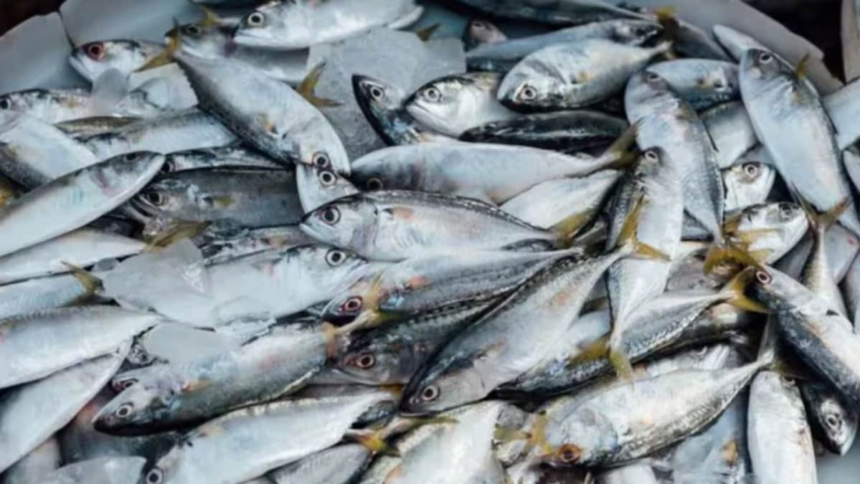
The elevation of fish to a top-tier political issue stems from a deep-seated anxiety regarding cultural imposition. Representational pic
As the 2026 West Bengal assembly elections approach, the political discourse has shifted from high-level policy to the very heart of the Bengali kitchen. In a state where fish is not merely food but a marker of cultural identity, both the Trinamool Congress (TMC) and the Bharatiya Janata Party (BJP) have turned the “maach” (fish) into a central campaign tool. What was once a symbol of domesticity is now at the forefront of a high-stakes battle over regional pride and religious autonomy.
Why has fish become the ultimate campaign weapon in 2026?
The elevation of fish to a top-tier political issue stems from a deep-seated anxiety regarding cultural imposition. Chief Minister Mamata Banerjee has framed the election as a choice between local Bengali traditions and what she terms “Delhi-led vegetarianism“. By highlighting restrictions on meat and fish in neighbouring states like Bihar and Assam, the TMC has built a narrative that a BJP victory would lead to a state-mandated dietary shift.
Conversely, Prime Minister Narendra Modi has weaponised the economics of the industry. During a high-profile rally in Haldia on April 9, the Prime Minister criticised the state government for its failure to achieve self-sufficiency in fish production. He pointed out the irony that despite Bengal’s vast coastline and river networks, the state remains heavily dependent on fish imports from states like Andhra Pradesh and, increasingly, Gujarat.
How is the BJP countering the ‘vegetarian party’ label?
To neutralise the TMC’s “outsider” narrative, the BJP has adopted a strategy of visual and culinary alignment. In a moment that went viral across social media, Dr Sharadwat Mukherjee, the BJP candidate for Bidhannagar, was seen campaigning in local markets while carrying a massive Katla fish. This “fish-in-hand” diplomacy is a direct attempt to signal that the saffron camp has no intention of imposing dietary restrictions.
State BJP President Samik Bhattacharya has reinforced this by citing Swami Vivekananda’s historical acceptance of non-vegetarian food, asserting that the party respects the unique culinary heritage of Bengal. The party is essentially running a two-track campaign: promising a “Blue Revolution” to modernise Bengal’s fisheries while simultaneously participating in public fish-eating events to prove their “Bengali-ness.”
What are the economic realities behind the rhetoric?
While the rhetoric is focused on identity, the underlying facts point to a significant economic crisis in the sector. West Bengal remains India’s second-largest fish producer, yet it faces a persistent deficit. The supply of the prized Hilsa (Ilish) from the Padma river in Bangladesh has become increasingly volatile due to geopolitical tensions, leading to soaring prices that hit the middle-class pocketbook.
The BJP has promised to implement advanced pisciculture techniques and seafood processing hubs to reduce this dependency. Meanwhile, the TMC highlights its “Jal Dharo Jal Bharo” water conservation scheme as proof of its commitment to the local fishing community. For the average voter, the debate is less about production statistics and more about the “plate test”—whether their favourite fish remains affordable and whether their right to eat it remains unquestioned.
Is food identity the decisive factor for 2026?
As polling dates draw near, the “fish-eye” focus of the campaign suggests that identity politics in Bengal has moved beyond language and religion into the realm of the plate. The TMC’s “maach-bhaat” (fish and rice) slogan is a powerful emotive tool designed to consolidate the 90 per cent non-vegetarian vote bank.
If the BJP can successfully convince voters that it will protect their dietary choices while fixing the supply chain, it may finally break through the “insider-outsider” barrier. However, if the fear of cultural homogenisation persists, the humble fish may well be the hook that keeps the TMC in power. In 2026, the route to the state secretariat, Nabanna, clearly runs through the bustling fish markets of Bengal.
April 10, 2026, 20:05 IST
Read More