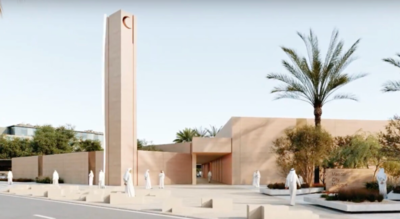
A new milestone in sustainable architecture is underway in the UAE, where Masdar City, a sustainable urban development around 30 kilometers (18.6 miles) from downtown Abu Dhabi, is constructing the world’s first mosque designed to operate on net-zero energy. Set for completion in October, the project integrates advanced sustainability technologies with heritage-inspired design, redefining how sacred spaces are built.
A first-of-its-kind net-zero energy mosque in Masdar City
Masdar City, globally known for its sustainable urban planning, has commenced construction on what will become the world’s first net-zero energy mosque—a religious structure that will produce as much energy as it consumes annually. This project marks the second mosque to be built in the city, following the Estidama Mosque, which was completed in 2023 and earned LEED Platinum certification for its use of solar panels, greywater recycling, and a sunken courtyard for passive temperature regulation.
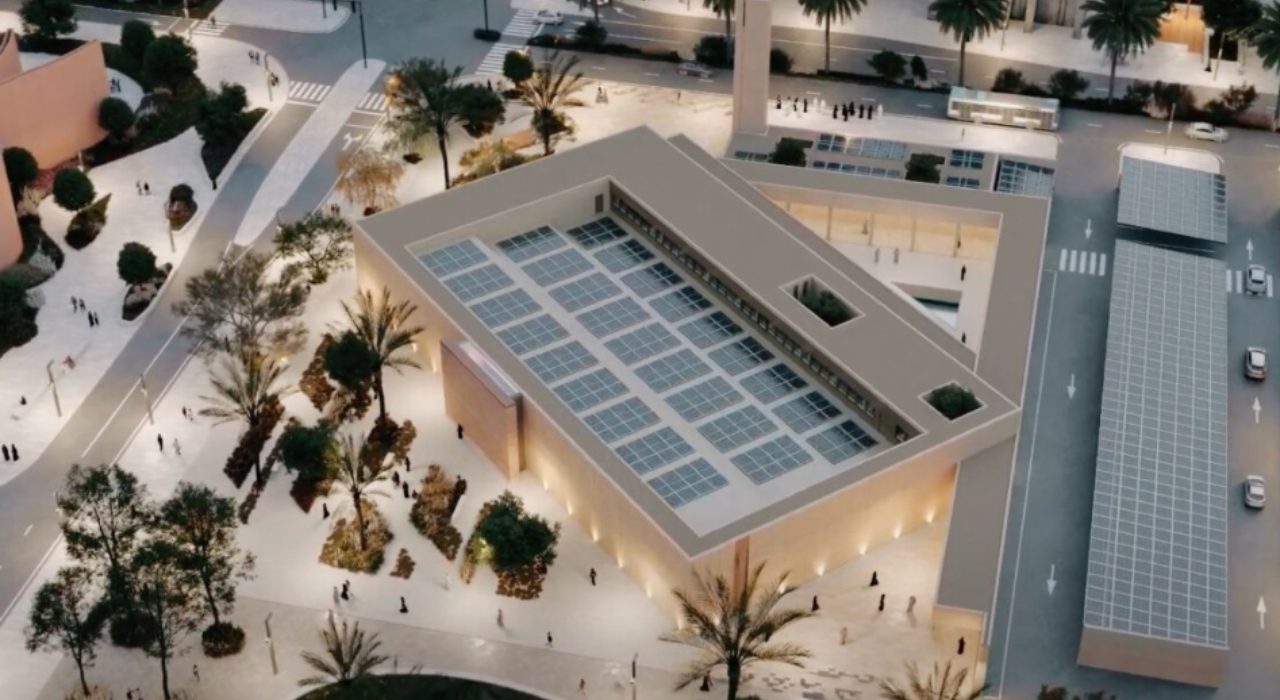
The mosque’s thick mud walls help keep it cool naturally, cutting down on energy needed for air conditioning./ Image: ARUP
The new mosque spans a circular footprint of 1,595 square meters and is designed to accommodate more than 1,300 worshippers. The structure’s compact geometry helps reduce both thermal load and internal water usage. Smart sensors embedded in the building will monitor occupancy, temperature, and humidity, allowing fans and air conditioning systems to be activated only when necessary, significantly cutting energy and water consumption. A key goal of the project is to meet LEED Zero Carbon certification standards. Developed by Aldar and designed by Arup, the mosque will be powered entirely by on-site solar panels and include an array of passive design strategies that together are expected to reduce energy use by 35% and water consumption by 55% compared to conventional benchmarks.
Design solutions around faith based constraints
A unique challenge in designing the mosque was ensuring that the qibla wall—which must face Mecca as required by Islamic law—did not compromise the building’s energy efficiency. Unlike other structures that can be oriented for optimal solar performance, the mosque’s fixed directional alignment required innovative solutions. Paul Simmonite, Associate Director at Arup, explained:“Often we would want to optimize orientation to minimize the impact of the solar system and heat gain.” To address this limitation, the design team implemented strategies including angled windows, canopies, and high-performance wall insulation. One major intervention was the reinforcement of the western façade, which receives the most solar exposure. As Amna Al Zaabi, Senior Analyst on Masdar City’s design management team, noted:“The entire western facade which is the one that experiences the highest number of solar gains is actually double fortified.” Passive cooling systems are central to the design. The interior spaces—including prayer halls, ablution areas, and circulation zones—have been carefully shaped to capture and direct soft breezes, reducing reliance on mechanical systems. A tiered rooftop window system aids natural ventilation while enhancing daylight access, further decreasing energy demands.
Local materials and low-carbon innovations
In homage to the region’s architectural history, the mosque’s design draws direct inspiration from the Al Bidyah Mosque, the UAE’s oldest standing mosque built in the 15th century. This influence is reflected in the use of rammed earth walls, a rare technique in modern public buildings but historically significant in the UAE. The qibla wall, spanning 60 meters, is constructed using soil sourced from a nearby quarry. The choice of materials offers both symbolic and functional benefits: it allows the mosque to blend naturally with the desert environment while leveraging thermal mass to regulate indoor temperatures. Beyond the walls, Arup’s material strategy includes the use of low-emission concrete, sustainable prayer carpets, and energy-efficient lighting, targeting reductions in both embodied and operational emissions. The mosque also sets a regional first in material innovation through its use of hydrogen-based steel rebar, supplied in partnership with EMSTEEL. This makes it the first development in the MENA region to incorporate this low-carbon steel alternative. Initial assessments suggest this could cut structural emissions by up to 95%.
A broader shift in Mosque architecture
The mosque reflects a broader shift in how sacred spaces are being designed in the UAE. There’s a clear move toward modern, minimalist architecture that prioritizes sustainability without losing religious meaning.Despite its contemporary features, the mosque keeps core Islamic elements like the mihrab and minarets at the heart of its design.This change is also made possible by more flexible building regulations, giving architects room to merge tradition with innovation. The result is a worship space that’s modern, efficient, and still deeply connected to its purpose.