
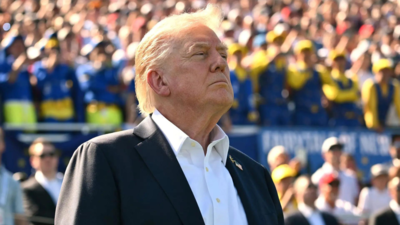
A bitter standoff in Washington over health care and spending has pushed the United States to the brink of its first government shutdown in seven years. Unless lawmakers strike a deal before midnight, large parts of the federal government will be forced to suspend operations, with hundreds of thousands of workers either furloughed or asked to work without pay.At the centre of the dispute is a temporary funding measure passed by the House to keep the government running for seven weeks. Senate Democrats are refusing to support it unless Republicans agree to extend expiring health care subsidies. President Donald Trump and his party insist the bill should remain “clean,” free of policy concessions.The clash reflects deeper divisions between the two parties. Democrats see the deadline as leverage to protect Affordable Care Act tax credits and curb Medicaid cuts, while Republicans argue Democrats are holding the public hostage for political gain. Both sides are under pressure from their bases not to give ground, making compromise unlikely.Meetings at the White House brought no breakthrough. Trump, flanked by congressional leaders, refused to shift on health care, while Democrats warned they would not back down. Vice President JD Vance declared the country was “headed into a shutdown” due to Democratic “obstruction.” Agencies have already begun preparing contingency plans, with the White House warning this time layoffs could be permanent in some programmes.
Here are 10 key questions and answers about the US government shutdown:
1. Why would the government shut down?
The US fiscal year begins on 1 October, and Congress is required to approve funding for government agencies before that date. If no agreement is reached, non-essential services must cease until new appropriations are signed into law. Lawmakers often rely on short-term funding bills known as continuing resolutions, but partisan divisions this year have prevented consensus. Democrats are demanding an extension of Affordable Care Act subsidies as part of the deal, while Republicans insist such issues should be considered separately. Without a resolution, agencies are legally obligated to halt many functions, triggering a shutdown.
2. What is the impact of a shutdown?
Shutdowns disrupt federal operations and place hundreds of thousands of workers on furlough without pay. Essential services—such as military duties, Social Security, air traffic control, and border protection—continue, though employees may work without pay until Congress authorises back wages. Past shutdowns have closed national parks, halted food inspections, slowed immigration hearings, and delayed tax refunds. Economically, short shutdowns cause limited damage, but prolonged ones can ripple through markets. The 2018–19 shutdown cost an estimated $3 billion in lost GDP, a reminder of how the consequences accumulate if the impasse drags on.
3. What functions are considered “essential”?
Each department decides which services must remain operational. In previous shutdowns, border security, in-hospital medical care, air traffic control, and power grid maintenance were deemed essential. Mandatory spending programmes, like Social Security and Medicare, also continue. Activities funded through user fees—such as immigration services paid for by visa fees—generally remain functional. However, services like national park operations, regulatory inspections, and grant processing often stop. While basic safety and security functions persist, everyday services for the public—from passport applications to environmental checks—are usually suspended.
4. What services are directly affected?
Shutdowns halt a wide array of government functions. For example, during the 2013 shutdown, the Environmental Protection Agency suspended inspections at hazardous waste and drinking water facilities, and the Food and Drug Administration delayed nearly 900 inspections. National parks were closed to millions of visitors, resulting in half a billion dollars in lost tourism revenue. In 2018–19, airport security was strained as Transportation Security Administration agents worked unpaid, with some refusing to report for duty. Museums and public services close, while federal grants, loans, and permits often stall, directly affecting citizens and businesses alike.
5. Is the government preparing for this shutdown?
Yes. Agencies have already issued contingency plans, detailing which functions will continue and which staff will be furloughed. The Office of Management and Budget coordinates these plans and has warned that this shutdown may involve permanent layoffs in programmes not aligned with the administration’s priorities. This marks a sharper stance compared to past shutdowns, where most furloughs were temporary. Workers’ unions have condemned the approach, accusing the White House of using employees as pawns in political battles. Federal employees are bracing for disruption, while agencies prepare to operate with skeletal staff.
6. How would federal employees be affected?
Federal workers face some of the harshest impacts. In the 2013 shutdown, around 850,000 non-postal workers were furloughed. During the 2018–19 partial shutdown, nearly 800,000 were either sent home or worked without pay. Employees are usually guaranteed back pay once the shutdown ends, but contractors often are not, leaving them with permanent financial losses. Prolonged shutdowns cause workers to miss paychecks, straining household budgets and morale. Some employees, like those in law enforcement or air travel, must still report for duty, enduring weeks without income until Congress passes funding legislation.
7. What happens to mandatory programmes?
Mandatory spending, such as Social Security, Medicare, and Medicaid, continues during a shutdown because it does not rely on annual appropriations. However, support services tied to these programmes may be disrupted. For instance, new enrolments, address changes, and benefit verification can face delays due to furloughed staff. Similarly, programmes like food stamps (SNAP) may be temporarily funded, but if a shutdown lasts beyond a month, benefit distribution could be jeopardised. Thus, while core benefits remain, the administrative functions surrounding them often falter, leaving citizens facing delays and uncertainty.
8. How many shutdowns have there been?
Since 1976, the US has experienced 20 funding lapses, though not all caused full shutdowns. Before 1980, agencies generally continued operations despite gaps. Since then, four major shutdowns have occurred, including two in 1995–96 under President Bill Clinton, a 16-day closure in 2013 over Affordable Care Act funding, and the record-breaking 35-day shutdown in 2018–19 during Trump’s first term. Shorter shutdowns have often happened over weekends with minimal effect. These episodes have become increasingly political, reflecting deepening partisan divides over spending priorities.
9. Why is this year’s threat more serious?
This time, the White House has instructed agencies not only to prepare for furloughs but also for permanent layoffs in some programmes. Such a move would magnify the disruption, as entire functions could be eliminated rather than temporarily paused. The uncertainty comes against a backdrop of ongoing federal workforce cuts and political battles over health care and spending. Unions have denounced the approach, warning that federal employees are being sacrificed for political leverage. Analysts caution that a prolonged shutdown could shake public trust and further weaken government capacity.
10. How might this affect the broader economy?
A shutdown’s economic toll depends on its duration. A few days may barely register, but weeks of disruption can slow growth. The 2018–19 shutdown delayed billions in tax refunds, disrupted federal lending, and weakened consumer confidence. With global markets already unsettled by trade tensions, another prolonged shutdown could amplify uncertainty. Government workers missing paychecks also reduce household spending, dampening local economies. Business groups warn that repeated shutdowns erode faith in Washington’s ability to govern, raising risks for both investors and ordinary citizens alike.