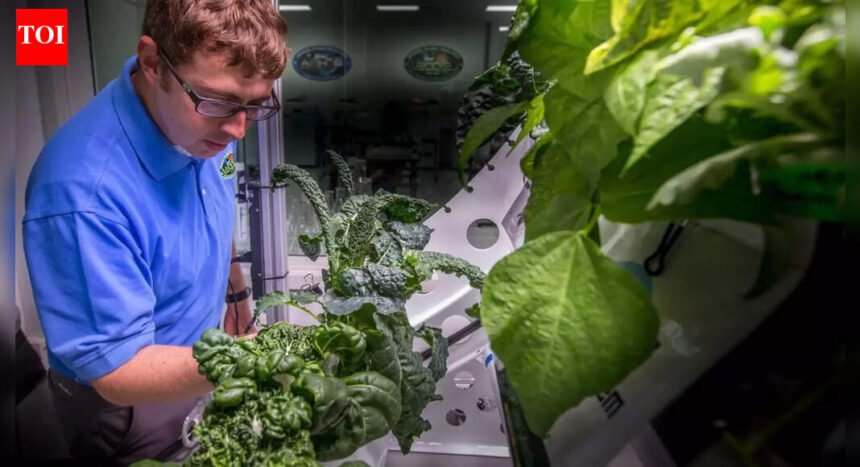

The quest to grow food beyond Earth has fascinated scientists and space agencies for decades, not only as a matter of survival, but as a critical strategy to sustain life on long-duration missions and future interplanetary exploration. Although many imagine leafy greens in space, the first vegetable ever to take root in microgravity was the humble potato. Back in the 1990s, NASA and the University of Wisconsin–Madison began collaborating to test whether tubers could grow in space, laying the groundwork for future crop experiments and pioneering techniques in controlled environment agriculture. That early step, modest yet profound, eventually led to later breakthroughs such as lettuce grown aboard the International Space Station (ISS). Understanding how these experiments evolved offers a rich history of space agriculture, from engineering challenges to botanical triumphs and insights into plant adaptation in novel environments.
How potatoes became the first space-grown vegetable
In 1995, researchers at the University of Wisconsin–Madison successfully sent potato leaf cuttings into space aboard the Space Shuttle via a system called Astroculture. The experiment involved growing white potatoes (Solanum tuberosum) in a closed‑loop, controlled environment to assess whether tubers could form without Earth’s gravity. According to a NASA technical report, the potato slices were supported in a gravel-like medium and watered through a specially calibrated system. After about 16 days, tiny tubers, each around 1.5 cm in diameter, had developed, demonstrating that tuberous plants could produce edible biomass even in microgravity.This experiment, sometimes referred to as the origin of “Quantum Tubers,” represented more than a novelty. It showed that potatoes, a calorie-dense and carbohydrate-rich crop, could be grown in a space‑based life support system. The underlying research from Wisconsin emphasised that tuber productivity under controlled conditions was promising enough to meet a significant portion of future astronauts’ energy needs.
How astronauts ate the first space-grown vegetable
Two decades after the potato trial, space farming entered a new phase with NASA’s Veggie plant system aboard the ISS. The first truly space-grown vegetable to be both harvested and consumed was red romaine lettuce (Lactuca sativa, cultivar ‘Outredgeous’). This took place during the Veg‑01 mission, with astronauts planting, tending and eventually eating the leaves in microgravity. The lettuce was grown in “plant pillows” filled with clay-based substrate and fertiliser, illuminated by red, blue and green LED lights tailored for plant growth.This leap from research to edible crop was a turning point: for the first time, astronauts could supplement their freeze-dried rations with fresh greens. The Lettuce experiment underscored that leafy vegetables, long considered delicate, could thrive in space under the right conditions.
How space-grown vegetables were proven safe
Following the lettuce harvest, scientists carried out detailed microbial and nutritional assessments to confirm food safety. Leaf and root samples returned to Earth were analysed for pathogens such as E. coli and Salmonella. The studies found that the space-grown lettuce was free of harmful contaminants, making it safe for consumption. Nutritionally, it proved comparable to Earth-grown lettuce, even showing some elevated levels of certain minerals. This validation reinforced confidence in the Veggie system’s ability to produce safe, edible crops in orbit, a critical milestone for sustainable mission planning.
How scientists adapted crops to space conditions
Cultivating plants in microgravity required ingenious solutions to overcome issues that would never arise on Earth. In the absence of gravity, water does not behave predictably: it floats, clings, and resists settling into soil. To address this, the early Astroculture system used arcillite (a porous clay-like medium) and a porous tube for consistent hydration. Later, in the Veggie system on ISS, scientists adopted wicking mechanisms to deliver water evenly without flooding the plant roots.On the biological side, plants had to adapt to unfamiliar cues. Roots could not rely on “down” for guidance, and shoots orientated themselves in response to LED light rather than sunlight. Researchers observed that potatoes and lettuce growing in space adjusted their energy allocation, toggling between growth and stress response to survive in microgravity. These adaptations emphasise how flexible plant physiology can be when faced with novel environments.
The lasting impact of space-grown vegetables
The 1995 potato experiment is more than a historic footnote: it paved the way for later developments in space agriculture. By showing that a calorie-rich, storage-friendly crop could grow in microgravity, scientists validated the potential of bioregenerative life support systems. Later, the success with lettuce demonstrated that astronauts can genuinely supplement their diet with fresh green food.Today, researchers on the ISS are testing a wider variety of crops including radishes, mizuna mustard and dwarf tomatoes, using evolved systems from Veggie and more advanced growth habitats. These experiments aim not just to produce food, but to build self‑sustaining systems that recycle air and water while generating psychological benefits for crews. The history of space botany, from humble tubers to leafy greens, reflects a long-term vision: someday, crewed missions to Mars and beyond may rely on space-grown vegetables for nutrition and survival.Also Read | Delhi’s night glow captured from space: ISS shares breathtaking night views of world’s brightest cities