
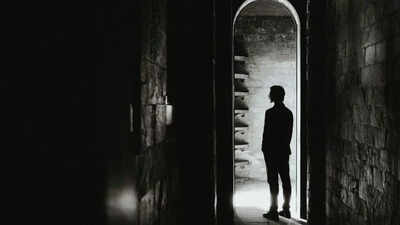
Humans rely heavily on vision to interpret the world, yet our ability to perceive shapes and movement in near-darkness raises complex neurological questions. Even when light levels fall below what the eye can detect clearly, the brain continues to construct visual impressions, drawing upon memory, prediction, and subtle residual light signals. This process highlights how perception is not merely a function of the eyes, but a dynamic collaboration between sensory input and cortical interpretation. Recent research exploring brain activity under different lighting conditions reveals that the visual cortex and prefrontal regions remain active even in low-illuminance environments, suggesting that the brain can maintain perceptual coherence without complete visual data.
How light fuels the brain: Visual signals shape neural activity
Vision begins when light enters the eye and strikes the retina, where photoreceptors convert it into electrical impulses. These signals travel through the optic nerve to the brain’s visual cortex, which translates them into coherent images. However, under low-light or near-dark conditions, this pathway operates with diminished input, forcing the brain to compensate. Studies in cognitive neuroscience have shown that when external light fades, the visual cortex relies increasingly on predictive coding, a process in which the brain anticipates sensory information based on context and prior experience.
Research published in Building and Environment demonstrates that light intensity directly influences brain stability and comfort. Using electroencephalogram (EEG) analysis, scientists found that moderate illuminance levels around 500 lux produce optimal brain activity, particularly in the prefrontal lobe and β frequency band, which are associated with focus and alertness. In contrast, both dim and overly bright environments caused neural fatigue and reduced cognitive efficiency. This finding supports the idea that while the visual system can adapt to varying light levels, it functions most efficiently when illumination supports rather than strains neural synchrony.
When the mind fills in the blanks: The role of memory and imagination
When visibility declines, the brain’s reliance on internal data increases. Functional MRI studies have revealed that the same neural networks activated during visual perception also respond when imagining or recalling visual scenes. This overlap explains why individuals often “see” familiar outlines or movements in darkness. The hippocampus, responsible for memory consolidation, and the prefrontal cortex, which manages expectation and prediction, work together to fill in visual gaps. This mechanism, while evolutionarily advantageous for navigation and threat detection, can also give rise to illusions or misperceptions in dim settings.In essence, the brain does not passively register what the eyes send; it actively constructs what it expects to see. This capacity for perceptual completion enables humans to orient themselves even when sensory data are incomplete. Studies in neuropsychology refer to this as top-down processing, a framework where cognition shapes perception. In the absence of light, this process becomes dominant, with the brain effectively using stored visual models to simulate environmental awareness.
How our eyes adjust to darkness
Although complete darkness is rare in natural environments, even minimal light exposure can significantly affect visual performance. The human retina contains two types of photoreceptors: rods, which are highly sensitive to dim light, and cones, which function best in brightness and colour differentiation. In darkness, rod cells become the primary agents of vision, increasing their sensitivity through a process known as dark adaptation. This adaptation can take up to 30 minutes, during which rhodopsin, a light-sensitive pigment, regenerates, enhancing the ability to detect faint light sources.Neurophysiological data indicate that while rod cells provide the raw sensory input, higher-order visual areas interpret this limited data by amplifying patterns and contrast. Studies in visual neuroscience have shown that even a few photons can trigger neural firing, allowing the brain to form approximate spatial representations. This explains why individuals can perceive vague outlines or motion in near-total darkness, especially when peripheral vision is engaged. Peripheral vision, rich in rod cells, excels in detecting movement and contrast, which is why looking slightly away from an object in low light often makes it more visible.
How the brain predicts light in the absence of vision
In environments devoid of light, the brain’s internal model of the surroundings takes precedence. This phenomenon aligns with predictive processing theory, which suggests that perception results from a balance between incoming sensory signals and prior expectations. When visual input decreases, predictive signals dominate, helping the individual maintain spatial awareness and continuity. This cognitive framework is particularly evident in individuals who navigate dark spaces regularly, such as miners, astronomers, or military personnel, whose neural pathways adapt through repeated exposure.Neuroscientists have found that the prefrontal and parietal cortices collaborate to maintain a virtual map of the environment. These regions synthesise auditory cues, tactile input, and proprioceptive awareness to compensate for missing visual data. The resulting mental representation allows people to move confidently even when actual visual feedback is minimal. This capacity illustrates how the brain operates as a multisensory predictive system rather than a passive receiver of light-based information.
Why lighting affects how we think
Light not only influences perception but also affects mood, circadian rhythm, and cognitive stability. The Building and Environment study reported that brain activity patterns at moderate light levels corresponded with optimal comfort and mental performance. EEG readings revealed that too little or too much light disrupted neural oscillations, particularly in β and δ frequency bands, which are vital for attention and cognitive control. These results highlight that the brain’s processing of light extends beyond vision, shaping emotional regulation and mental alertness.Understanding how the brain functions in low-light conditions also has practical implications. Poor illumination in workplaces or schools can strain the visual system, leading to fatigue and reduced productivity. Conversely, controlled lighting that mimics natural brightness supports circadian alignment and enhances cognitive endurance. Research into adaptive lighting technologies, informed by neural feedback, aims to design environments that sustain healthy brain function even in visually challenging contexts.
The mind’s vision in darkness
Our ability to perceive in darkness is less about vision itself and more about cognition. The brain’s interplay between residual sensory input, memory, and imagination allows humans to remain perceptually active even when deprived of visual stimuli. Far from being idle, the brain in darkness continues to predict, reconstruct, and interpret, transforming absence of light into a cognitive experience. This synthesis of physiology and perception underscores how seeing in the dark is not merely a function of the eyes, but a testament to the brain’s adaptive intelligence.Also Read | Mushroom-powered computers? Scientists are making it happen; know how