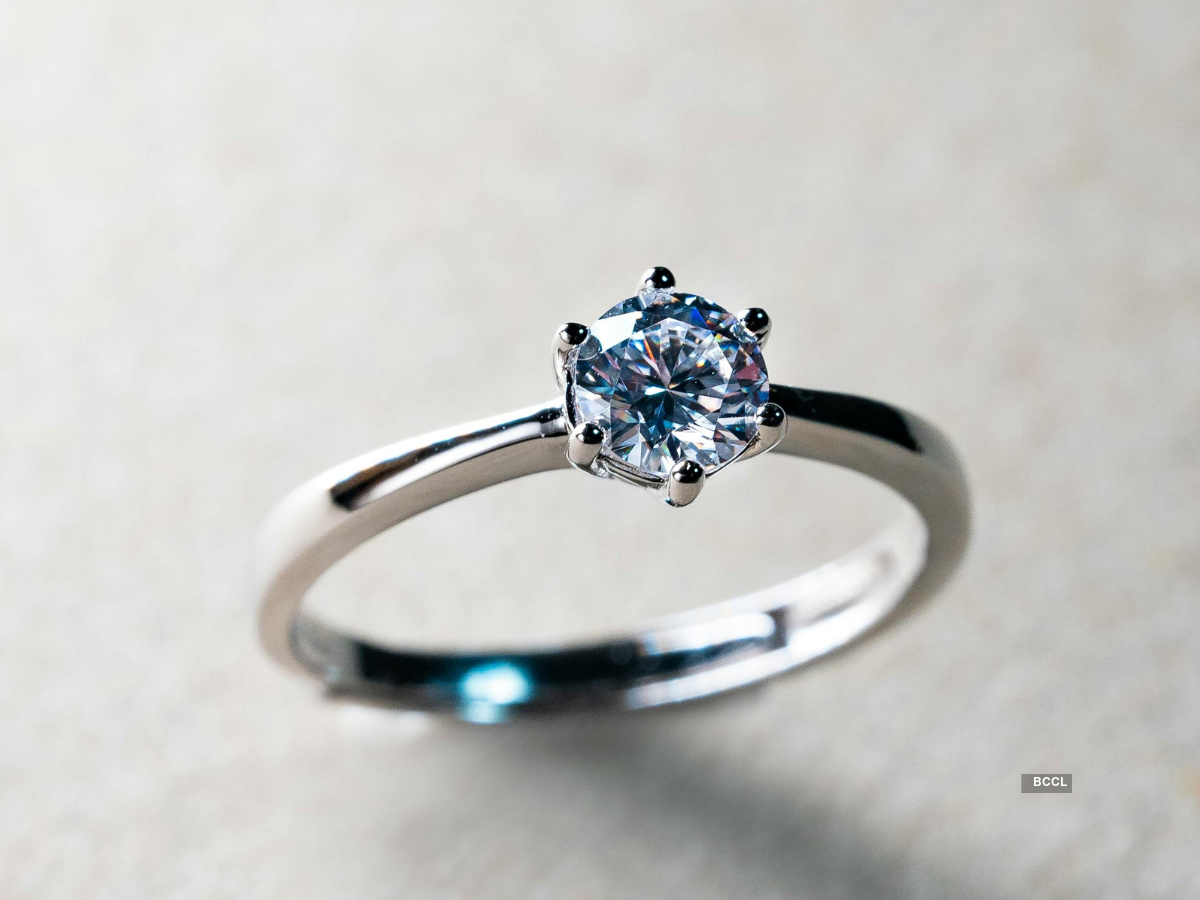
Solitaires have gained traction among Indians aged 28-40 years, with sales increasing about a quarter after prices fell 30% year-on-year, according to industry executives.
A 1-carat engagement ring that cost ₹7-8 lakh in the previous financial year is now priced at ₹5-5.5 lakh, said Neil Sonawala, managing director, Zen Diamond India. Lower-ticket stones, priced around ₹2 lakh, are also seeing higher offtake as elevated gold prices prompt buyers to opt for diamond-heavy designs that require less of the precious metal, he said.
“We have witnessed a 25-35% year-on-year increase in solitaire demand in the current fiscal. This growth has been primarily driven by improved affordability following global price corrections, along with a stronger consumer shift toward investment-led purchases,” Sonawala said.
India’s diamond market is pegged at ₹80,000-90,000 crore, according to industry executives.
Prices of natural diamonds have seen a sharp decline amid slowdown in exports due to the high tariffs imposed by US President Donald Trump. China, the second major buyer of Indian cut and polished diamonds, has also lowered its offtake.
Rajiv Popley, managing director of Mumbai-based Popley & Sons, said, “Since the gold content is much less in diamond-studded jewellery, the young aspirational generation is opting for solitaires for engagements and anniversaries. Millennials form the majority of buyers. They are buying solitaires worth ₹2 lakh, which are cheaper than 20 gm gold rings or chain. The surging gold prices have given a boost to the offtake of solitaires.”
Zen Diamond India is witnessing a sharp increase in aspirational buyers, with nearly 35-40% growth in first-time purchasers, particularly within the 28-40 age group. “While engagements remain the primary purchase driver, nearly 30% of solitaire purchases are now self-purchases or milestone-driven,” said Sonawala.
Jewellers said that correction in diamond prices had significantly lowered entry barriers and expanded the consumer base.
“Younger audience wants jewellery that reflects individuality, simplicity and meaning over traditional opulence. Customers today are actively seeking accessible yet premium alternatives, and that has accelerated the traction for categories like 9-carat and 14-carat gold, as well as lightweight natural diamond jewellery,” said Atul Sinha, chief operating officer, CaratLane. “The recent BIS (Bureau of Indian Standards) hallmark certification for 9-carat has further strengthened confidence in these offerings, and since hallmarking began, we’ve seen close to a 200% surge in monthly 9-carat sales, reflecting how quickly consumers are embracing these newer caratages.”
High gold prices have dented gold jewellery demand but studded jewellery is witnessing an uptick, India Ratings & Research said in a report released on Tuesday.
“Reshaping consumer behaviour to accept record-high gold prices as the new normal, along with realigning the product mix by increasing the proportion of studded jewellery, lower-purity (9-carat, 14-carat and 18-carat) gold jewellery, light and ultra-light pieces for the mass segment to accelerate inventory turns, will aid jewellers in navigating industry challenges over the near to medium term,” said Preeti Kumaran, senior analyst, India Ratings & Research.