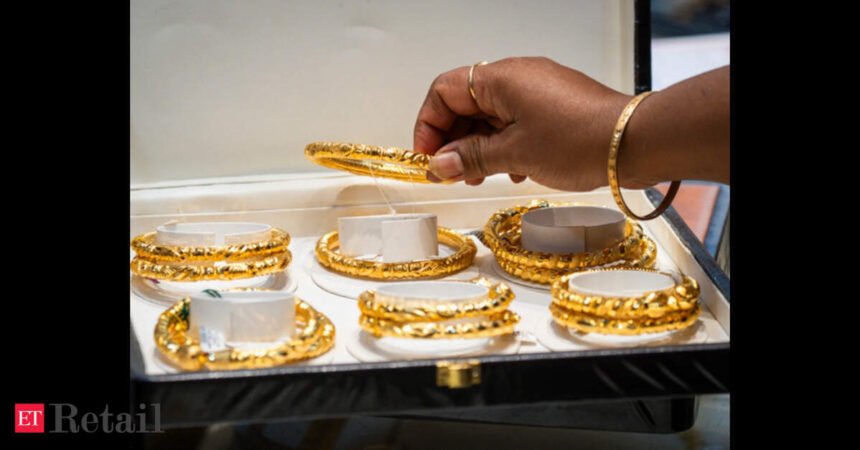
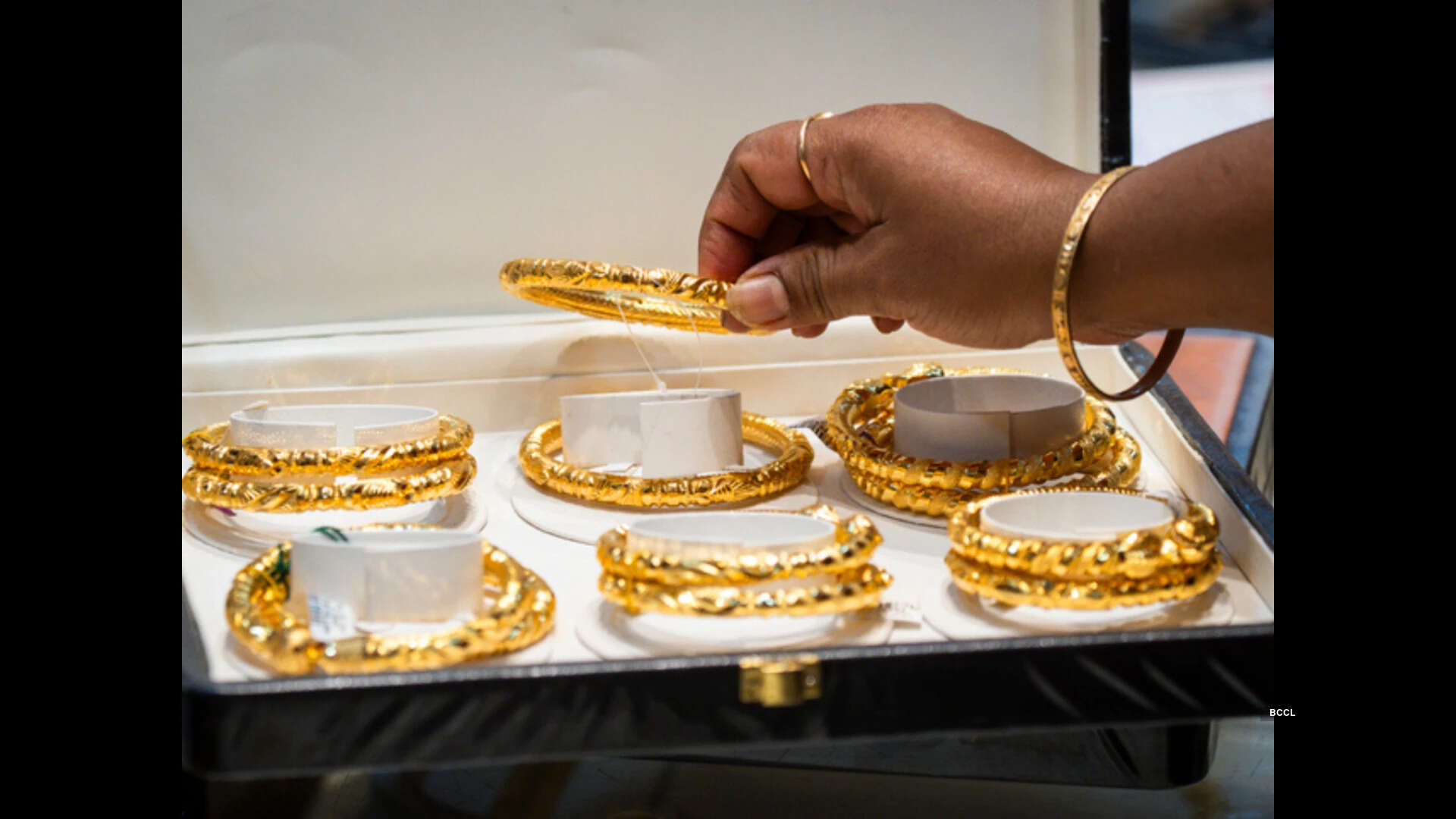
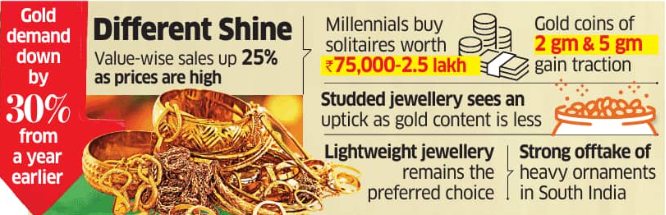
Gold demand during Akshaya Tritiya fell about 30% by volume this year as prices, up nearly 60% from a year ago, discouraged big purchases, jewellers said.
Buyers stuck to budgets, opting for lighter jewellery, small coins and exchange deals. Millennials mostly preferred solitaires in the ₹75,000-2.5 lakh range.
Value-wise, the demand is up by 20-25% as per reports trickling in from across the country, said Prithviraj Kothari, president of India Bullion & Jewellers Association (IBJA). “High price of gold has resulted in a drop in demand,” he said.
IBJA expects an offtake of 10.5 tonnes of gold this Akshaya Tritiya that started on Sunday morning and ends on Monday morning. About 15 tonnes were sold during last year’s festival.
People buy gold on Akshaya Tritiya as it is considered one of the most auspicious days in the Hindu calendar to welcome prosperity, wealth and good fortune. “While there is some degree of caution, particularly at higher price points, customers are balancing this by opting for lighter, more accessible designs,” said Saumen Bhaumik, managing director of omnichannel jewellery brand CaratLane. “At the same time, demand from high-intent buyers remains strong, especially for design-led and solitaire jewellery.”
On Sunday, gold was priced at ₹1,51,650 per 10 gm. With 3% GST, it was ₹1,56,244.
Tie-ups with Qcomm platforms
At these levels, consumers mostly bought 2 gm and 5 gm coins.
CaratLane, a subsidiary of Titan Company, expects double-digit growth this Akshaya Tritiya, Bhaumik said.
“With the Muhurat spanning two days this year, we expect demand momentum to remain resilient through the night,” said Ramesh Kalyanaraman, executive director at Kalyan Jewellers.
The Kerala-based jewellery retailer has tied up with quick commerce platforms such as Swiggy Instamart to enable convenience-led and last-minute purchases of jewellery, he noted.
Pune-headquartered PNG Jewellers expects growth to exceed its initial 2025% estimate and reach over 35%. “The relative stability in gold prices over the past few days has given buyers greater confidence to make planned purchases,” said Saurabh Gadgil, chairman of PNG Jewellers.
Gold prices have stayed in the ₹1.51-1.53 lakh range in recent days, with no major swings.
Consumers are also shifting to exchange-led buying, upgrading old jewellery or making smaller purchases. Retailers said 40-50% of sales came from old gold exchanges.
Also, studded jewellery saw high interest as it uses less gold.
“Customers who would earlier buy a 1012 gram gold necklace are now gravitating toward a 5-6 gram diamond-studded piece at a comparable price point,” said Neil Sonawala, managing director of Zen Diamond India.
“The volatility from West Asian tensions has, if anything, reinforced the perception that gold and diamond jewellery are durable stores of value,” he said.
Zen Diamond is a Turkish diamond jewellery brand that entered India in 2024.
South India leads
Demand remained strongest in South India, accounting for about 40% of national sales, followed by the West (25%), East (20%) and North (10%).
Lightweight jewellery is more popular in western and northern markets, while southern buyers still prefer heavier pieces, though lighter designs are gaining traction.