Last Updated:
The SIR has emerged as the biggest flashpoint of Bengal election. More than 90 lakh names have been deleted, bringing the total electorate down from 7.66 crore to 6.75 crore.




The BJP has expanded significantly since 2019 and 2021, positioning itself as the main alternative to TMC.
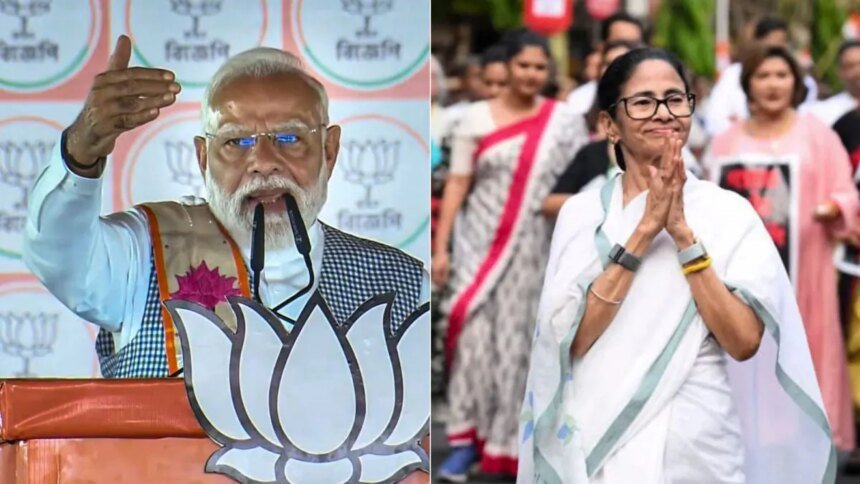
West Bengal Election 2026: With only a few hours left for the second phase of polling for the West Bengal election to end, the focus has now shifted to whether Trinamool Congress (TMC) will continue to cling onto power or the BJP will finally break into Mamata Banerjee’s stronghold to form the government.
The BJP’s campaign was spearheaded by Prime Minister Narendra Modi and Union Home Minister Amit Shah, with several party chief ministers also campaigning extensively, as the party seeks to form its first government in West Bengal. On the other hand, Mamata Banerjee led the TMC’s poll campaign while its local leadership and cadres hit the streets to secure another term.
Here is a breakdown of the make-or-break factors shaping the 2026 West Bengal verdict:
1. SIR And Infiltration
The Special Intensive Revision (SIR) of electoral rolls has emerged as the biggest flashpoint of this election. More than 90 lakh names have been deleted, bringing the total electorate down from 7.66 crore to 6.75 crore.
The TMC has alleged that the exercise is a “conspiracy to disenfranchise” its supporters. The BJP, however, has doubled down on its infiltration narrative, arguing that the revision is a necessary clean-up drive to remove illegal migrants and “bogus voters,” particularly in border districts.
2. Women Vote: ‘She-Shakti Power’
Women have long been the bedrock of the TMC’s support, bolstered by welfare schemes such as Lakshmir Bhandar. However, the BJP has stepped up its outreach to this crucial segment through its “Matri Shakti” campaign, promising enhanced safety and parity in access to central welfare benefits. The women’s vote has proven decisive in several elections, including in Maharashtra and Bihar, where BJP-led governments rolled out cash transfer schemes in the run-up to assembly polls.
The BJP has also sought to portray the TMC as “anti-women,” pointing to the opposition’s united stance against a delimitation-linked implementation of women’s reservation in Parliament.
3. Consolidation Vs Split of Minority Votes
Representing nearly 30% of the electorate, the minority vote is the TMC’s most vital shield. However, the emergence of the ISF and a more vocal Left and Congress presence in districts like Murshidabad and Malda suggests a potential fracture. If even a small percentage of this block shifts away from the TMC, several seats in the South 24 Parganas and North Bengal could swing toward the BJP. However, the BJP’s aggressive stance on the SIR and infiltration could unite Muslims to stand behind Mamata Banerjee.
4. The Left-Congress “Silent” Gain
While the contest is largely bipolar between the TMC and the BJP, any resurgence of the Left Front and Congress could disrupt the balance. If these parties gain traction, they may cut into the vote share of the two main contenders. A shift of Hindu votes towards the Left or Congress could hurt the BJP in key seats, while consolidation of Muslim votes behind them could erode the TMC’s support base.
5 Reasons Why BJP Could End Mamata Banerjee’s 15-Year Reign In West Bengal
5. ‘Bengali Asmita’ Vs Hindutva
The TMC has framed the election as a battle to protect Bengali culture from “outsiders,” using the slogan of “Bengali Asmita” to counter the BJP’s Hindutva narrative. This cultural tug-of-war is particularly potent in the 142 seats of Phase 2, where the regional identity of the South Bengal heartland often clashes with the BJP’s nationalistic pitch.
6. “Return” Of Migrant Voters
Fearing their votes would be deleted from the voter list, thousands of migrant workers from across the country returned to West Bengal to cast their ballots. Representing a significant voter base, their choices could prove decisive — with frustration over the status quo potentially bolstering the BJP’s “change” narrative, while continued reliance on state welfare schemes may keep them aligned with the TMC.
Decoding BJP’s Bengal Poll Strategy: Softer Tone, Local Push & Cultural Reset
7. Anti-Incumbency Of 15 Years
After 15 years in power, the TMC is grappling with inevitable governance fatigue. In a bid to counter anti-incumbency, the party has dropped 74 sitting MLAs and fielded a slate of fresh candidates. The real test of this strategy will be in Bhabanipur, where Chief Minister Mamata Banerjee faces a fierce challenge from Suvendu Adhikari — a contest widely seen as the psychological barometer for the state.
As voting concludes in the 2026 Assembly polls, EVMs are being moved to strongrooms. All eyes are now on May 4, 2026, when the counting will reveal which of these factors ultimately shaped the verdict.
April 29, 2026, 15:27 IST
Read More