Last Updated:
What’s playing out is not just a parliamentary contest but a layered political strategy—one message for the South, another for key electoral states




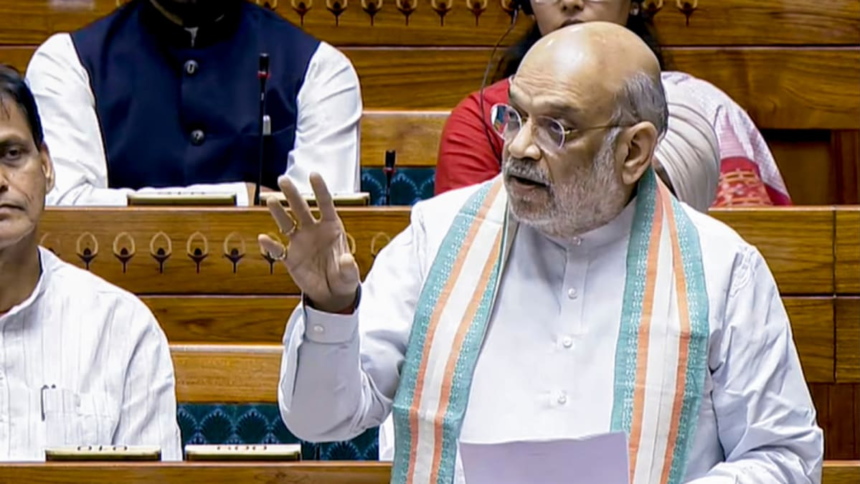
Home Minister Amit Shah speaks in Parliament. (File image: PTI)
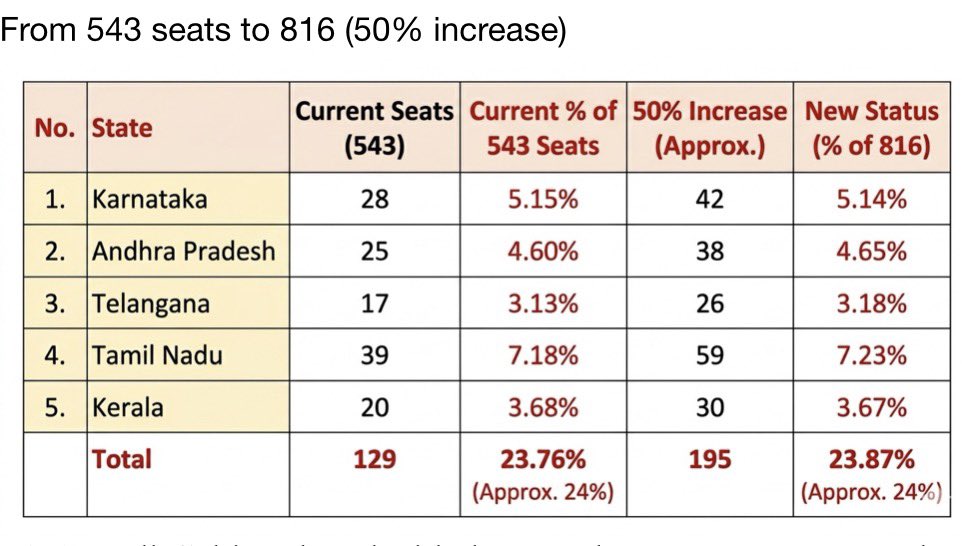
Union Home Minister Amit Shah stood up to make a crucial point in the Lok Sabha on Thursday—one that the government clearly believes could blunt a growing political attack. His assurance was simple: when the House expands to 850 members, every state will get about 50% more seats, and no one—including the southern states—will lose their current share.
It was not a routine intervention. The government knows the delimitation issue has acquired a sharp political edge, especially in the South. Leaders like Tamil Nadu Chief Minister MK Stalin have been arguing that any fresh exercise could tilt the balance in favour of the Hindi heartland. Shah’s attempt was to put numbers on record and cut through that narrative.
On paper, the argument is straightforward. Take Tamil Nadu—its seats would go up from 39 to 59, and its overall share would remain broadly intact. The Centre’s line is that fears of the South “losing out” simply don’t hold when you look at the maths.
But politics rarely runs on maths alone.
For Stalin, delimitation has already become more than a policy issue—it’s now part of his election pitch. In the run-up to the Tamil Nadu polls, it offers a rallying point, a way to frame the contest as one between the state’s interests and the Centre’s decisions. Whether the numbers support that argument or not may not matter as much on the ground.
That’s why, despite Shah’s clarification, there is little sign of the opposition backing off. If anything, the lines seem more clearly drawn.
The real test could come when the constitutional amendment bill is put to vote. It needs a two-thirds majority—always a tall order. If the bill falls short, the opposition will almost certainly claim it as a win. Stalin, in particular, would be able to go to voters saying he stood his ground and protected Tamil Nadu’s voice.
The BJP, though, is looking at a wider political canvas.
Even in defeat, there may be an opportunity or a silver lining.
In states like West Bengal, where women voters are key, the party is expected to sharpen its messaging around the Women’s Reservation Bill. The pitch is likely to be direct: the opposition blocked or delayed a measure meant to empower women. With the Prime Minister set to campaign extensively over the next 10 days, this could become a central theme.
So what’s playing out is not just a parliamentary contest but a layered political strategy—one message for the South, another for key electoral states.
Inside Parliament, the numbers remain tight. The government may still hope that some opposition parties sit out the vote or walk out, bringing down the effective strength of the House. But that’s never something you can bank on.
In the end, the delimitation debate shows how quickly a technical issue can turn political. The government insists no state will lose out. The opposition insists the risks are real. And somewhere between those positions lies the fact that in Indian politics, perception often travels faster, and further, than facts.
April 16, 2026, 22:41 IST
Read More