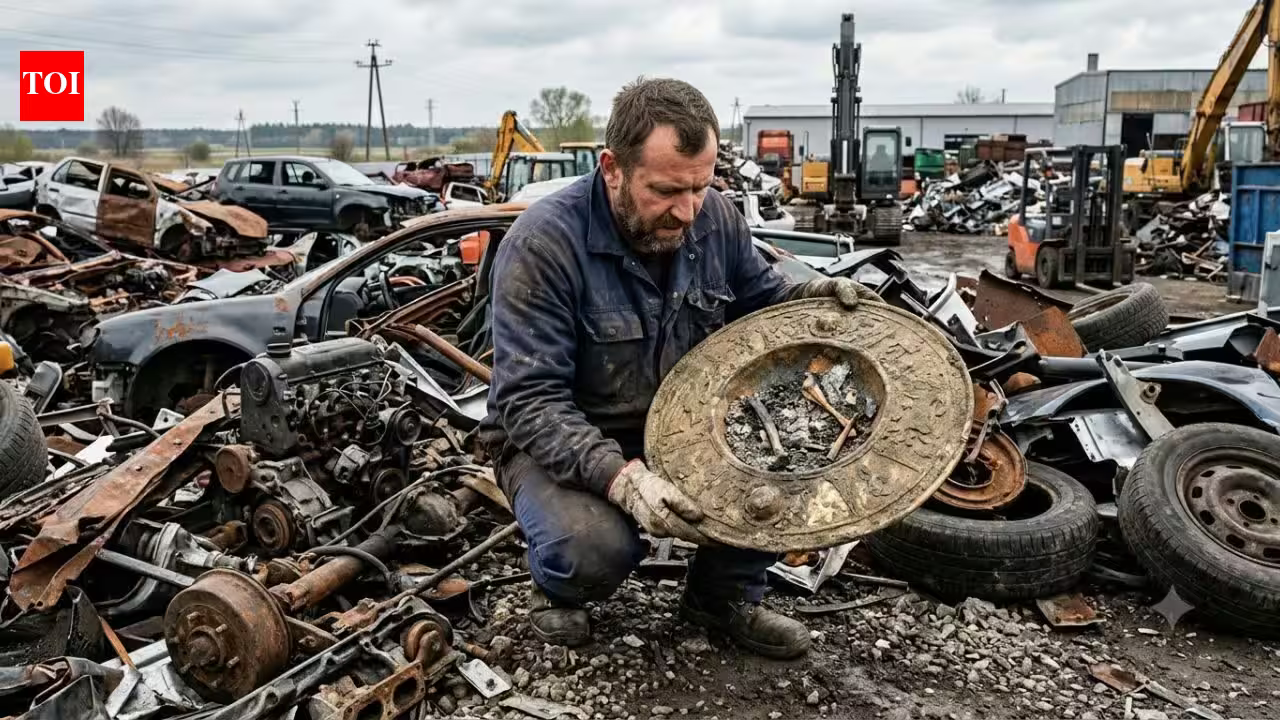
An old iron fitting found among scrap metal in eastern Poland has turned out to be part of a burial that disappeared from the archaeological record long ago. The object, recovered in Hrubieszów, is a shield boss dating to around the 2nd century CE. More unexpectedly, traces of cremated human bone were still preserved within soil lodged inside it.The discovery does not amount to a complete grave. The shield is gone, as are the other objects that would normally help archaeologists understand who was buried and when. Yet the surviving piece carries several clues about a cremation ceremony associated with the Przeworsk culture and communities linked with the Vandals.
What looked like scrap turned out to be an ancient shield boss
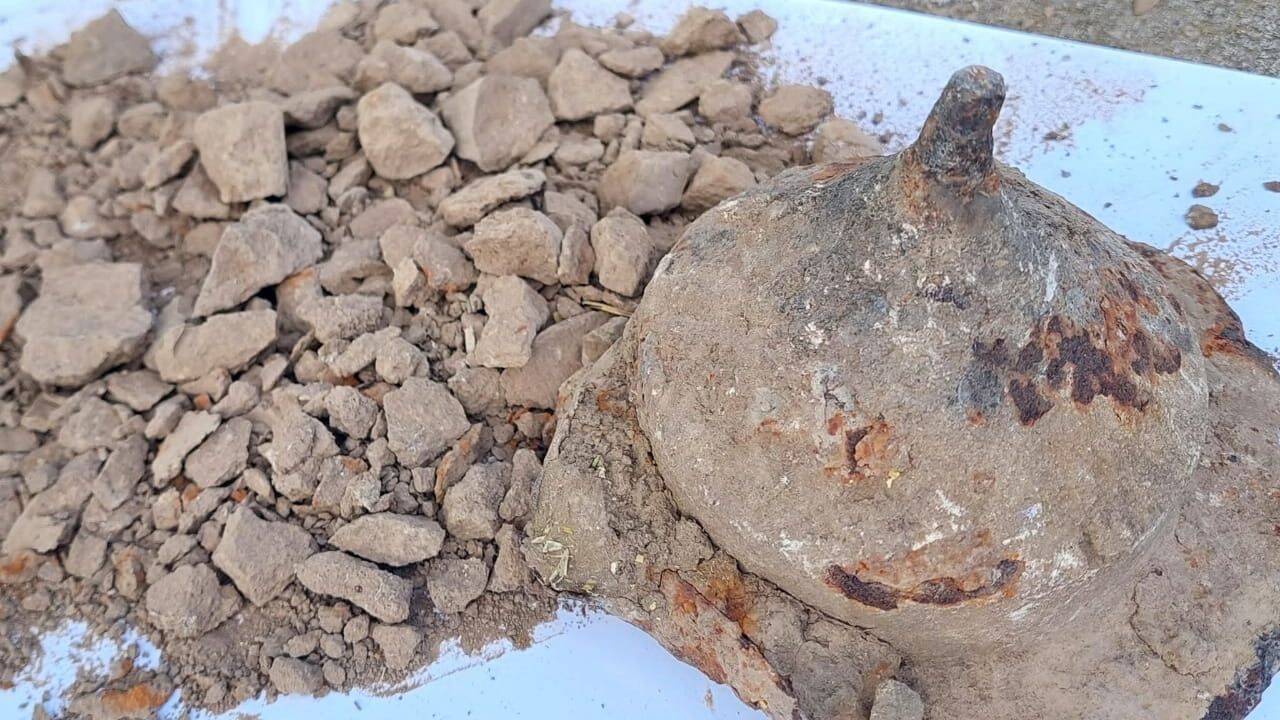
According to Archaeology News Online Magazine, the object was noticed by Włodzimierz Starykiewicz while he was searching a scrapyard for old motorcycle and car parts. Covered in corrosion, it did not immediately resemble something that had spent centuries underground. Starykiewicz nevertheless suspected that the unusual iron fitting might have an archaeological value and contacted the Stanisław Staszic Museum in Hrubieszów.Museum specialists identified it as an umbo, the reinforced fitting that sat at the centre of an ancient shield. Its pointed form is characteristic of a type used during the Roman period. The piece dates to the 2nd century CE.An umbo had a practical job. Fixed over the centre of the shield, it strengthened a vulnerable part of the wooden structure and helped protect the hand of the person carrying it. The wooden shield itself has long since disappeared.
Soil trapped inside the shield boss revealed traces of a cremation
There was still a small quantity of hardened soil inside the iron fitting when it was recovered. Rather than clearing it out, Starykiewicz left the material in place. The soil contained fragments of burnt human bone. Examination also found evidence that the iron had been subjected to intense heat, consistent with its presence on a funeral pyre. The combination gives archaeologists a reason to believe the shield was part of a cremation burial rather than simply an abandoned or discarded piece of military equipment.Some traces in the soil also point towards the object’s later history. Crop stubble was present, suggesting that the fitting had lain in cultivated ground before eventually being recovered and taken to the scrapyard. It is a small amount of surviving material, but it connects the object to a much larger event: the burning and burial of a person more than 1,800 years ago.
PC: Archaeology News Online Magazine
The shield boss points to a Przeworsk culture cremation burial
The find belongs to the archaeological world of the Przeworsk culture, an Iron Age and Roman-period society whose communities occupied substantial areas of what is now Poland. Around Hrubieszów, archaeologists associate some burials with groups connected to the Vandals.Cremation was an established funerary practice among communities in the region. Personal belongings and equipment could be placed with the deceased before or during the funeral, meaning that weapons and other fittings sometimes survived even when the human remains were heavily altered by fire.The shield boss may therefore have belonged to someone buried with equipment associated with warfare. That does not establish that the individual was a warrior, however, and the surviving remains cannot determine whether the person was male or female.The missing parts of the grave make the question harder to answer.
Farming and time erased much of the original burial
A burial containing a shield boss might once have included considerably more. Swords, spearheads, javelin points, belt fittings and brooches are among the objects that can occur in comparable graves.None of them accompanied the umbo. The shield itself would have offered little chance of survival. Ancient shields were largely constructed from wood, with leather or other organic coverings sometimes added. Unlike the iron fitting, those materials generally disappear after centuries in the ground.Agriculture may have contributed to the loss of the burial’s original arrangement. The object appears to have been lying in a cultivated area, and later disturbance seems to have separated it from whatever remained of the grave. By the time it reached the scrapyard, its archaeological context had effectively vanished.
The shield also hints at contact with Rome
The form of the umbo sits within a wider pattern of interaction between communities north of the Roman frontier and the Roman world. Przeworsk material culture contains objects and styles that show connections with Roman military equipment.Such similarities do not necessarily mean that the equipment was directly imported from the Roman army. Goods, ideas and manufacturing techniques could travel in several ways, including trade, warfare and contact between neighbouring communities.The shield fitting is therefore useful beyond the question of the individual burial. It belongs to a period when communities outside the Roman Empire were not isolated from what was happening across the frontier.Still, without the rest of the grave, there is only so much the object can reveal.
Museum hopes the original finder will come forward
The museum is now trying to establish where the shield boss was originally recovered. Staff have appealed to the person who brought it to the scrapyard, hoping that even an approximate location might be remembered.A rough findspot could make a significant difference. Archaeologists might be able to inspect the surrounding area, look for additional material or determine whether the shield boss came from a larger archaeological site.For now, the iron fitting remains an isolated survivor of a burial that has otherwise disappeared. The cremated bone inside it is a rare connection to the person who was once placed beside the shield.What began as an inconspicuous piece of corroded metal among discarded vehicle parts has provided a small, but tangible, record of a funerary practice in eastern Poland nearly two millennia ago.