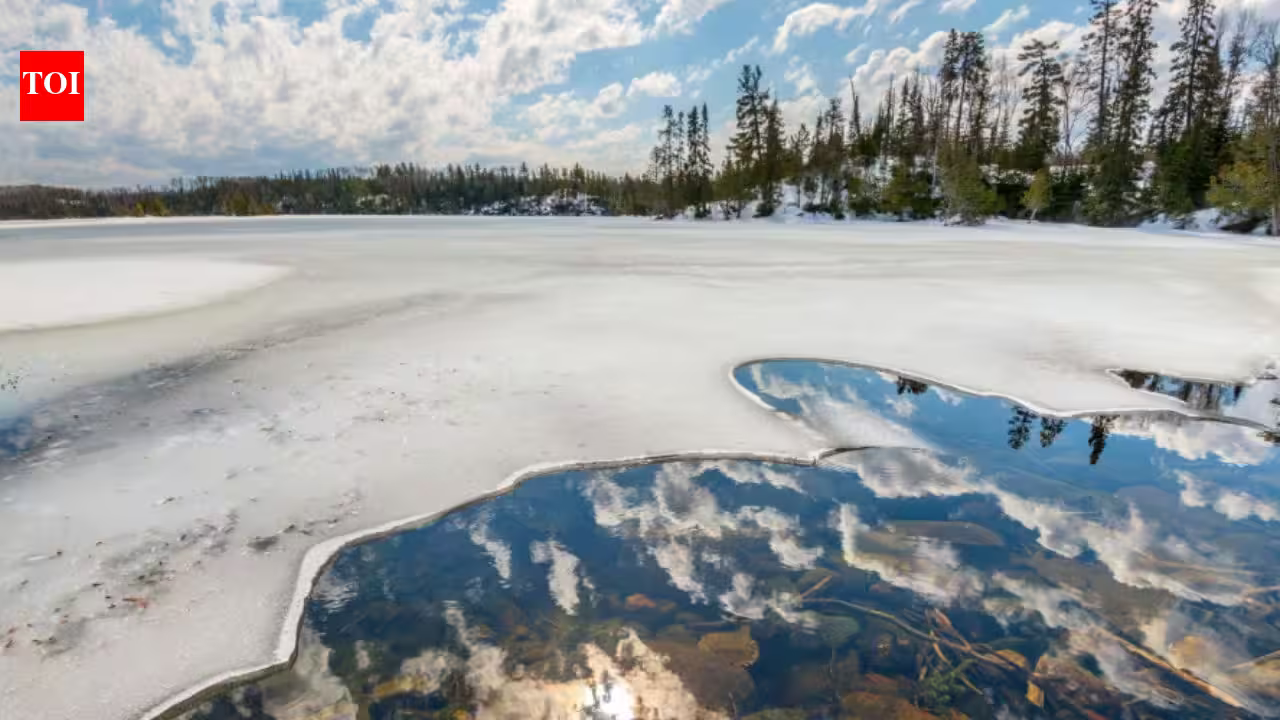
Winter ice on lakes plays an important role in keeping lakes healthy by controlling water temperature, supporting aquatic life and helping maintain the natural balance of freshwater ecosystems. However, scientists say this seasonal ice cover is disappearing faster than expected as the climate continues to warm.A new international study has found that once winter temperatures rise above certain critical levels, ice loss speeds up sharply. The researchers warn that if greenhouse gas emissions remain high, lakes across the Northern Hemisphere could lose around 40 days of winter ice cover by the end of this century.The findings were published in the journal Proceedings of the National Academy of Sciences (PNAS) and reported by Chiesse Academy of Sciences.
More than 700 lakes studied
To understand how lake ice is changing, the researchers examined records from 724 lakes across the Northern Hemisphere. They analysed ice patterns and air temperature data collected between 2000 and 2022.The study looked at ice phenology, which is the timing of seasonal events related to lake ice. This includes when lakes freeze in autumn and when the ice melts in spring.After comparing these records with air temperature data, the researchers found that lakes do not respond equally during freezing and melting seasons.
Ice melting faster than freezing
One of the key findings was that spring ice melt is much more sensitive to rising temperatures than autumn freeze-up.As winters become warmer, lakes are losing their ice much faster in spring than they are delaying freezing in autumn. This means the overall ice-covered season is shrinking more quickly than many people might expect.Researchers say this uneven response shows that warming has a stronger effect on melting than on freezing, making lake ice seasons shorter year after year.
Critical temperature thresholds
The study also identified winter temperature thresholds. These thresholds range between -13.7°C and -6.8°C. According to the study, once a lake’s average winter air temperature rises above this range, the amount of ice lost increases much more rapidly.Researchers say this marks a major change in how lakes respond to warming. To explain this, they measured phenological sensitivity. This refers to how strongly the timing of a natural event changes when temperatures rise. In this case, it measures how quickly lake ice responds to warmer weather.The study found that after the temperature threshold is crossed, this sensitivity can increase by as much as 22 times.
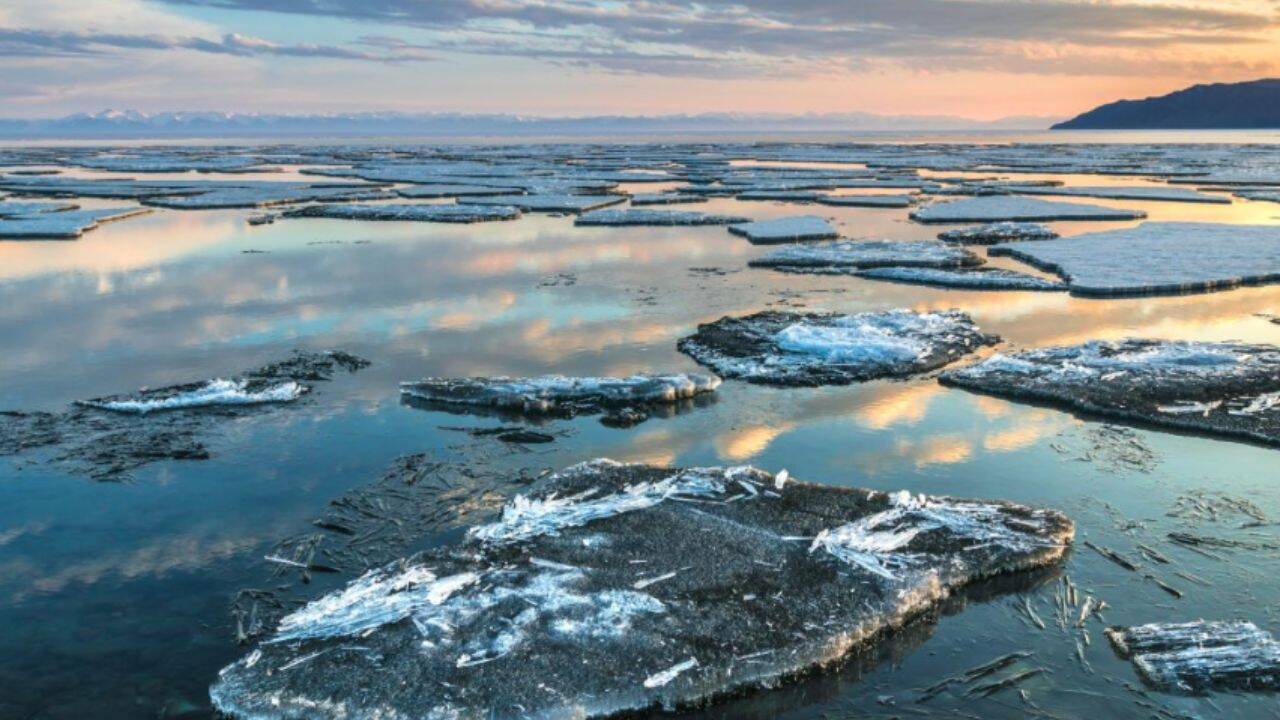
Lakes are losing their ice much faster in spring than they are delaying freezing in autumn.
Small temprature rise, big effect
According to Dr Jian Zhou of Nanjing Normal University, the study’s first author, lakes behave differently before and after crossing these temperature limits. “Below these thresholds, ice cover responds to warming in a gradual manner,” Zhou said, as quoted by Chiesse Academy of Sciences“But once the threshold is crossed, the system enters a fundamentally different regime where each additional degree of warming triggers a disproportionately large loss of ice cover.”In other words, before reaching the threshold, rising temperatures reduce ice slowly. After crossing it, even a small increase in temperature can lead to a much larger reduction in ice cover.
Climate matters more than lake
The researchers also wanted to know whether the size, shape or depth of a lake affects these thresholds. Their analysis found that the biggest influence comes from large-scale climate conditions rather than the physical features of individual lakes.Two factors stood out in particula- winter air temperature and surface albedo. Surface albedo refers to how much sunlight a surface reflects back into space. Bright surfaces, such as snow and ice, reflect more sunlight, while darker surfaces absorb more heat.According to the researchers, these broad climate conditions play a much greater role in determining whether a lake crosses the critical temperature threshold than its depth or shape.
Many more lakes could become vulnerable
Using climate projections, the team estimated how lake ice may change in the future under a high-emissions scenario.They found that the average duration of winter ice cover across Northern Hemisphere lakes could become about 40 days shorter by the end of this century.The study also projects that the number of lakes crossing the critical temperature thresholds will increase sharply.At present, about 23 per cent of the studied lakes have already crossed these thresholds. By the end of the century, that figure could rise to 70 per cent if emissions remain high.
At what temperature threshold do you think the impact of climate change on lake ice becomes critical?
3k+ users shared opinion today
5k+ users already voted today
3k+ users shared opinion today
Scientists warn of wider impacts
The researchers say losing lake ice is not only about shorter winters. It can also affect the health of freshwater ecosystems.Prof. Kun Shi from NIGLAS, who co-led the study, said many lakes in the middle latitudes are approaching a particularly vulnerable stage.“Our findings suggest that many mid-latitude lakes are approaching a state of heightened vulnerability,” Shi said.“Even modest additional warming could trigger abrupt and potentially irreversible shifts in lake ice regimes, with cascading consequences for water quality, aquatic ecosystems, and northern communities that depend on stable winter ice cover.”This means warmer winters could affect water quality, aquatic plants and animals, and communities that rely on frozen lakes during winter.