
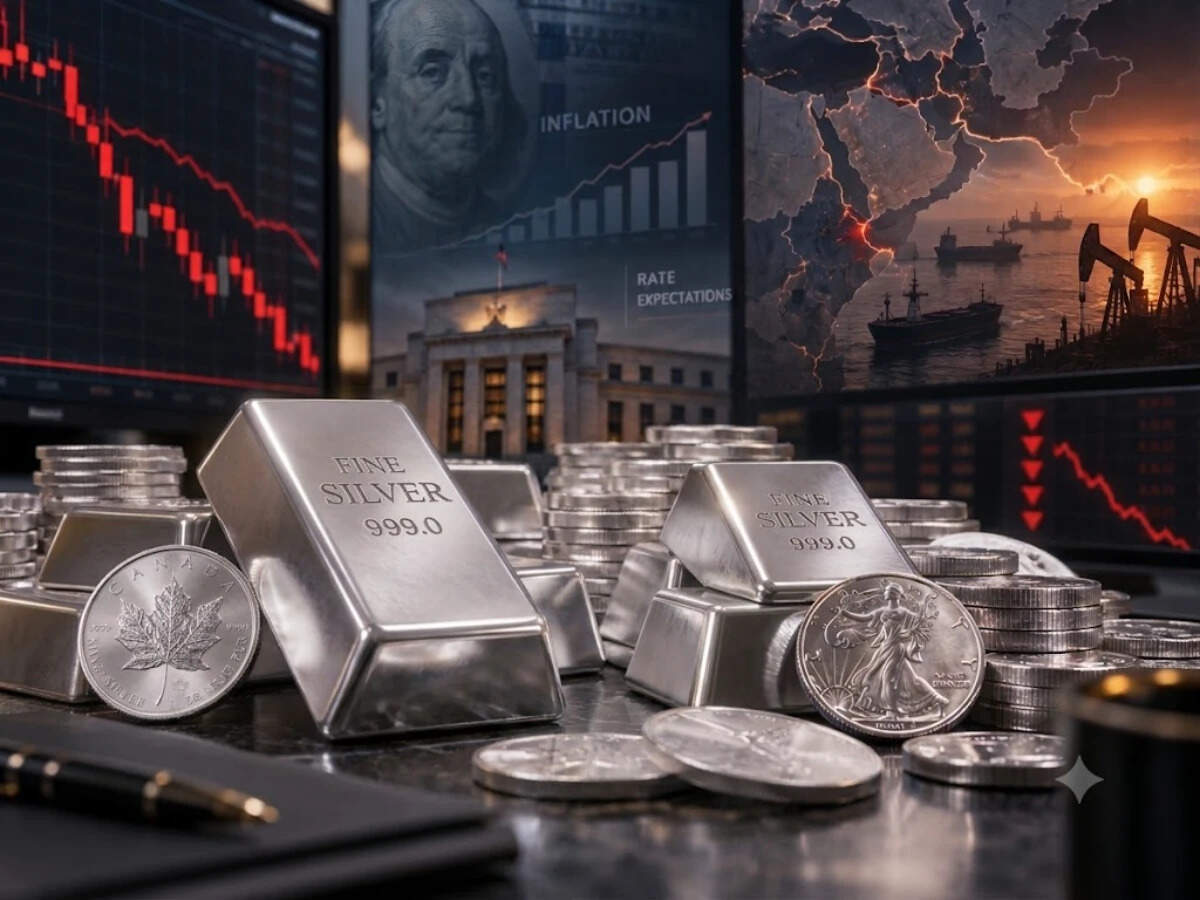
Silver’s supply squeeze may be easing, but a new worry is emerging for investors as the market is projected to shift from a deficit to a surplus in 2027. Rising inventories, weak jewellery demand and slowing industrial consumption could limit price gains and make it harder for silver to repeat the rally that followed the earlier supply crunch.Silver has underperformed gold in recent weeks, with the latter finding support around $4,000 while silver has fallen to successive year-to-date lows in the low $50s, according to a report by Metals Focus, which serves as the primary external research provider for the Silver Institute and the World Gold Council.The decline comes amid broader weakness in precious metals, with silver typically more sensitive than gold to price movements. Since the outbreak of the Iran conflict, concerns over rising oil prices have fuelled expectations of tighter monetary policy, weighing on the outlook for metals that do not offer interest income.Although the US Federal Reserve kept rates unchanged at its October meeting, policymakers signalled they remained open to further tightening as inflation persisted. Markets are now pricing in an 80% chance of a 25-basis-point rate hike in December, followed by at least two more hikes in 2027. Rising bond yields have further weakened the investment case for precious metals.Surplus aheadThe silver market deficit is expected to narrow further this year, with the market projected to return to surplus in 2027. This would reduce the likelihood of a repeat of the severe physical supply squeeze that helped drive prices higher in 2025 and early 2026, Metals Focus said in its report.“Against this backdrop, silver is likely to continue taking its cue from gold over the next 12 months. With ongoing headwinds from rising interest rates and yields, precious metals are expected to remain under pressure in the near term, with silver’s higher beta suggesting scope for further underperformance relative to gold.”However, the outlook could change if markets begin to scale back expectations of aggressive monetary tightening in 2027. In that scenario, silver, also called poor man’s gold, could regain momentum as investors rebuild their exposure, Metals Focus said.For now, support from the physical market is likely to remain subdued. High prices continue to weigh on jewellery and silverware consumption, while efforts to reduce silver use and replace it with other materials, particularly in solar panels, are curbing industrial demand.Why is poor man’s gold under pressure?One reason silver has lagged gold is that the two metals serve different purposes for investors. Gold has received support from central bank purchases and safe-haven demand from long-term investors amid geopolitical and economic uncertainty. Silver, by contrast, is more closely linked to industrial demand and lacks the same monetary appeal as gold.At the same time, the physical market has become less tight since March, reversing the conditions that prevailed in 2025 and early 2026, when a liquidity squeeze in London’s over-the-counter market helped fuel a sharp rally in silver prices.By the end of September, total silver inventories in London vaults had reached a nearly four-year high of 932 million troy ounces, according to the report. Excluding metal held by physically backed exchange-traded products (ETPs), inventories available for trading stood at around 267 million ounces. That was nearly double the low recorded in October 2025 and brought stocks close to levels seen before disruptions linked to US President Donald Trump’s tariff measures.Inventories at key commodity exchanges in the US, China and India have also risen modestly in recent months, adding to signs that supply pressures are easing.A sharp slowdown in investor activity has contributed to the improvement in liquidity. In 2025, strong inflows into silver ETPs absorbed metal from the London market. This year, however, holdings in these products have fallen by about 60 million ounces, releasing silver that was previously tied up in investment vehicles.The initial outflows reflected investors booking profits as prices hit record highs. Although net selling later eased, uncertainty over the near-term price outlook has kept fresh investment in check.Physical investment demand in Western markets has also offered little support. Metals Focus’ coin survey found that sales of silver bullion coins by leading mints plunged more than 80% quarter-on-quarter in the second quarter of 2026, following a surge in the first quarter. Sales fell to their lowest quarterly level since the survey began in 2010.Although volumes recovered somewhat in the third quarter, they remained subdued, declining 22% from a year earlier. With investor demand cooling, inventories rising and industrial and jewellery consumption facing headwinds, silver may find it harder to repeat the rally driven by the supply squeeze of recent years.