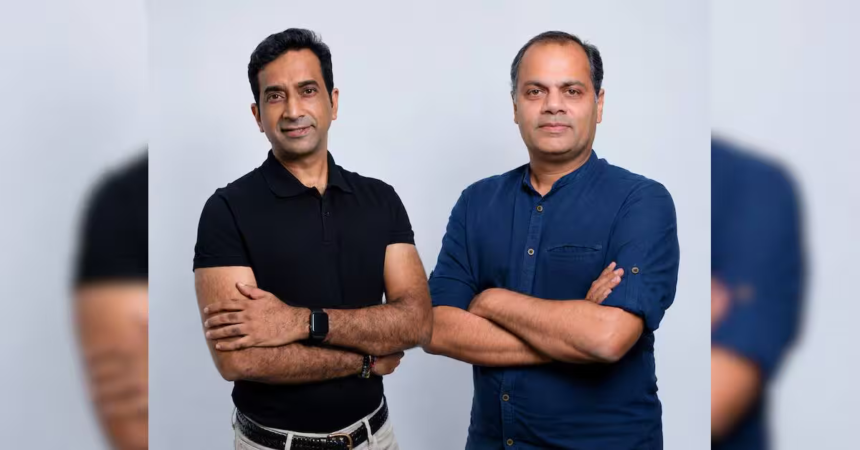
Oister Global, an India-focused multi-strategy private markets asset manager, has launched the Oister Deep Tech Fund, which aims to raise ₹400 crore, with a ₹200 crore greenshoe option taking its potential corpus to ₹600 crore.
Registered as Oister Global Scheme II, a Sebi Category II alternative investment fund (AIF), it will build a concentrated portfolio of eight to 10 mature companies in the frontier technology ecosystem. The fund will follow Oister’s glass-box investment approach and have a six-year tenure, extendable by up to two years with investor approval.
Rohit Bhayana, co-chief executive officer and co-founder of Oister Global, said while capital for deep tech is growing every year, very few funds back these companies after the early stage.
“Early-stage investors back the idea, and larger institutions tend to wait until a company is well past its hardest years,” said Bhayana. “The growth stage in between, where technology turns into a business, has had very few committed investors. That is the gap we saw, and it is why we launched the Oister Deep Tech Fund,” said Bhayana.
The fund will focus on mature companies in critical sectors, including space technology, defence and aerospace, semiconductors, quantum technologies, advanced mobility, materials and energy storage.
It will target businesses that have crossed the ‘valley of death’, with proven technology and defensible intellectual property (IP) protected by patents in India and internationally. These companies will be revenue-generating, with multiple revenue streams and domestic and international customers. The fund will also look for strong policy support and a clear path to liquidity.
Its capital will support production expansion, order execution and commercial adoption.
“Deep tech founders in India run a different race from software startups. They spend years building a product, then need serious capital to manufacture and sell it, and most growth investors are not set up to wait that long,” said Sandeep Sinha, co-founder and co-CEO of Oister Global. “Our thesis is to back winners: proven deep tech leaders built by founding teams with deep scientific and engineering pedigree.”
Sinha said commercialisation was central to Oister’s investment approach. The fund looks for clear commercial use cases and paying customers, rather than just scientific promise, and aims to help companies scale and reach new markets.
Oister has identified an initial shortlist of companies across these sectors, with further investments to be evaluated as the fund is deployed.
India’s deep-tech sector is attracting more capital than ever, and the next test is what happens after the first cheque. Oister said startups in the sector raised nearly $3 billion across 189 deals in 2025, the strongest year on record. WIPO’s Global Innovation Index 2026 identifies 453 Indian deep-science startups and spinouts, of which only 18 have reached late-stage funding. By comparison, the same dataset counts 12,752 such companies in the United States, 1,980 of them late-stage, and 3,466 in China, 582 of them late-stage. Scaling these companies calls for larger, patient domestic capital. Over the coming decade, India’s frontier-tech companies are expected to move from first orders to global supply chains. Oister sees the fund as backing the businesses that will shape the country’s technology exports.