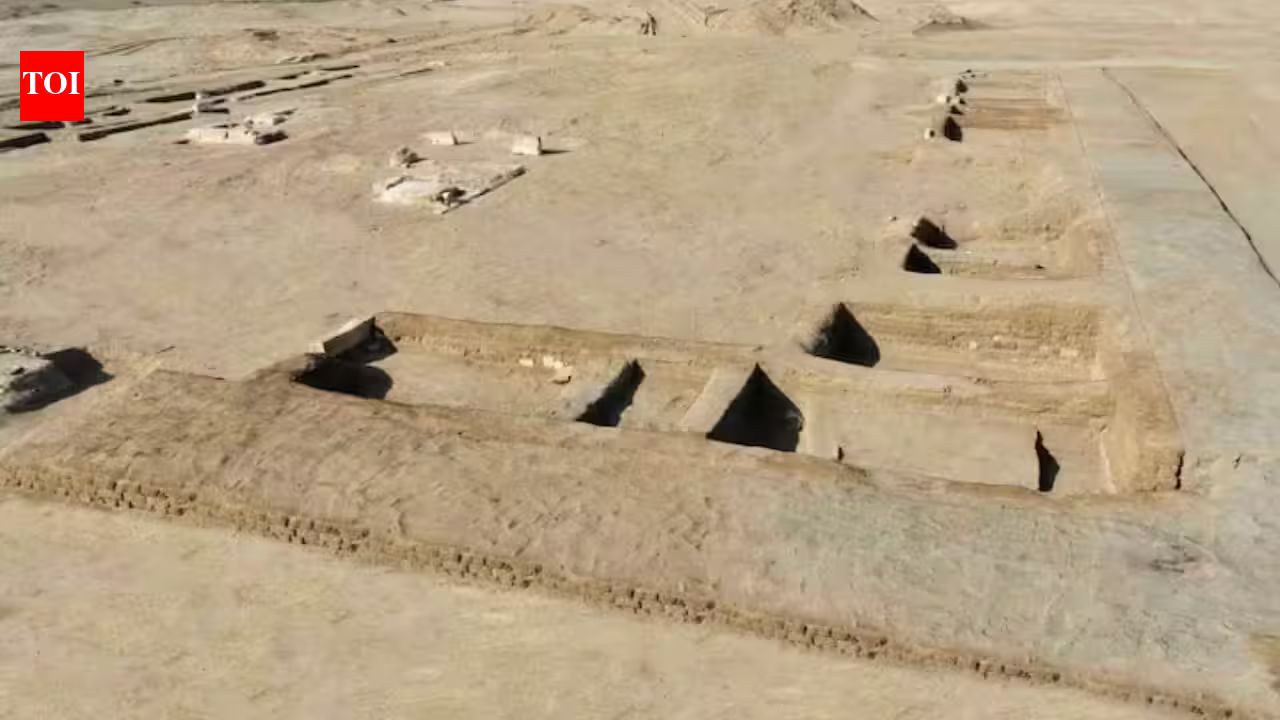
Discoveries at Tell Abu Seify in Qantara East are giving archaeologists fresh clues about an ancient Egyptian settlement that may be the lost city of Masn. The site lies along the route of the Ancient Horus Military Road, a strategic corridor that connected Egypt with its eastern frontier. The latest excavations uncovered a large sandstone lintel bearing the titles of Ramesses II. Its inscription also mentions restoration work on a statue of Horus, Lord of the City of Masn. According to the Egyptian State Information Service, this evidence strengthens the hypothesis that Tell Abu Seify could be Masn, although researchers stress that the identification is not yet proven. Excavations have also revealed roads, enclosure walls, temple rooms, statues and later Roman remains. Together, the discoveries show how the site changed from a religious and military centre into a complex that was later reused and quarried over several centuries.
Ramesses II inscription may help identify the lost city of Masn
The most important discovery is a large sandstone lintel found broken into two pieces. It carries inscriptions on three sides containing the titles of King Ramesses II. Notably, the text refers to restoration work involving a statue of Horus, described as Lord of the City of Masn. This reference gives archaeologists a direct link between the site and the ancient place name. The finding does not prove that Tell Abu Seify was Masn, but officials say it provides strong support for that possibility. Researchers are continuing excavations and scientific studies to test the identification. The lintel is therefore significant not simply because it names a famous pharaoh, but because it connects a known religious figure with the settlement whose location has remained uncertain. The evidence could help narrow that search further.
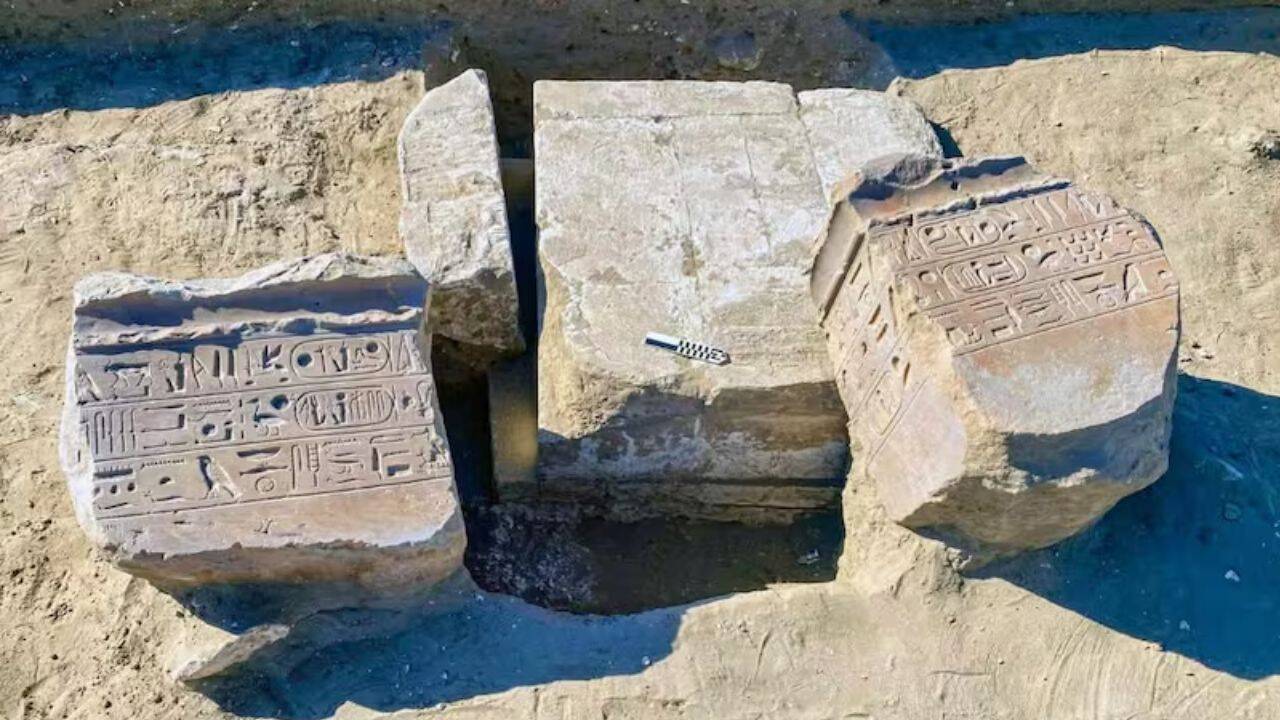
Ramesses II inscription may help identify the lost city of Masn (PC: AI Generated)
What did archaeologists find around the ancient temple
Earlier interpretations of the site have also changed as new evidence has emerged. Archaeologists are continuing to excavate a huge mudbrick enclosure with gateways, rooms and several construction layers. Studies now indicate that this structure formed the outer enclosure around a temple precinct rather than being the temple itself. Two stone-paved roads were also found leading from outside the fortified area towards the temple. The older road dates to the Ptolemaic Period, while a narrower Roman road was later built over it. Inside the complex, storage rooms stood on the northern side, and larger service rooms lay to the south. These remains show that the site was carefully organised and developed through different periods of use. They also reveal how access to the temple changed over time.
How did the site change during the Roman period
The temple complex did not remain unchanged. Evidence shows that it passed through several stages before losing its original religious role. The temple reached its architectural peak during the Ptolemaic Period, according to the archaeological assessment. By the third century AD, parts of the complex had been reused as a military castrum. During the Late Roman Period, the site was transformed again into a quarry for lime production. Two large circular kilns were built over the corners of the sanctuary, and limestone remains inside them had been exposed to intense heat. The sanctuary itself was apparently destroyed through quarrying activity. These later remains show how a place that once served religious and strategic purposes was gradually adapted for practical industrial use. Each phase left traces within the same complex.
What do the statues reveal about Tell Abu Seify
The excavation has also produced objects that reveal the site’s long religious and military history. Finds include part of a schist statue from the 26th dynasty showing an army scribe carrying a broken naos. Archaeologists also recovered a headless and footless Late Period statue, part of a royal basalt statue, and fragments of basalt and limestone falcon statues. Administrative and military objects add further evidence of the site’s strategic role. Taken together with earlier seasons, the discoveries strengthen the idea that Tell Abu Seify may be the location of Masn, a city mentioned in New Kingdom texts. Researchers still need more excavation and scientific study before reaching a definitive conclusion. For now, the site appears to have been an important station on Egypt’s eastern frontier.