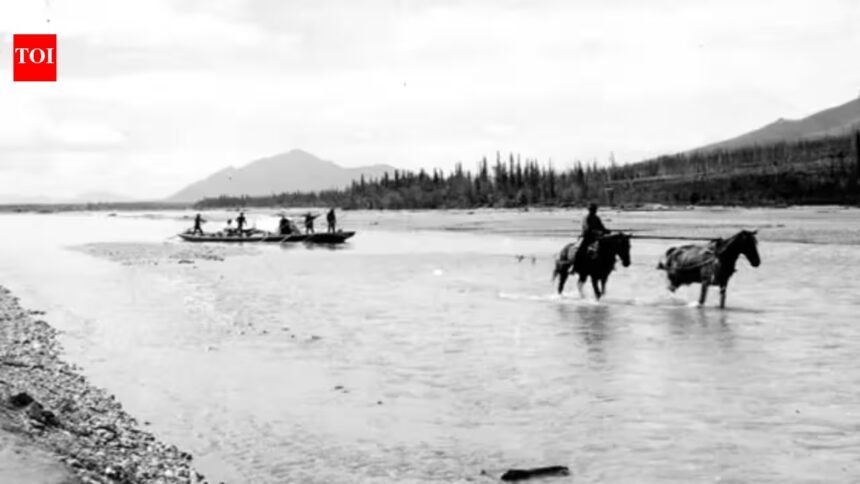
Alaska Koyukuk gold rush history begins in 1898, when about seventy small steamers carried prospectors up the Koyukuk River through practically unknown country. Most of the boomtowns that sprang up in 1898 and 1899 have since disappeared, leaving Wiseman, Coldfoot and the ghost town of Old Bettles as the survivors. The gold itself was real, placer mining, which recovers gold from loose gravel, produced more than $4 million by 1918. Few individual miners cleared more than $50,000, yet a larger share of them made between $5,000 and $50,000 than in any other Alaskan district. Most streams there yielded coarse gold.
How a fleet of about seventy small steamers pushed 600 miles up the Koyukuk River in 1898
A 1921 article in The Pathfinder magazine, republished by the National Park Service, describes the fleet as loaded with prospectors, most of whom owned their boats. The majority came from the eastern United States, with a scattering of experienced old-timers among them. The account credits those old-timers with getting the fleet 600 miles or more up the river, as far as the sites of today’s towns of Bergman and Bettles.Many of the easterners were unused to the hardships of such a journey and discouraged by the desolate look of the country. They gave up almost at once and headed home before winter arrived. Some abandoned their boats and took passage downstream with others, while some left theirs in the care of braver friends who stayed to try their luck. As a result, the bleached remains of little steamers could still be seen here and there along the riverbanks.
Streams named for loved ones back home, and the first creeks that proved the gravel held gold
Enough men stayed to show that the gravels of the Koyukuk and its tributaries were not barren. Far from home, the prospectors named streams after mothers, sisters and sweethearts, which is how Myrtle Creek, Clara Creek and Rosie Creek got their names.Myrtle Creek and Emma Creek were among the first to be prospected, and together they are said to have produced more than $100,000 in their first few years, with some gold coming out ever since. Myrtle Creek feeds Slate Creek, the stream on which the town of Coldfoot now stands. Gold Creek and Gold Bench, both feeding the South Fork of the Koyukuk, gave up more than a quarter of a million dollars in their first four years but have been light producers since.
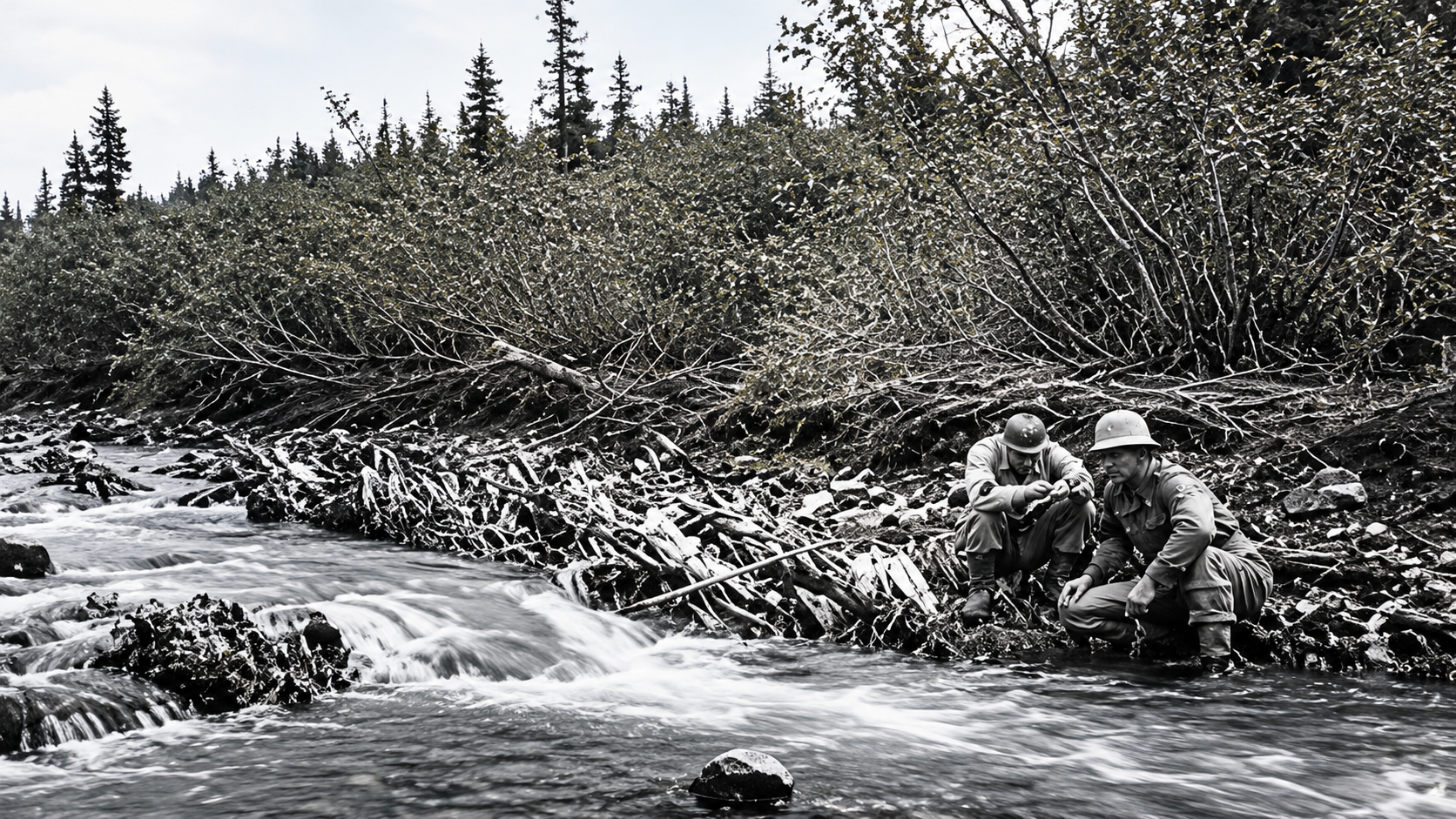
Prospectors on Myrtle Creek near Middle Fork of Koyukuk River, 1899 (Image: USGS Photographic Library)
Nolan Creek and the Hammond River, the richest ground, the biggest nuggets and a $400,000 stretch
Nolan Creek and its tributaries are described as probably the richest and most consistent producers in the whole region. Gold was first found there in the autumn of 1903, and about $25,000 was taken out that winter. Another $140,000 followed in the winter of 1904 to 1905, and the creek, its tributaries and its benches (raised gravel terraces beside the stream) have produced steadily since. One stretch of ground only about 400 feet long, between claims three and four below Discovery claim, yielded around $400,000. The largest nugget found in the valley was worth $865, and a $714 nugget turned up on a bench the summer before the article was written.The Hammond River, a tributary of the Middle Fork, followed a slower path. Gold was found there in the autumn of 1901, but the rich pay in deep ground was not struck until 1912. About $1 million then came out of the valley over four years. The largest nugget from the main river weighed about 150 ounces and sold for $2,700.
Why the fortune faded: Scattered gold, soaring supply costs and a shrinking population by 1921
Gold on the Koyukuk never came in one dependable ribbon. The 1921 article says no continuous paystreak, meaning the richest band of gold-bearing gravel, was found anywhere in the district. It could be picked up in one place on a claim and followed for a while before disappearing, then turn up again in another direction after systematic prospecting.Mascot Creek shows the pattern. Pay was struck there in the autumn of 1902, and over $100,000 was taken from the creek bed by open-cutting the following summer. Output later fell so far that the men still working it made little more than a living. Porcupine Creek went the other way: considerable work in 1901 found no decided paystreak, yet in the four years before 1921 it became a good producer.Costs did the rest. By 1921 the Koyukuk’s population was smaller than at any time since 1902, which the account blames on the high price of supplies and transport. Many old-timers had left to help build the government railroad, and the hope was that cheaper freight once it was finished would draw them back, along with newcomers, to mine on a larger scale than ever before.