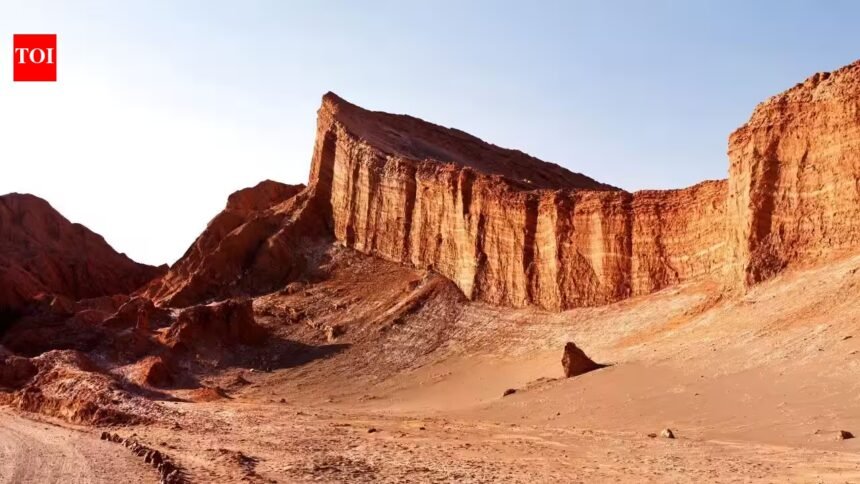
In one of the driest places on Earth, ancient rock-like formations are telling scientists an extraordinary story about how life may have begun on our planet and where we might find it elsewhere in the universe. There are stretches of land so dry that some weather stations have recorded no measurable rainfall for years. Yet, unbelievingly, they have become a source of study for scientists that have been exploring the question of ‘how did life begin?’The Atacama Desert in northern Chile is widely recognised as the driest non-polar desert on the planet. Its extraordinary dryness, intense solar radiation, high levels of ultraviolet exposure and mineral-rich terrain make it a case study for how life can exist in extreme conditions. Layered structures built by microscopic organisms over long periods, called stromatolites, are the most fascinating evidence of life. They look like ordinary rocks at first glance, but their existence is much older which makes them an origin of curiosity among researchers.
Rocks that are actually records of life
Stromatolites are among the oldest known evidence of life on Earth. They are formed by communities of microorganisms, particularly photosynthetic microbes such as cyanobacteria. These organisms trap sediment particles and help bind them together. As multiple layers accumulate over a period of time, they create distinctive laminated structures. Over time, these layers preserve a record of biological activity and the environmental conditions in which the organisms lived.
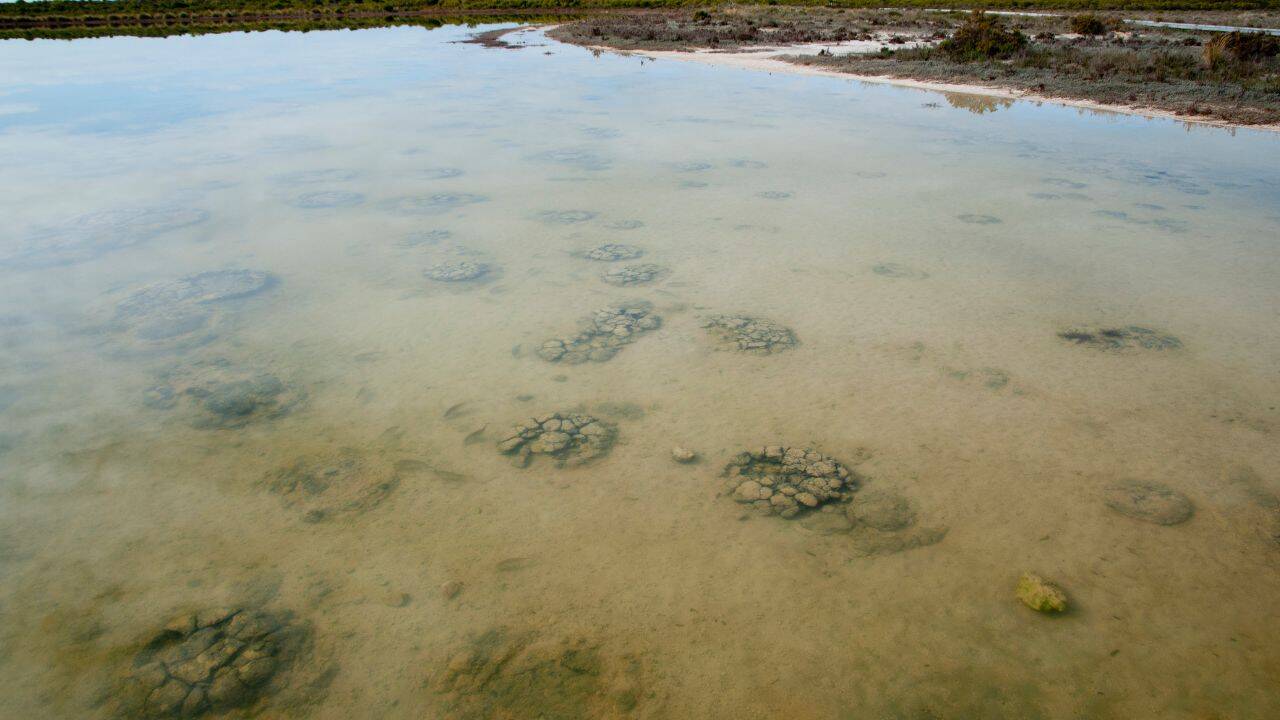
Representative Image of Stromatolites (Image Credit: Canva)
Ancient stromatolites are especially important because they provide clues about how early microorganisms interacted with their surroundings. This includes how photosynthesis helped transform Earth’s atmosphere. Some of the oldest widely discussed examples date back more than 3.4 billion years. These structures and their microbial communities offer scientists an opportunity to investigate how life survives in extreme environments today.
An unlikely refuge in a seemingly lifeless landscape
The Atacama’s ecosystems change with altitude, geology and the occasional arrival of moisture. Coastal fog, known locally as camanchaca, sustains neighbouring vegetation, while saline lakes and underground water become habitats for organisms in the region.A January 2026 study titled ‘Geographic distribution of nematodes in the Atacama is associated with elevation, climate gradients and parthenogenesis’, examined soil samples from six locations Researchers identified 36 genera of nematodes which are microscopic roundworms, belonging to 21 families. The samples came from remarkably different environments, including sand dunes, saline lake shores, high-altitude mountains and fog-fed habitats. During the study, the researchers found that different locations supported distinct communities. It was observed that nematode diversity also increased with rainfall.
What the desert can teach us about life on other planets
The desert has long attracted researchers because its extreme dryness, intense radiation and mineral-rich soils resemble conditions that may have existed on ancient Mars. Scientists are particularly interested in how microorganisms survive without regular access to liquid water, how they protect themselves from radiation and how they establish themselves in seemingly inhospitable terrain.
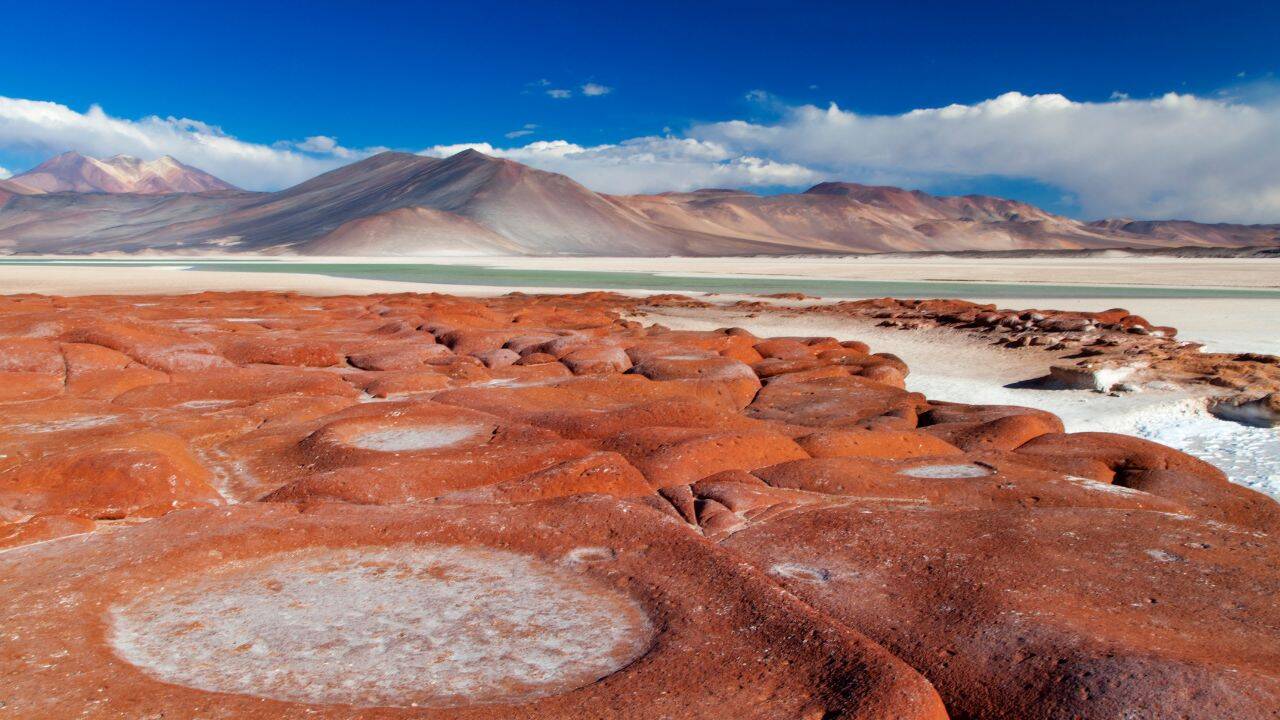
Atacama desert (Image Credit: Canva)
A separate study, published in Nature in 2025, titled ‘An Atacama subsurface tephra layer reveals how life colonized Kenorland in the Neoarchaean‘, explored how microorganisms arriving from the Pacific Ocean could become permanent residents of the desert. The researchers studied a site called Mancha Blanca, where an ancient volcanic ash deposit beneath the surface creates different conditions for microbial survival.Their findings suggest that the desert acts as a natural filter: microorganisms carried inland by wind may arrive in large numbers, but only those already equipped to tolerate extreme salinity are likely to establish themselves. The researchers believe this process could offer clues to how microbial life colonised dry land around 2.6 billion years ago.This is particularly interesting for Mars research. If life once existed on the Red Planet, scientists need to understand what traces it might have left behind and whether microscopic organisms could have survived underground, protected from harsh surface conditions.