Last Updated:
The most striking revelation of the current electoral cycle is the meteoric rise of Vijay’s Tamilaga Vettri Kazhagam (TVK)




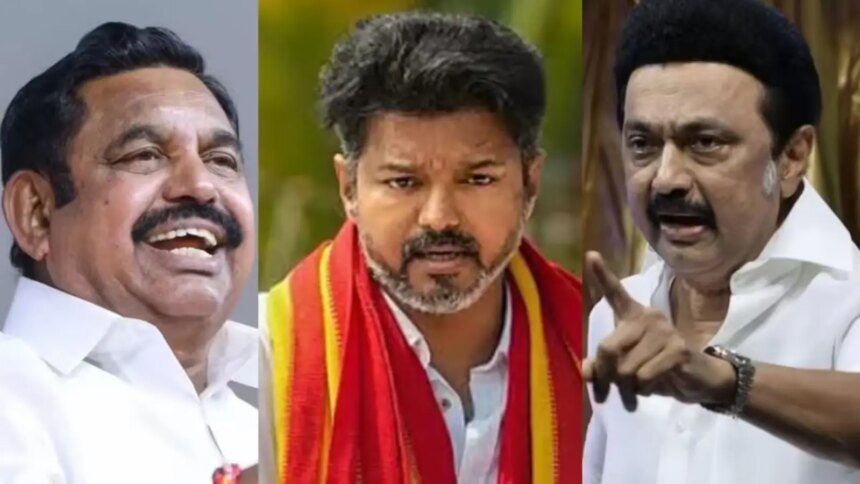
With one exit poll favouring the TVK and several others predicting a photo finish between the DMK and AIADMK alliances, the probability of a hung assembly is higher than at any point. Representational image
As the counting day for the Tamil Nadu assembly elections approaches, the traditional bipolar contest between the DMK and AIADMK has been disrupted by a surge of smaller parties and a high-profile cinematic entry. While the Dravidian giants continue to anchor their respective alliances, recent exit poll data suggests that the key to Fort St George may lie in the hands of “kingmakers” who have managed to carve out significant vote shares in specific regions. The most striking revelation of the current electoral cycle is the meteoric rise of Vijay’s Tamilaga Vettri Kazhagam (TVK), which, according to one prominent exit poll, could even secure the highest number of seats, potentially outperforming both established fronts.
Can Vijay’s TVK emerge as the single largest party?
The entry of Tamil superstar Vijay into the political arena with the TVK has fundamentally altered the state’s political geometry. While early predictions viewed him as a potential “spoiler” similar to past cinematic entrants, one major exit poll has sent shockwaves through the state by projecting the TVK as the leader in the seat tally. This trend suggests a massive consolidation of the youth and first-time voter base, who appear to have gravitated towards Vijay’s platform of “secular social justice” and Tamil identity. If these projections hold true on counting day, the TVK will move from being a mere kingmaker to the king itself, forcing the traditional Dravidian parties into the uncharacteristic role of junior partners or opposition leaders.
Which smaller parties may hold the balance of power?
Beyond the TVK phenomenon, the performance of established smaller entities remains crucial for the survival of the major alliances. The Pattali Makkal Katchi (PMK), with its concentrated strength in northern Tamil Nadu, and the Viduthalai Chiruthaigal Katchi (VCK), representing a significant Dalit vote bank, are expected to decide the fate of dozens of seats. Exit polls indicate that even a 2 to 3 per cent swing in vote share caused by these parties could strip the DMK-led alliance of its majority or prevent an AIADMK turnaround. The Naam Tamilar Katchi (NTK), led by Seeman, also continues to show a resilient and growing vote share that, while not always translating into seats, consistently eats into the margins of the two main fronts.
How do exit polls reflect the linguistic pride and identity narrative?
The 2026 election has been fought largely on the grounds of linguistic identity and the protection of state autonomy. Exit polls suggest that the DMK’s focus on “Dravidian Model” governance and its resistance to perceived central imposition has resonated with a large section of the electorate. However, the same data indicates that the TVK successfully co-opted this narrative by blending cinematic charisma with a “sons of the soil” rhetoric that appealed to those disillusioned with both major camps. This suggests that while linguistic pride remains a potent tool, the messenger has become as important as the message for the Tamil electorate.
What is the likely scenario for a hung assembly?
With one exit poll favouring the TVK and several others predicting a photo finish between the DMK and AIADMK alliances, the probability of a hung assembly is higher than at any point since the 1950s. In such a scenario, parties like the PMK or even the BJP—which has been striving to increase its footprint in the state—could become indispensable for government formation. The ultimate winner will likely be the leader who can best negotiate with these smaller blocs, turning a fragmented mandate into a stable coalition. As the state braces for the results, the only certainty is that the era of uncontested two-party dominance in Tamil Nadu is facing its most significant challenge yet.
Read More