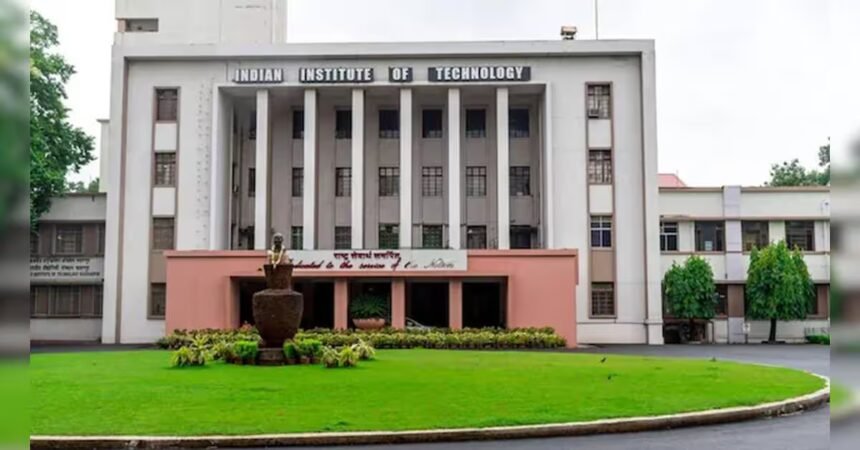
Indian Institute of Technology (IIT) Kharagpur will offer 12 postgraduate medical seats across six MD specialisations in the 2026-27 academic session, becoming the first IIT to offer postgraduate medical courses accredited by the National Medical Commission (NMC).
The courses will be offered at the institute’s Dr B C Roy Multi-Speciality Medical Research Centre and include General Medicine, Radiology, Physiology, Pathology, Community Medicine and Biochemistry, with two seats in each discipline, the institute said on Thursday.
Admissions will be through NEET-PG 2026 counselling, with the courses included in Round 2 of the process.
The introduction of the programmes marks an expansion of the IIT system into postgraduate medical education, a field traditionally dominated by dedicated medical colleges and institutions.
IIT Kharagpur said the courses would also provide opportunities for medical students to engage with research in engineering, artificial intelligence and biomedical sciences.
The institute has identified medical imaging, AI-assisted diagnostics, computational pathology, molecular diagnostics and biomedical devices as potential areas of interdisciplinary research.
The institute said students would have access to its research facilities and expertise in areas including microfluidics, bioengineering, artificial intelligence and computational sciences.
Suman Chakraborty, director of IIT Kharagpur, said the objective was to bring clinical training and technological research together and develop doctors with an understanding of scientific research and innovation.
“We want our medical graduates to be not only outstanding clinicians, but also innovators capable of addressing some of humanity’s most pressing healthcare challenges. The inaugural batch of 2026-27 will be pioneers of this new journey. The future of medicine will increasingly belong to those who can connect deep clinical understanding with scientific discovery and technological innovation,” Chakraborty said.
IIT Kharagpur has offered medical and healthcare-related programmes for more than two decades through its School of Medical Science and Technology, established in 2001.
These include a three-year Master of Medical Science and Technology (MMST) for MBBS graduates, along with programmes in medical imaging, biomedical engineering and nuclear medicine.
Other IITs have also expanded into medical technology and biomedical research, though not necessarily clinical medical degrees.
IIT Guwahati offers a four-year BS programme in Biomedical Science and Engineering, while IIT Jodhpur offers a master’s programme in Medical Technologies.
IIT Kanpur has also established a medical school, with plans to introduce super-speciality programmes such as DM and MCh.
However, IIT Kharagpur’s new MD programmes mark its entry into NMC-accredited clinical postgraduate medical training.
Established in 1951, IIT Kharagpur was the first IIT to be set up in the country.
The institution had initially sought NMC approval for 20 postgraduate medical seats, according to statements made by director Suman Chakraborty in March.
Candidates can opt for the six specialisations through the second round of NEET-PG 2026 counselling.
The seat matrix, eligibility requirements and counselling schedule are available through the Medical Counselling Committee’s official portal.