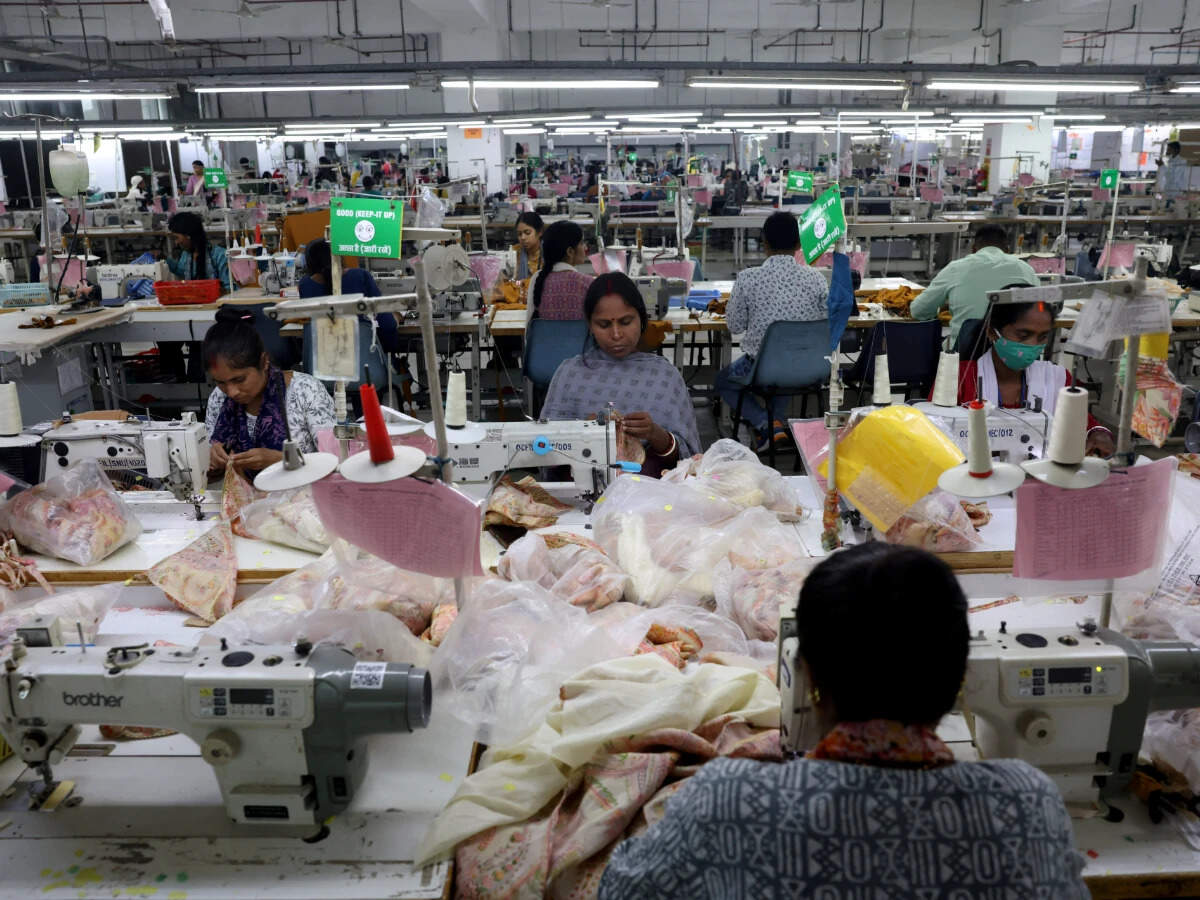
Bengaluru: India will need to grow apparel exports by over 20 per cent annually to achieve its $100 billion export target by FY31, with manufacturing scale, productivity and a shift towards faster-growing product categories emerging as key priorities, according to a report by Boston Consulting Group (BCG) and the Confederation of Indian Industry (CII).India’s textile and apparel industry is targeting $350 billion by FY31, including $100 billion in exports, from its current estimated size of $190-200 billion. However, apparel exports have remained largely stagnant at around $37 billion over the past decade, highlighting the gap between India’s manufacturing capabilities and its global export performance.India accounts for around 6 per cent of global textile exports but only 3 per cent of global apparel exports, despite being the world’s second-largest textile exporter, the report, Winning the Global Wardrobe: India’s Roadmap to Textile and Apparel Leadership, said.“India is a strong global exporter when it comes to upstream. But when it comes to downstream, it is quite underpenetrated,” Nishant Shekhar, managing director and partner, and India head – Consumer Practice at BCG, told ET Retail.India’s share in synthetic-led apparel categories such as knitwear, outerwear and sportswear is close to 1 per cent, even as these segments are among the faster-growing categories globally, Shekhar said. The country will also need to expand beyond its traditional strengths in cotton-led apparel such as shirts, T-shirts, dresses and babywear to categories including trousers and synthetic-intensive products.The opportunity exists across price segments, with India’s share in value and mid-priced apparel estimated at 4-6 per cent, while its share in the premium segment, which accounts for nearly 20 per cent of the market, is around 1 per cent, he said.Manufacturing fragmentation and productivity gaps continue to weigh on India’s competitiveness. Only around 5 per cent of the country’s textile and apparel clusters are integrated from spinning to garmenting, while manufacturing capacity remains dispersed, Shekhar said.Indian workers typically handle two to three operations in apparel factories compared with four to five in Bangladesh, reflecting a gap in factory productivity. Higher worker attrition, machine downtime, ageing machinery and limited digital maturity also constrain efficiency, he said.India needs to focus on multi-skilled workforce training, machinery upgrades, digital adoption and measures to reduce worker attrition to improve productivity, Shekhar said.The shift in global sourcing away from China could offer India an opportunity to expand its exports. China has lost 10 percentage points of global apparel export share over the past decade, while Bangladesh gained four percentage points and Vietnam three percentage points. India, however, lost one percentage point during the period.Vietnam has benefited from extensive free trade agreements and foreign-investment-led manufacturing, with foreign-invested companies contributing around 60% of its exports, Shekhar said.India’s trade agreements with the UK and the European Union could improve its access to global markets, but exporters will also need to build scale, strengthen product development capabilities and offer consistent execution to secure larger orders.Global brands have reduced their supplier factory base by 35-60 per cent since 2010, reflecting a growing preference for fewer, larger and more strategic sourcing partners, the report said.Indian exporters will need to move beyond transactional orders and build long-term relationships with global buyers, backed by category expertise, in-house research and development, product innovation and the ability to reliably execute large volumes, Shekhar said.Large manufacturing clusters anchored by garment manufacturers, with supplier networks of MSMEs and access to shared infrastructure, technical support and sourcing linkages, could help address the industry’s scale constraints and strengthen export competitiveness.The report identified product and market prioritisation, long-term buyer relationships, integrated manufacturing, workforce productivity, AI and automation, and ecosystem development as key levers for India’s textile and apparel industry to achieve its FY31 ambition.