India on Tuesday expressed deep concern over attacks by Iran on two United Arab Emirates (UAE)-linked supertankers, which were carrying 30 Indian seafarers among their combined crew of 46. In the attacks, one Indian national was killed and 10 others were injured, including two whose condition is said to be serious.
The Ministry of External Affairs (MEA) summoned the deputy chief of mission of the Embassy of Iran, Mohammed Javed Hosseini, in New Delhi in the morning. MEA Joint Secretary Anand Prakash lodged a strong protest over the attacks with him. The meeting lasted 10 minutes.
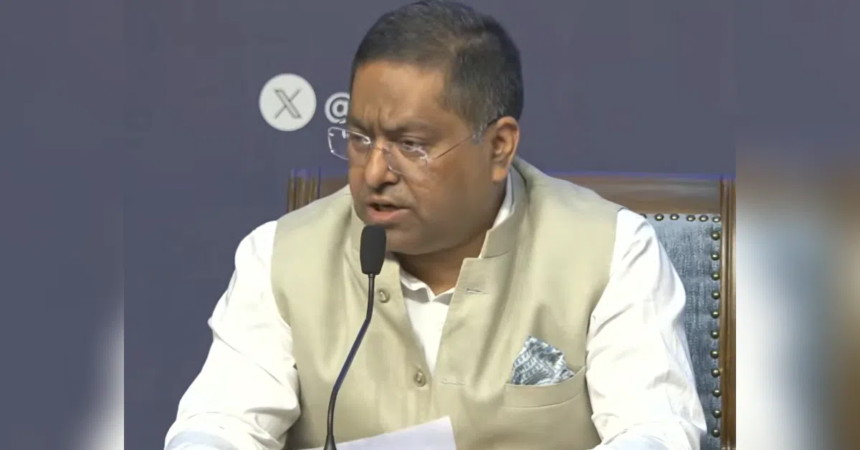
Later in the day, MEA spokesperson Randhir Jaiswal said at a media briefing that India’s deepest concern over the attacks was conveyed to the Iranian diplomat, and he was told that these attacks must stop at the earliest.
The attacks on the two UAE-linked ships came two days after an Iranian attack on the Cyprus-flagged container ship GFS Galaxy, which left an Indian crew member missing. Several attacks on commercial shipping in recent days have shattered the mid-June interim peace pact between the US and Iran.
According to Indian government sources, 16 Indian nationals, mostly sailors, have been killed or are missing in the Gulf region since the beginning of the conflict in West Asia on February 28. Of the 16, three Indian nationals are missing. Sources said the loss of Indian lives is one of the highest for any country other than Iran during the conflict in West Asia. India has the second-highest number of seafarers in the world.
In response to a question on US President Donald Trump announcing a mandatory 20 per cent toll on all commercial cargo transiting the Strait of Hormuz, the MEA spokesperson said, “We are closely following the developments in West Asia. We continue to call for safe and unimpeded navigation and the flow of commerce through the Strait of Hormuz. This is the key to ensuring energy and economic security for people across the world.”
On Tuesday morning, Iranian forces attacked two vessels, MT Al Bahiyah and MT Mombasa, during their transit through the Strait of Hormuz. Of the 12 Indian nationals on board MT Al Bahiyah, one lost his life and another was injured. Of the 18 Indian nationals on board MT Mombasa, nine sustained injuries, including two who are reported to be seriously injured, the MEA said.
The UAE’s Defence Ministry said on social media that MT Mombasa and MT Al Bahiyah were “targeted by two Iranian cruise missiles while transiting the southern shipping lane of the Strait of Hormuz, within Omani territorial waters”.
The MEA extended its deepest condolences to the family of the deceased Indian national and wished a speedy recovery to those injured. India’s mission and post in the UAE are closely monitoring the situation and are in touch with the UAE authorities to ensure all possible assistance to the affected Indian seafarers, the MEA said.
In June, at least three ships with Indian seafarers were attacked by the US military, killing one Indian. The MEA had then summoned the US chargé d’affaires in New Delhi, Jason Meeks, twice in the space of 48 hours on June 10 and 12. Prime Minister Narendra Modi had flagged the attacks on commercial vessels in the Persian Gulf when he met US President Donald Trump on the sidelines of the Group of Seven (G7) Summit in France on June 17.
In its statement on Tuesday morning, issued after summoning the Iranian diplomat, the MEA “strongly” condemned the attacks and acts of violence targeting seafarers and disrupting free and safe navigation through international waterways such as the Strait of Hormuz.
“We also reiterate our deep concern on account of the resumption of attacks and escalation of hostilities in the West Asia region and call for an immediate cessation of violence and a return to dialogue and diplomacy in the interests of peace, security and stability in the region,” it said.
“The targeting of commercial shipping and civilian infrastructure in the region must cease so that free and unimpeded navigation and commerce through international waterways in the region, in keeping with international law, can be restored at the earliest,” the MEA said.