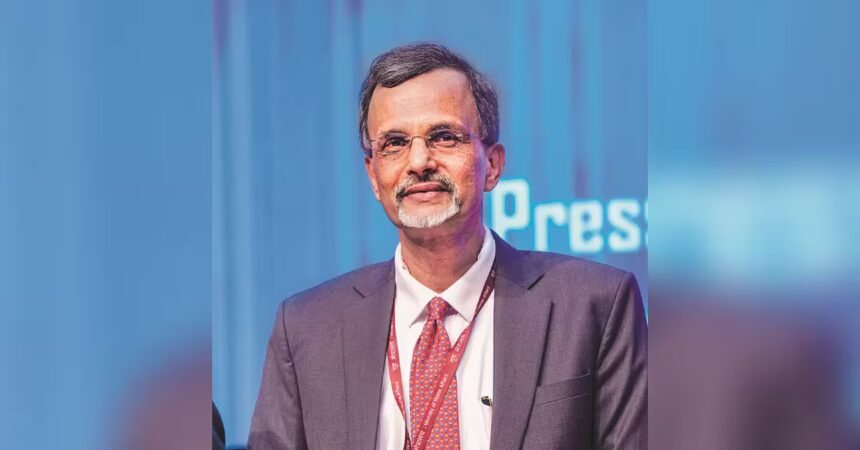
India could reap a huge windfall in 2027-28 (FY28) from lower crude oil prices, Chief Economic Advisor (CEA) V Anantha Nageswaran said on Wednesday. He added that managing a strengthening rupee, rather than a weakening domestic currency, backed by robust capital inflows could emerge as a challenge next financial year.
Speaking at the annual general meeting of the Federation of Indian Chambers of Commerce and Industry (Ficci), Nageswaran said concerns over electricity prices, crude oil, natural gas availability and fertiliser supplies had weighed on the outlook during the current financial year. But the economic picture was now looking considerably brighter.
“We are approaching the end of the calendar year in a better frame of mind than we found six months ago. If prognosis of oil prices and what happens to the AI (artificial intelligence stock) valuations are any indication, then 2027-28 can turn out to be a fairly good year in terms of growth, (and) capital flows into India. In fact, who knows our problem next year may be one of managing rupee strength rather than rupee weakness,” he said.
His remarks come amid easing crude oil prices and the rupee’s appreciation against the dollar in recent weeks.
Though the finance ministry does not forecast crude oil prices, he said, the consensus among various agencies is that Brent crude could remain below $80 a barrel. “If that happens to be the case, India will have a huge windfall next year in terms of lower energy prices, which will naturally lead to lower input cost, lower inflation, and higher growth as well,” he said.
He also said the diffusion of risks associated with AI could lead to a substantial increase in capital inflows into India. “What was considered a sort of a drawback is now becoming a sort of a tailwind, or advantage, because India is not expected to have any hangover if the AI bubble had to puncture,” he added.
However, Nageswaran said India would need to balance three priorities: energy costs, energy security and the transition to cleaner energy. “That kind of trinity” had not confronted certain Asian economies when they made their journey into the developed world, he said.
He added that economic shocks in the post-Covid pandemic period and beyond were likely to be driven by supply constraints rather than demand. The positive aspect, he said, was that India’s recent growth had been accompanied by “macroeconomic stability, fiscal prudence, (and) external account stability”.
On trade, the CEA highlighted the importance of the agreements India had recently signed, saying the country needed to open more markets for exporters and expose domestic manufacturers to greater competition amid global supply shocks. “A trade agreement is not only about providing new markets for our exports, but also introducing external competition to domestic manufacturers,” Nageswaran added.
Citing the World Bank’s latest poverty estimates for India, the CEA suggested the near-elimination of extreme poverty means that “aspirations will be rising much faster than the actual growth” and the country needs to be mindful of it.