Sports
oi-Gaurav Sharma

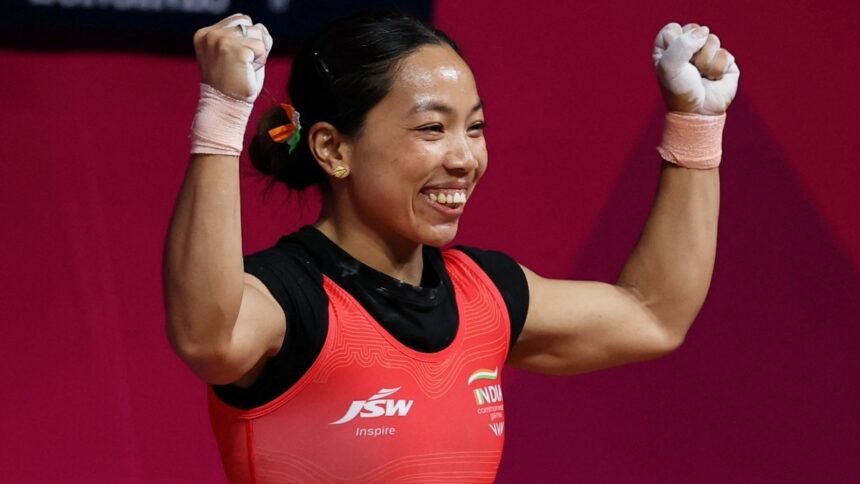
Mirabai Chanu ended one of the longest waits in Indian weightlifting by winning silver in the women’s 49kg event at the 2026 Asian Games in Aichi-Nagoya on Wednesday. The result gave Chanu her first Asian Games medal and brought India back onto the weightlifting podium at the continental event after 28 years.
The 31-year-old finished with a total lift of 198kg, behind North Korea’s Ri Song Gum, who claimed gold with 215kg. Indonesia’s Luluk Diana Tri Wijayana took bronze with 191kg. For Chanu, the medal was more than another addition to an already decorated career. It filled a gap that had remained despite success at the Olympics, World Championships and Commonwealth Games.
At the 2026 Asian Games in Aichi-Nagoya, Mirabai Chanu won silver in the 49kg weightlifting with a 198kg total, marking her first Asian Games medal and ending India’s 28-year wait for a weightlifting podium finish since Karnam Malleswari in 1998.

Mirabai Chanu silver ends India’s 28-year wait
India’s last Asian Games weightlifting medal had come in 1998, when Karnam Malleswari won silver in Bangkok. Since then, Indian lifters had repeatedly fallen short at the continental Games, where China, North Korea, South Korea and other Asian powerhouses have traditionally dominated the sport.
Chanu’s silver in Nagoya is therefore significant on two levels. It gives India a rare weightlifting medal at the Asian Games and marks a personal breakthrough for an athlete who had experienced repeated setbacks at this event. Her previous campaigns had produced frustration rather than a podium finish.
At Incheon 2014, Chanu finished ninth in the women’s 48kg category. She missed the 2018 Jakarta-Palembang Games because of a back injury. At Hangzhou 2023, she came close to a medal but finished fourth with a total of 191kg after an injury during the clean and jerk affected her challenge.
Those disappointments gave Wednesday’s performance added weight. Chanu arrived in Japan after winning her third straight Commonwealth Games gold in Glasgow earlier in 2026. But the Asian Games field was far stronger, with defending champion and world champion Ri Song Gum setting the standard from the start.
How Chanu built her medal-winning total
Chanu kept herself in medal contention with a composed snatch session. She completed all three attempts and finished with a best lift of 87kg. Ri had already moved clear with a 94kg snatch, but Chanu’s clean series ensured she remained well placed in the fight for silver and bronze.
The Indian lifter then opened the clean and jerk with 107kg. She followed it with a successful 111kg effort on her second attempt, taking her total to 198kg. That lift proved decisive because it created a strong cushion over Indonesia’s Wijayana, who could not complete her 107kg clean and jerk attempt.
Ri, meanwhile, competed in a separate league. The North Korean first lifted 116kg in the clean and jerk and then attempted 121kg, a lift that set a world record. Her final total of 215kg secured a third successive Asian Games gold and underlined her dominance in the 49kg category.
Chanu could not realistically chase gold once Ri pulled away in the snatch. But her execution under pressure was enough to secure second place. It was the kind of controlled performance she needed in an event where one missed attempt can quickly alter the medal order.
A medal that completes an important gap
Chanu has long been one of India’s most accomplished weightlifters. She won Olympic silver in Tokyo, became a world champion in 2017 and has built an exceptional record at the Commonwealth Games. Yet the Asian Games had remained the one major multi-sport event where she had not stood on the podium.
That made the Nagoya result especially meaningful. The Asian Games weightlifting competition is often deeper and more demanding than the Commonwealth Games because it features several of the sport’s strongest nations. For Indian lifters, medals at this level are rare and often require near-perfect execution.
Chanu’s 198kg total was lower than Ri’s winning mark but comfortably ahead of the bronze-medal total. It also showed her ability to produce a stable performance after years of managing injury concerns. Her clean and jerk, traditionally her stronger discipline, again became the lift that secured her place on the podium.
The medal also adds another landmark to Indian women’s weightlifting. Malleswari’s 1998 silver had remained the reference point for nearly three decades. Chanu’s performance now gives a new generation a fresh Asian Games benchmark, even as India continues to search for broader depth in the sport beyond its leading names.