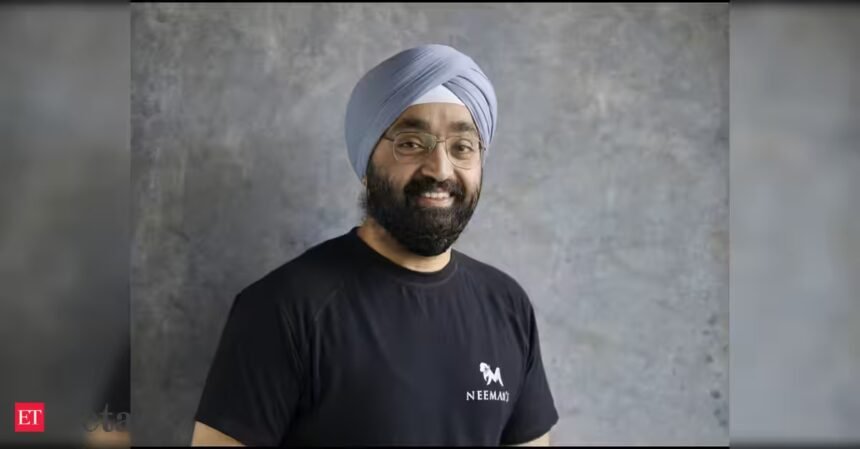

Neeman’s is targeting Rs 1,000 crore in revenue by FY30 and plans to expand its exclusive store network to 500 outlets over the next three to four years, as the sustainable footwear brand shifts into an aggressive retail expansion phase after turning profitable.
The company, which reported revenue of Rs 185 crore in FY26, expects to close the current fiscal at around Rs 350 crore, followed by Rs 500 crore in FY28 and Rs 750 crore in FY29, before reaching the Rs 1,000 crore milestone in FY30.
“We are already profitable this year, and we are not bleeding,” Amar Preet Singh, co-founder and COO of Neeman’s, told ETRetail. The brand is targeting an EBITDA margin of around 5–8 per cent this fiscal, compared with a (-) 6 per cent EBITDA margin in FY26.
Having opened its first physical store in 2023, Neeman’s has grown to around 50 outlets in 2026. It now plans to add at least 50–100 stores annually, with a target of opening five to 10 stores every month.
“From the current year, we are looking at at least five to 10 stores opening every month,” Singh said. “We believe that every year, a 100-store rollout can get us to 500 stores.”
The expansion will largely follow the company-owned, company-operated model, allowing Neeman’s to retain control over the customer experience. The brand will continue to run franchise pilots, but company-owned stores will remain its preferred route.
“We want to own the experience and ensure that customers understand why the brand has started and what kind of products we sell,” Singh said.
Neeman’s typically invests Rs 50–75 lakh per store, including rental deposits, fit-outs and merchandise. Larger flagship outlets could require investments of close to Rs 1 crore. Its stores generally range from 700 to 1,500 sq ft, depending on the market and the viability of the location.
The brand said stores in markets where it already has a strong online customer base typically achieve operational break-even from the first month, with capital expenditure recovered within 12–18 months.
“Now the project is well set, and we know what kind of investments we need to make,” Singh said, adding that the company has used its direct-to-consumer data to identify promising cities, product preferences and merchandising requirements.
Neeman’s currently derives around 45 per cent of its business from its own website, 30 per cent from marketplaces and 25 per cent from retail. Over the next three years, it expects retail to contribute around 40 per cent of revenue, with its website and marketplaces accounting for the remaining 60 per cent.
Beyond exclusive outlets, the brand is expanding through shop-in-shop formats and multi-brand retailers. It has entered Reliance Trends and is also expanding its presence across lifestyle and footwear retail networks. By FY30, it aims to be present in 500 exclusive brand outlets and expand its reach through 300–500 multi-brand outlets, according to Singh.
The brand’s growth plans are supported by its recent fundraising. Neeman’s raised capital in December last year and believes it has sufficient funding to support expansion through the next financial year. It is also using bank financing to meet working capital requirements and may approach private equity investors for additional capital when needed.
Singh said the company was valued at around Rs 500 crore in its latest funding round, with approximately 65 per cent equity diluted to investors so far.
The brand, which started in 2018 as an online-first footwear business focused on everyday comfort and sustainable materials, is also widening its product portfolio. It currently has around 150–180 active SKUs across six to eight categories, translating into nearly 1,000 options across sizes and colours. The portfolio is expected to expand to 500–600 SKUs by FY30, while retaining a relatively lean catalogue.
Neeman’s is stepping up its women’s range this fiscal, with women currently contributing around 20 per cent of business. It plans to enter the kids’ footwear segment next year as it works towards becoming a family-oriented brand.
The brand launches around five to six products every month and works with nearly 20 active manufacturing factories, alongside additional partners under pilot programmes, across India, China and Vietnam. It is also planning exploratory market pilots in the US, the Middle East and the UK next year.
“We started with the vision that we should serve at least 50 lakh customers every year, and I think I see that happening this year,” Singh said. “With the mix of D2C, marketplaces and retail, more and more consumers are trying our product.”