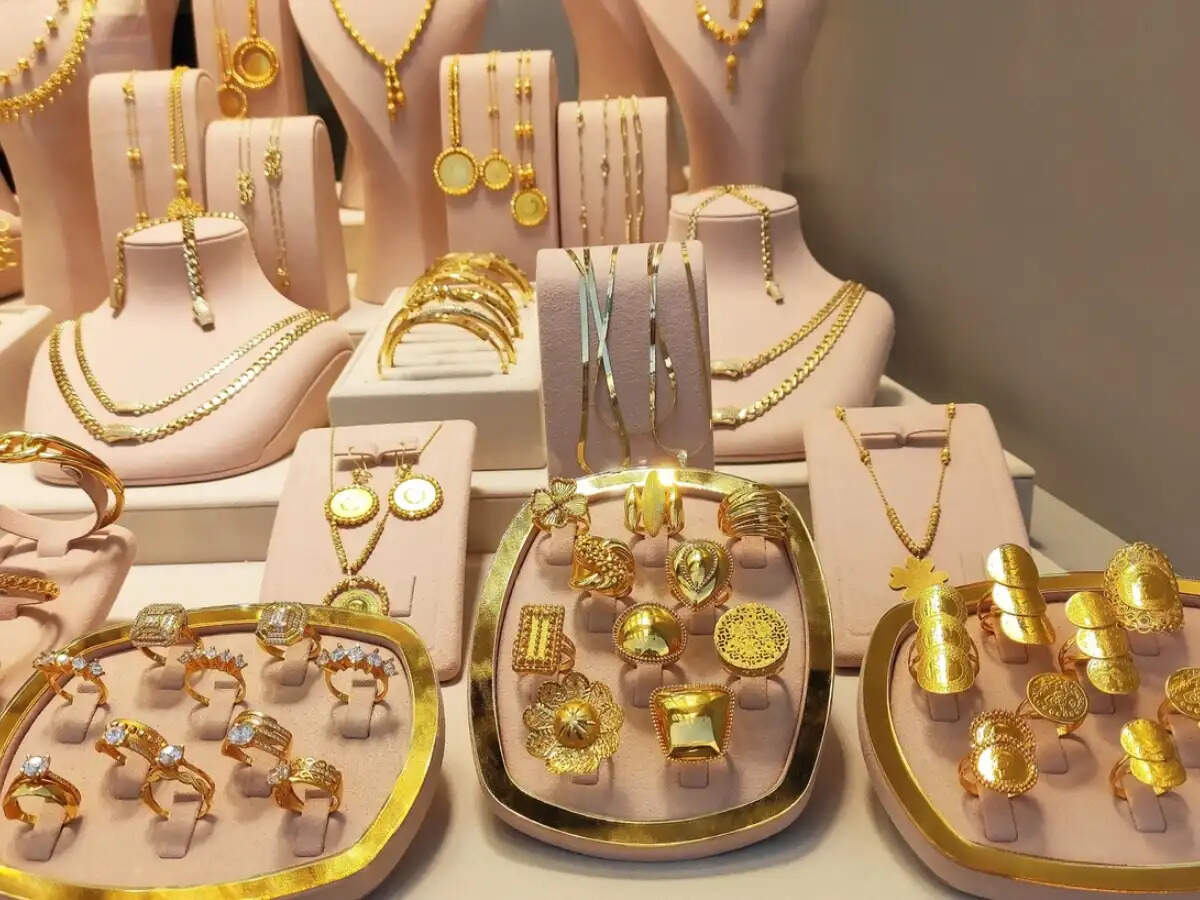
Bengaluru: Gold at around Rs 1.5 lakh per 10 grams has not dimmed the mood in India’s showrooms. It has changed what is on the shopping list. Pieces are lighter, carats are more varied, and trading in an old ornament for a new one is now ordinary. Jewellers say shoppers have found their own way to celebrate.
The backdrop is a record-priced metal. Between April and June, India’s jewellery demand fell 15 per cent by volume, even as total spending on gold hit a record Rs 1.98 lakh crore. The quarter’s average domestic price was Rs 1.51 lakh per 10 grams, against Rs 94,876 a year earlier, before duty and GST. In May, the Prime Minister asked households to avoid buying gold jewellery for a year unless needed, and the effective import duty rose from 6 to 15 per cent.
Prices have eased from their August highs. On 16 October, 24K gold was Rs 14,744 a gram in Mumbai, about Rs 1.47 lakh per 10 grams; which is nearly16 per cent above last year’s pre-Dhanteras close of Rs 1,27,008.
Designing around the budget
Retailers describe the response as a design problem. Suvankar Sen, managing director and CEO of Senco Gold, puts it simply: “Gold prices have doubled. But the budget might have gone up by 20%. So, you have to reduce your weight by 30-40%.” His answer is to focus on “making the jewellery look heavy but weigh light.”
Arun Narayan, CEO of Titan’s jewellery division, says the push for lighter, wearable pieces is not new. He talks of “modern gold, which is a big trend of the last two, three years, which is not traditional gold jewellery, but very wearable, lightweight, but very stylized modern jewellery that you could wear even with western wear.” For weddings, Titan is exploring modular designs. “If it’s modular, then it gives you multiple ways of wearing the same,” he says.
More choice in carat
Carat is another way to widen the range. Saumen Bhaumik, managing director of CaratLane, expects volumes “to be led by accessibility, with 9KT and 14KT offering entry-friendly price points that suit gifting and everyday wear.” But he adds: “18KT will continue to serve consumers looking for premium and differentiated pieces, so we are not seeing a uniform shift towards lower-priced products.”
Narayan is clear that lower carat is not a step down: Titan has worked on its alloy so that 18-carat jewellery “looks as good as 22 carat and therefore is not a compromise, but a smarter way of buying jewellery.” Sen sees the same appetite for variety: “people are experimenting with lower caratage.”
Old gold, new designs
Exchange has moved into the mainstream. Sen says “almost 45-50% of the businesses is about old gold.” At Titan, Narayan says “over 50% of the jewelry purchases in our store have an element of exchange in it,” and the company has been calling it “the smartest way to buy jewellery” for almost a year, ahead of the May appeal.
The World Gold Council’s data points the same way. It found that households largely held on to existing jewellery, and borrowing against gold kept growing. For many families, exchange puts the gold they already own to use.
The mood going in
Optimism runs through. Bhaumik says, “We expect positive growth over last year. The extended festive and wedding calendar is a tailwind, and jewellery remains a priority purchase, though consumers are weighing value and occasion more carefully.” Narayan adds, “we are going in very optimistic and very bullish.” While Sen puts a number on it: “In terms of value, we are all expecting around 20-25% growth minimum year-on-year.” He also expects a rush of delayed purchases. Customers, he says, have told his team “We want to buy something for the auspicious day,” and “all the buying is going to get piled up.”
Weddings should bring buying across the range. Narayan says “we will see a lot of wedding purchase this time across the country,” from “a chain that could be bought for the bridegroom or for members of the family, as much as you buy the entire trousseau for the bride,” to Dhanteras shoppers who “just want to buy that once, you know, small piece as a token.”
Diamonds are gaining attention too. Narayan says “from January, we are seeing a lot of heightened interest,” and Sen says “I feel that the diamond jewellery will have a higher growth.”
One category however, may be quieter. Gold coins sold strongly last Dhanteras, and Narayan notes “last year’s base of sale was extremely high.” Last year, jewellery sales fell nearly 30 per cent around Dhanteras while coins and bars sold well.
What to watch
The World Gold Council still expects 650–750 tonnes of demand in India this year, with the festive and wedding season supporting the second half. Much will depend on whether gold holds near ₹1.5 lakh and how the market responds to the higher duty. Sen sums up the retailers’ view: “People should not stop buying jewellery just because the gold prices are high.” Then, in the words that sum up the season: “Jewellery can be in any form.”