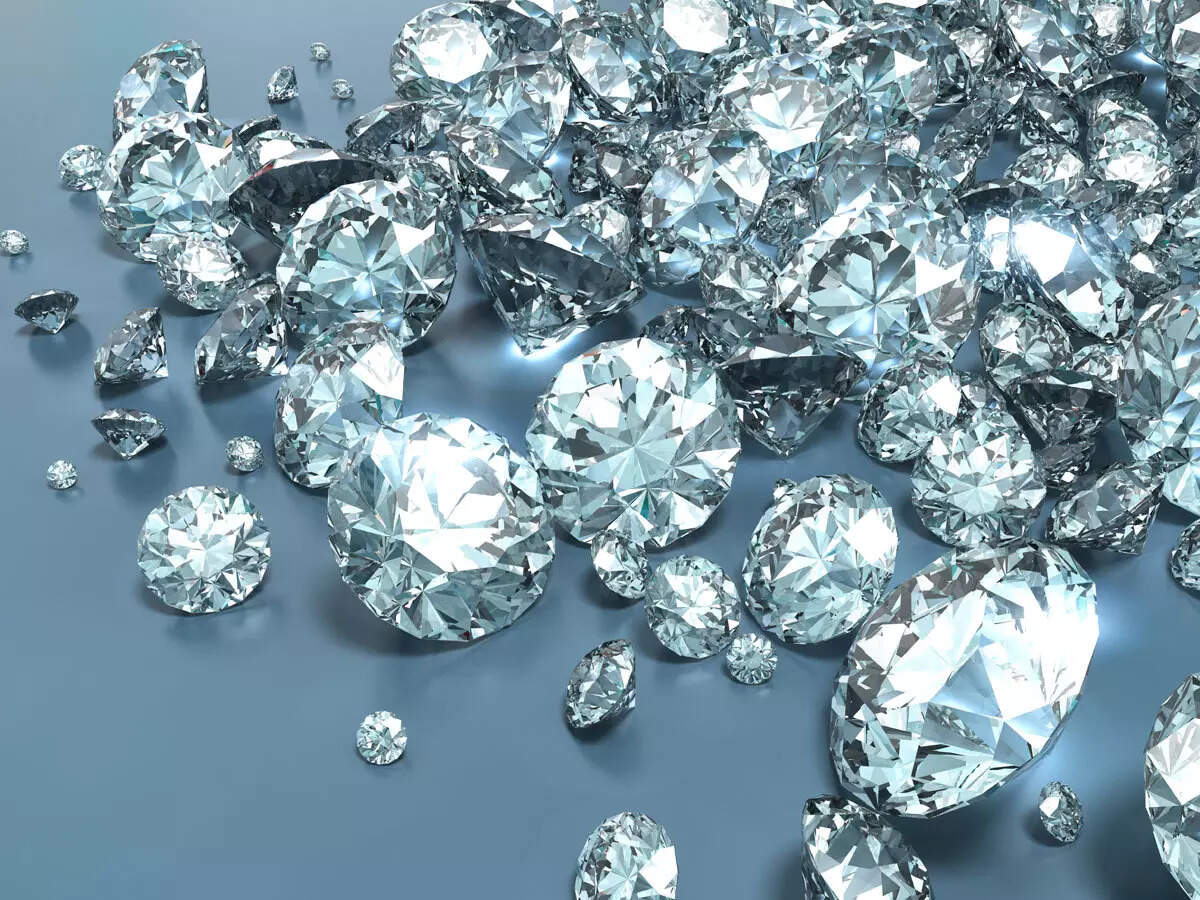
Kolkata: Natural diamond prices have corrected sharply by around 20-30% from their post-pandemic highs, finally showing signs of stabilisation, with prices of larger stones—particularly those above two carats—now beginning to rise significantly, said Paul Rowley, executive vice president of diamond trading at De Beers.
But the recovery comes at a challenging time for the miner, as a sharp slowdown in Chinese demand, amid a growing preference for gold, has weighed on the diamond market.
De Beers is now turning to India as a key growth engine, betting on the festive season to revive consumer demand and targeting 10-12% growth in FY27.
“Prices have fallen but we have seen stabilisation. In fact, 2 carats upwards, the pricing has started to increase significantly,” Rowley said. The most expensive shape for 2 carat natural diamonds is currently marquise, priced at Rs 19 lakh. The least expensive shape for 2 carat natural diamonds is currently princess, priced at Rs 12 lakh.
China, once a key market for natural diamonds, has seen demand weaken amid an economic slowdown and a contraction in the luxury market. The decline has added pressure on the global diamond industry and De Beers, which is now increasingly looking at markets such as India to offset weaker demand in China.
India’s estimated $10 billion market accounted for around 15% of the global natural diamond jewellery market in 2025-26, Rowley said. India has now emerged as the second-largest natural diamond jewellery market globally, according to industry data. India accounted for 12% of global demand in 2024, up from 10% in 2019, while the US remained the largest market with a 53% share. China and Japan accounted for about 5% each.
“India is an important growth market for us,” Rowley said, pointing to the country’s expanding consumer base and increasing demand for natural diamond jewellery.
The Indian natural diamond jewellery market was valued at Rs 785 billion in 2024 and is forecast to grow at a 12% compound annual growth rate through 2030, reaching about ₹1.52 trillion, according to a De Beers study.
The market is also being driven by younger consumers. Gen Z, aged 18-28, accounts for 51% of India’s natural diamond jewellery market by value, while millennials contribute another 35%. Together, the two cohorts account for 86% of market value.
A shift in consumption patterns is also supporting demand. More than half of acquired diamond jewellery is now worn every day, compared with only 27% in 2014. Outside weddings, women account for 64% of natural diamond jewellery purchases, indicating a growing role for self-purchase.
The wedding segment accounts for 29% of the Indian natural diamond jewellery market by value, with brides buying for themselves contributing 79% of wedding-market value.