Most people hate drilling holes in walls. The noise, the dust, the anchors that don’t work, and then months later, the patches that never quite match the paint. It’s annoying and repetitive, something we all accept as just part of living. Argentine inventor Marco Agustín Secchi, 29, looked at that problem and decided it was ridiculous. What if walls could just hold things with magnets instead? So he built Ironplac: a magnetizable cement-based material that turns ordinary walls into surfaces that grip magnet-backed objects without nails or screws. It sounds simple until you realise it could change how we organise homes, offices, and workshops. Right now it’s still being tested. But if it works at scale, hanging a picture might finally stop being something that damages your walls.
The problem nobody thought to solve: Why magnetic walls matter
Think about how often you move things on your walls. A picture frame needs adjusting. You want to hang a mirror in a different spot. Your kid’s artwork needs repositioning. A tool rack gets relocated. Shelves shift. In rental apartments, each hole is damage you’ll lose money on. In your own home, it’s just a mess you’re never really happy about fixing.The construction industry hasn’t changed much in decades, despite all the talk about innovation. Walls are still passive surfaces. You drill. You damage. You patch. That’s the process, and it’s basically been the same for generations. Secchi’s frustration came from exactly this point. Why are we still doing this? Why hasn’t anyone solved it?Ironplac works on a simple concept. Mix special mineral and ferrous fillers into cement or plaster-like finishes. Apply it to walls the way you’d apply any traditional coating. The result looks and feels like a normal wall, but it becomes magnetic-receptive. Objects with magnets stick to it. You can move them around endlessly. No holes. No damage. Just repositioning.
How Ironplac actually works: It’s not a powered system
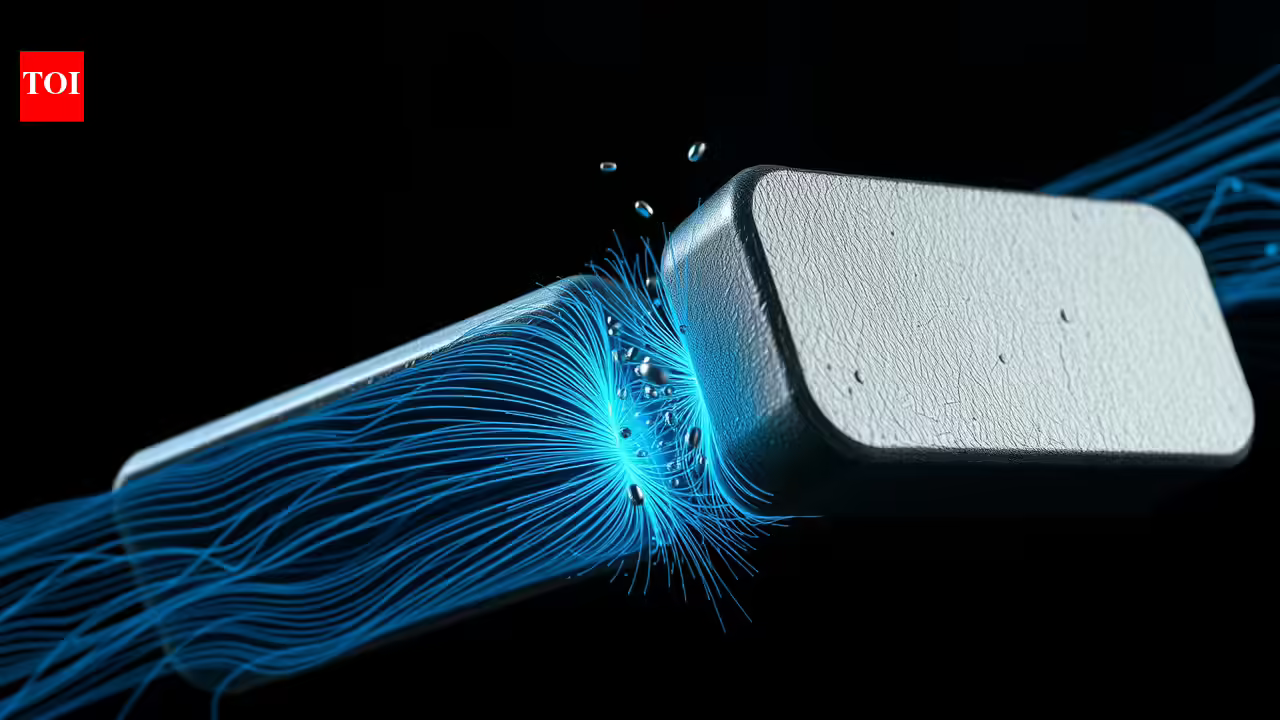
Here’s an important distinction that most people get wrong: Ironplac isn’t an active magnet system. It doesn’t stay “on” like some powered device, constantly pulling at anything metallic nearby. That misconception usually kills people’s interest until they understand what it really does.The wall itself becomes passive-magnetic. It doesn’t generate a field. Instead, when an object carrying a magnet comes in contact with the wall, it responds. The magnetic properties are in the material. Think of it like how a magnet sticks to a fridge. The fridge doesn’t have power running through it. It’s just steel that responds when a magnet is applied.For wet construction, builders can apply Ironplac like a final skim coat. Mix it with water, apply it the way you’d apply regular plaster. For dry construction systems, it works with boards and panels. That flexibility matters because it means the material could fit into existing building workflows without completely changing how construction works.The ferrous components in the material give it the magnetic responsiveness. Research published in Results in Engineering examining cementitious composites made with magnetic sand and magnetite powder shows that this underlying materials science is real, with previous studies aimed at infrastructure applications including wireless power transfer and magnetic sensing. What makes Ironplac different is taking that proven materials science and pointing it at something every day, the problem of hanging things on walls.
What you can actually do with a magnetic wall
In demonstrations, Secchi has shown walls holding tools, picture frames, knives, panels, and even heavy objects like shovels. The magnets are on the back of whatever you’re hanging. You just press the object against the wall, and it stays. Need to move it? Pull it off. No holes left behind. No patches needed. Organise your kitchen, rearrange your bedroom, redo your home office, all without creating damage.For workshops, this could be revolutionary. Tool organisation becomes flexible instead of fixed. Hang a wrench, use it, move it. Same with shelving systems. Teachers could use magnetic walls for organising classrooms without drilling. Rental apartments become less stressful because moving things doesn’t mean explaining wall damage to your landlord.There’s also a practical weight-bearing question. How much weight can it hold long-term? What happens with repeated repositioning? Can it handle humidity changes or temperature swings without degrading? Those are the kinds of practical questions that decide whether a clever prototype actually becomes a building material people use.
The environmental angle: Less waste, more adaptability
Construction creates massive waste globally. According to environmental reports, buildings accounted for 34% of global energy demand and 37 of energy-related carbon emissions in 2022. Construction and demolition debris alone reached 600 million tons in 2018 across the United States.A single magnetic coating won’t solve that. But more adaptable interiors could reduce unnecessary rework. If you can rearrange your space without damaging walls, you’re less likely to need repairs, repainting, or replacement materials. Multiply that across millions of homes and buildings, and the waste reduction becomes real. It’s a small shift in how we think about walls, but the environmental impact could add up.
Where it stands now: Still testing, moving toward product
Ironplac isn’t on store shelves yet. Secchi has said the project is in the pilot-testing phase. Photos show the material being tested in real construction settings, both wet and dry systems. The formula is moving through the Patent Cooperation Treaty system managed by the World Intellectual Property Organisation, which suggests the inventor is serious about protecting the technology internationally.That’s smart. If this works at scale, it’s valuable. But the path from prototype to product requires proving consistent performance. Builders and architects won’t adopt something new unless it performs predictably, fits into standard workflows, and offers clear value. Weight capacity, durability over time, price point, ease of application all these factors will determine if this stays a clever demo or becomes part of how construction happens.The bigger picture is that the construction industry is slowly starting to change. 3D printing, modular building, prefabrication, and new materials are all pushing the sector toward something different. Ironplac doesn’t seem like a revolution on its own. But it represents a shift in thinking, looking at how we actually use buildings and asking why we’re still accepting inconvenient, outdated solutions. For anyone who’s ever drilled a hole in a wall and regretted it, that shift can’t come soon enough.