Amid the West Asia crisis and its impact on global crude oil supplies, the Odisha government on Thursday evening announced a series of austerity and fuel-conservation measures to reduce the consumption of petrol and diesel across public establishments in the state.
The move comes in the backdrop of Prime Minister Narendra Modi appealing to citizens to minimise unnecessary use of petrol and diesel in view of the volatile international situation and rising concerns over energy security.
Responding to the Prime Minister’s appeal, Odisha Chief Minister Mohan Charan Majhi had earlier halved the number of vehicles in his convoy and urged people to cut down on avoidable fuel consumption.
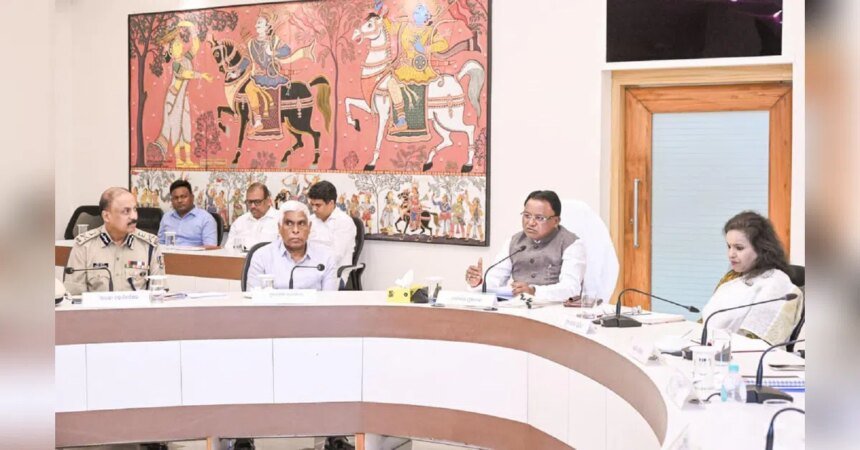
Extending the initiative to the administrative machinery, Majhi on Thursday directed Chief Secretary Anu Garg to implement a comprehensive eight-point guideline to reduce fuel use in government departments, public institutions and government-supported organisations across the state.
According to the new directives, virtual governance will now be the norm in the state administration. All official meetings, reviews, training programmes and workshops will be conducted online unless physical presence is absolutely necessary. In cases where in-person attendance is unavoidable, only those officers and employees whose presence is essential will attend physically, while others will join virtually.
In a significant push towards cleaner mobility, the government has made it mandatory for all new two-wheelers and four-wheelers purchased by government offices from June 1 to be electric vehicles (EVs). Purchase of petrol- or diesel-run vehicles will only be permitted under special circumstances and specific requirements. Similarly, all four-wheelers hired on rent by government offices will also have to be electric vehicles from June 1 onwards.
The Chief Minister has directed the rationalisation of the use of official vehicles by senior officers. Officials who have been allotted government vehicles for personal official use will now be required to adopt carpooling and share vehicles for commuting purposes. As part of the measure, the expenditure incurred on the use of such vehicles will also be reduced proportionately.
In order to streamline official vehicle usage, the Finance Department has been asked to frame detailed guidelines within 15 days specifying which categories of senior officers are entitled to use government vehicles for personal official purposes.
The guidelines further mandate that officers and employees travelling to distant locations for official work should preferably use public transport such as buses and trains instead of individual government vehicles.
In another major step to promote electric mobility, the Finance Department has also been tasked with preparing a policy framework on how government officials owning private electric vehicles can use them for official duties.
The government is also planning to introduce electric bus and minibus services for employees to commute from residential clusters to government offices in urban areas where a large number of staff members reside.
As part of the fuel-saving initiative, every government office has been directed to take conscious measures to reduce monthly consumption of petrol and diesel used for government vehicles by at least 10 per cent.
The Chief Minister also ordered the strict implementation of these measures, starting with the State Secretariat and extending to all government and non-government undertakings, autonomous institutions, universities and societies functioning under the state government.
Officials said the measures will not only help conserve fuel amid global uncertainty but also accelerate Odisha’s transition towards sustainable and energy-efficient governance. The state is already witnessing high demand for EVs in recent months despite charging infrastructure constraints.