Cricket
oi-Gaurav Sharma

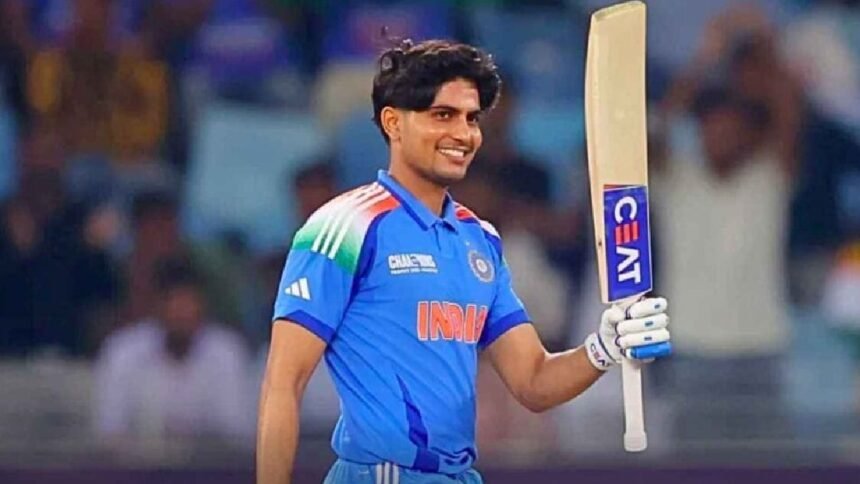
Shubman Gill has moved to the top of the ICC ODI batting rankings, giving India another major marker of stability in the 50-over format as the team builds towards its next global cycle. Gill, India’s Test and ODI captain, rose one place in the latest update issued on July 29, 2026, after a productive three-match ODI series against England earlier in the month.
The 26-year-old right-hander from Punjab now has 801 rating points, enough to overtake New Zealand’s Daryl Mitchell, who is second with 794. Gill scored two half-centuries in the England series, and those innings helped him regain control of a rankings race that also features two of India’s most experienced batters, Virat Kohli and Rohit Sharma.
India’s Shubman Gill became the No. 1 ranked ODI batter on July 29, 2026, with Virat Kohli and Rohit Sharma also in the top four, while Vaibhav Sooryavanshi surged in T20I rankings after a series against Zimbabwe.

Shubman Gill leads strong Indian presence in ODI rankings
India now has three batters in the top four of the ICC ODI batting rankings. Kohli is third with 767 rating points, while Rohit is fourth with 758. The cluster highlights India’s continued batting depth in the format, even as the side manages transition, captaincy demands and the workload of senior players across formats.
Gill’s rise is significant because it comes at a stage when India are shaping their ODI plans around a new leadership core. He has long been viewed as one of the most consistent top-order players in the format. His ability to score quickly without taking excessive risks has made him central to India’s one-day batting structure.
For India, the rankings update is also a reminder that the ODI format remains a major part of its long-term planning. With Gill, Kohli and Rohit all inside the top four, the team retains an experienced and high-performing batting base. The challenge for the management will be to balance continuity with opportunities for emerging players.
Mitchell’s presence at No. 2 keeps the race close. The gap between Gill and the New Zealand batter is only seven rating points, which means the top spot could change again depending on upcoming ODI performances. ICC rankings are updated according to player output, match context and the strength of opposition, making sustained form essential.
Vaibhav Sooryavanshi makes sharp T20I rankings jump
The biggest Indian movement in the T20I batting rankings came from Vaibhav Sooryavanshi. The 15-year-old left-hander from Samastipur in Bihar jumped 230 places after a standout series against Zimbabwe. He scored two half-centuries in the three-match series and was named Player of the Series for his performances.
Sooryavanshi is now ranked 48th in the ICC T20I batting rankings with 536 rating points. The jump is striking because of both his age and the scale of his rise. It also reflects how quickly performances in a short bilateral series can influence T20I rankings, especially for players starting from a lower base.
His progress will attract attention because India have been searching for young attacking options in the shortest format. However, rankings gains at this stage are only one part of the story. For a player at the start of an international career, consistency, role clarity and careful workload management will matter as much as early numbers.
There was movement elsewhere in India’s T20I batting group. Abhishek Sharma slipped one place to third after a poor series against Zimbabwe, where he made scores of 1, 8 and 2. He now has 819 rating points. The dip shows how quickly lean patches can affect rankings in the T20I format.
Tilak Varma, meanwhile, climbed two places to sixth. His unbeaten 60 off 29 balls in the second T20I against Zimbabwe helped his rise. The left-hander’s movement strengthens India’s representation near the top of the T20I batting list and adds another option in the middle order.
Pakistan and West Indies players gain in Test rankings
The latest ICC update also brought changes in the Test rankings after Pakistan’s match against the West Indies at the Brian Lara Stadium. Pakistan’s new Test captain Babar Azam gained four places in the batting rankings following an unbeaten half-century in the second innings of the first Test.
In the Test bowling rankings, Pakistan fast bowler Mohammad Abbas made one of the larger moves. The 36-year-old climbed nine places to 17th after taking three wickets in the first innings and five in the second. His performance underlined the value of control and experience in red-ball conditions.
West Indies seamer Jayden Seales also gained ground after playing a key role in his team’s 90-run win. Seales took a five-wicket haul in the second innings and moved up five places to 24th in the Test bowling rankings. His performance helped the West Indies close out a notable home victory.
There was a fall for Shamar Joseph, who dropped six places to 20th in the Test bowling list. Rankings shifts of this kind are common when players around the same band deliver contrasting performances in the same cycle. A single match can have a sharp impact when rating-point gaps are narrow.
In the ICC T20I bowling rankings, several Indian bowlers lost ground. Varun Chakaravarthy fell three places, Jasprit Bumrah slipped five, and Arshdeep Singh dropped eight. Zimbabwe fast bowler Blessing Muzarabani was among the gainers, rising 10 places to 26th after the recent series against India.
For India, the headline remains Gill’s move to No. 1 in ODIs, backed by the continued presence of Kohli and Rohit near the top. Sooryavanshi’s surge adds a separate storyline in T20Is, where India’s next generation is beginning to make rankings impact. The next set of international fixtures will determine whether these gains hold.