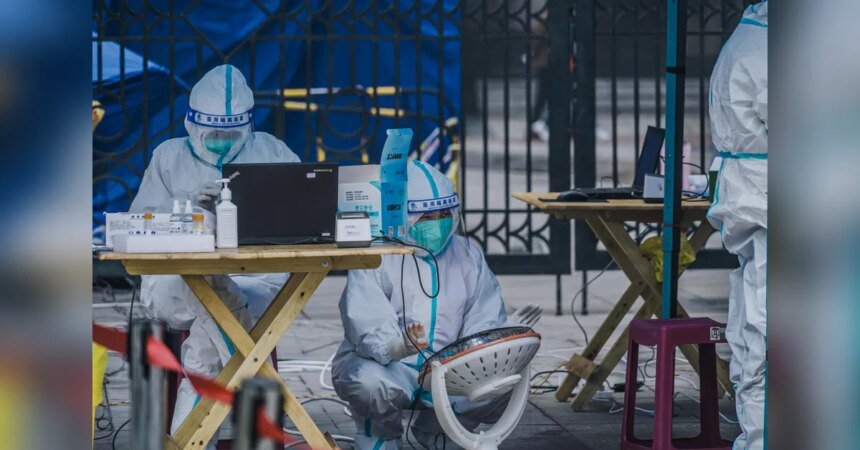
The report, titled A World on the Edge: Priorities for a Pandemic-Resilient Future, paints a sobering picture of global health security nearly six years after the Covid-19 pandemic exposed cracks in public health systems worldwide. According to the report, countries are now facing a more volatile and fragmented world, while trust between governments, institutions and citizens is steadily eroding.
Pandemic risk is rising, not falling
Pandemic risk is rising, not falling
The GPMB assessed major global health emergencies from the last decade, including Ebola, Zika, Covid-19 and mpox, and concluded that preparedness efforts are failing to keep pace with emerging risks.
The report noted that climate change, urbanisation, conflict, ecological disruption and increased global travel are making infectious disease outbreaks more frequent and more severe.
WHO detected nearly twice as many health emergency events in 2024 compared to 2015, highlighting how rapidly risks are growing.
Despite scientific advances, new vaccines and billions spent on preparedness, the report says the overall trajectory of pandemic risk continues to worsen.
Trust and equity are collapsing
Trust and equity are collapsing
According to the GPMB, trust has weakened between governments and citizens, between countries, and even in multilateral organisations and the pharmaceutical industry.
Meanwhile, inequalities in access to vaccines, diagnostics and treatments remain deeply entrenched.
The report highlighted that during recent mpox outbreaks, vaccines reached low-income countries even more slowly than during the Covid-19 pandemic. Mpox vaccines took between 24 and 27 months to reach poorer countries, compared to 17 months during the Covid-19 pandemic.
Experts behind the report warned that a growing sense of “equity fatigue” is emerging globally, with governments increasingly unwilling to prioritise fair access because it is seen as politically difficult and financially expensive.
Speaking during the launch of the report earlier this week, Kolinda Grabar-Kitarovic, Co-Chair of the GPMB, said, “The world does not lack solutions. But without trust and equity, those solutions will not reach the people who need them most.”
Funding for preparedness is slipping
Funding for preparedness is slipping
The report found that although Covid-19 triggered a temporary increase in health emergency funding, development assistance for health has now fallen back to levels last seen in 2009.
Preparedness financing, the report said, still depends too heavily on political attention. Governments tend to invest immediately after a crisis, but funding often declines once the emergency fades from public memory.
The GPMB warned that reduced global cooperation, rising debt burdens and shifting political priorities could undo much of the progress made after Covid-19.
It also stressed that weaker financing could leave countries slower to detect outbreaks and less able to respond quickly during the crucial early days of a pandemic.
Pandemics are widening inequalities
Pandemics are widening inequalities
The report found that the impacts of health emergencies are no longer limited to health systems alone. Economic disruption, social instability and political polarisation are becoming more severe after every major outbreak.
-
During the first year of Covid-19, global foreign direct investment fell by 51 per cent, marking the steepest decline ever recorded -
The report also estimates that the world could lose more than $50 trillion in economic output between 2020 and 2030 because of pandemic-related disruptions -
Around 80 per cent of children globally were pushed out of school during Covid-19, while nearly half of children in Ebola-hit regions of West Africa lost access to education during that outbreak -
More than 10.5 million children worldwide also lost a parent or caregiver during the Covid-19 pandemic
Report calls for urgent reforms
Report calls for urgent reforms
The GPMB urged governments to treat 2026 as a critical turning point for global health security. It called for stronger political leadership and faster implementation of reforms before another pandemic emerges.
The report laid out three major priorities:
-
Independent global monitoring of pandemic risks -
Fairer access to vaccines and medical supplies -
Sustainable long-term financing for preparedness
It also called for the WHO Pandemic Agreement to be finalised and fully implemented so countries can cooperate more effectively during future health emergencies.
According to the report, technological advances such as artificial intelligence, rapid genomic surveillance and faster vaccine development could help the world respond better in the future. However, these tools will only work if countries rebuild trust, strengthen cooperation and ensure equal access to resources.
“Political leaders, industry and civil society can still change the trajectory of global preparedness – if they turn their commitments into measurable progress before the next crisis strikes,” said Kolinda.
This report is for informational purposes only and is not a substitute for professional medical advice.